AMD Surges Past Nvidia in Record Stock Rally Ahead of Earnings
A Historical Gap Between Two Semiconductor Giants
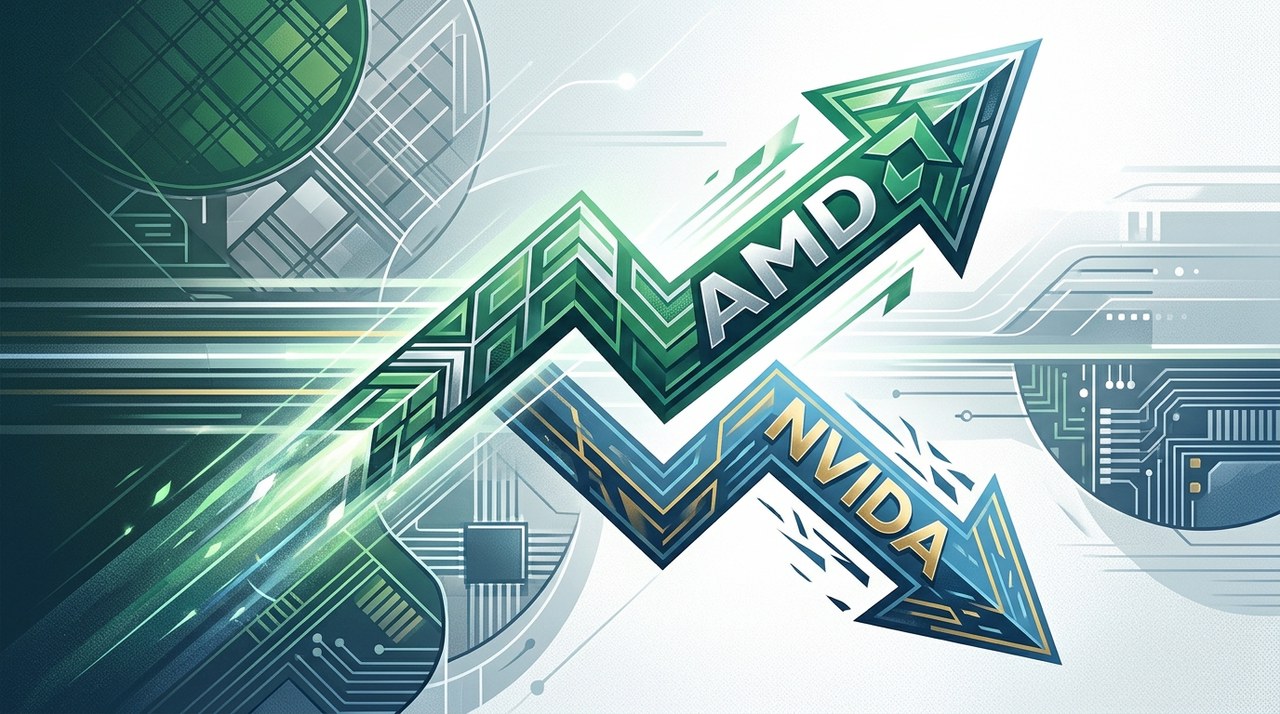
The semiconductor market recently experienced a rare divergence between two of its prominent market leaders, Advanced Micro Devices (AMD) and Nvidia. Over a period of five consecutive trading days, AMD outperformed Nvidia by an impressive 53.2 percentage points, according to data published by financial commentary group The Kobeissi Letter. This performance gap marks the widest margin of outperformance for AMD over Nvidia since Nvidia completed its initial public offering (IPO) back in January 1999.
During this intense five-day stretch, AMD stock rallied by 44.7%. At the exact same time, Nvidia stock experienced a retreat of 8.5%. To put this price action into historical context, the previous record for AMD's five-day outperformance margin occurred in April 2016, when the gap reached 49.9 percentage points.
Looking at the broader calendar year, the divergence between the two chip manufacturers is even more pronounced. From January 1 through the close of trading on Friday, AMD stock has surged by 149.4%. Conversely, Nvidia stock has registered a decline of 12.7% over the same timeframe. This creates a massive year-to-date performance gap of approximately 162 percentage points between the two rivals.
It is important for market participants to keep in mind that past stock performance or historical outperformance margins do not guarantee future returns or continued performance trends.
What Drove the Massive AMD Stock Rally?
Understanding this sudden shift in market dynamics requires examining two major recent events: corporate leadership changes at Nvidia and strong financial performance from AMD.
Nvidia's Executive Leadership Transition
The core catalyst behind the relative shift began with unexpected executive news at Nvidia. Chief Executive Officer Jensen Huang officially resigned from his position on November 12, creating an immediate period of uncertainty for investors who had long linked Nvidia's leadership in artificial intelligence directly to his direction.
In response to his departure, Nvidia's board of directors appointed Chief Financial Officer Colette Kress to serve as interim CEO while the board conducts a search for a permanent replacement. Executive shifts of this magnitude frequently cause institutional investors to re-evaluate short-term risk profiles, leading some to temporarily shift focus toward industry peers.
AMD's Record Third-Quarter Financial Results
While Nvidia navigated executive leadership changes, AMD presented strong fundamental performance metrics. AMD released its third-quarter financial report, revealing record quarterly revenue of $13.4 billion. This figure represents a 45% increase compared to the same quarter in the previous year.
The primary engine driving AMD's top-line growth was its data center business segment. Revenue within the data center division nearly doubled, reaching $8.5 billion for the quarter. This expansion highlighted increasing enterprise demand for AMD's hardware components across major cloud infrastructure networks.
Commenting on these market developments, financial commentary group The Kobeissi Letter shared on social media platform X that AMD has been a major beneficiary of Nvidia's historic volatility.
Friday's Market Pullback and Important Technical Levels
The record-setting run encountered resistance during Friday's session, demonstrating how rapidly short-term market momentum can change.
AMD stock surrendered a portion of its weekly gains, falling 8.75% during regular market hours to close at $534.06 per share, down from its recent high of $585.30. The downward pressure carried into after-hours trading, where the stock slipped an additional 2.41% to reach $521.20.
Macroeconomic Trends and High Trading Volume
The decline in AMD coincided with a broader pull-back across semiconductor and technology stocks. Broader macroeconomic trends influenced market sentiment throughout the day:
- 10-Year Treasury Yields: The yield on 10-year U.S. Treasury notes remained elevated above 5% following the publication of October's Producer Price Index (PPI) data.
- Pressure on Tech Stocks: Elevated interest rate benchmarks often create headwinds for fast-growing technology companies, as future corporate earnings are evaluated under higher discount rates.
- Heavy Trading Activity: AMD's trading volume hit 48.6 million shares on Friday, reaching nearly double its three-month daily average.
- Profit-Taking: Market analysts at The Motley Fool noted that part of Friday's decline was attributable to standard profit-taking following the stock's sharp upward trend.
From a technical analysis perspective, market observations from BeInCrypto pointed out that after-hours pricing dipped close to $514. Analysts marked that $514 level as a critical line of support. Moving below that price point could potentially disrupt the stock's short-term bullish chart structure.
The Road Ahead: High Stakes for Nvidia's Upcoming Earnings Report
Market attention is now turning toward Nvidia's third-quarter earnings announcement, scheduled for Tuesday after the close of regular U.S. stock trading.
Analyst Expectations and Business Outlook
Nvidia previously provided official revenue guidance for the third quarter of approximately $108 billion, give or take 2%. Consensus estimates from analysts polled by LSEG anticipate reported quarterly revenue of roughly $109.2 billion alongside adjusted earnings per share of $2.48.
These financial expectations depend on continued strong demand for graphics processing units and stable supply chains. However, final actual performance could still be impacted by shifts in customer spending patterns, operational bottlenecks, or broader economic conditions.
Key Details Regarding Executive Leadership Timelines
Investors should take note of how the reporting timeline aligns with corporate executive changes:
- Third-Quarter Period: The financial quarter ended on October 25, which means the upcoming results reflect operating activities under former CEO Jensen Huang.
- Forward Outlook: Future guidance provided for the upcoming fourth quarter will be the first forward-looking statements delivered under interim CEO Colette Kress.
- Sector Impact: Robust earnings and strong forward guidance could potentially rebuild investor confidence in Nvidia. Conversely, weaker-than-expected metrics could weigh on the wider semiconductor sector, including AMD.
Market Implications: Is Enterprise AI Demand Shifting?
The significant divergence in relative stock performance between AMD and Nvidia was built largely on expectations that major cloud enterprise clients might be diversifying their artificial intelligence hardware purchases.
Tuesday's earnings presentation and management commentary will provide market participants with their first opportunity to hear whether Nvidia observes any actual shift in customer purchasing behavior, or if demand for its AI hardware ecosystem remains firm.
Market participants should continue to evaluate fundamental performance metrics alongside overall market conditions, keeping in mind that hardware and technology assets remain sensitive to systemic market movements.
Latest blog posts



AI Threats Put Bitcoin Self-Custody at Risk, Cobra Warns
Bitcoin.org maintainer Cobra cautions that advancing AI threats and institutional dominance are making Bitcoin self-custody increasingly risky during a market downturn.
|
Unocoin Reports $200K Crypto Loss After Key Breach
Indian exchange Unocoin confirmed a $200,000 crypto loss from hot wallets after backup keys were compromised, pledging full user reimbursement.
|
Louisiana AG Slams CFTC Chair Over Prediction Market Lawsuit
The CFTC filed a lawsuit against Louisiana to block a state ban on 31 prediction markets, prompting strong criticism from the state's Attorney General.