
AI Math Breakthroughs Don't Threaten Bitcoin Security Yet: K33
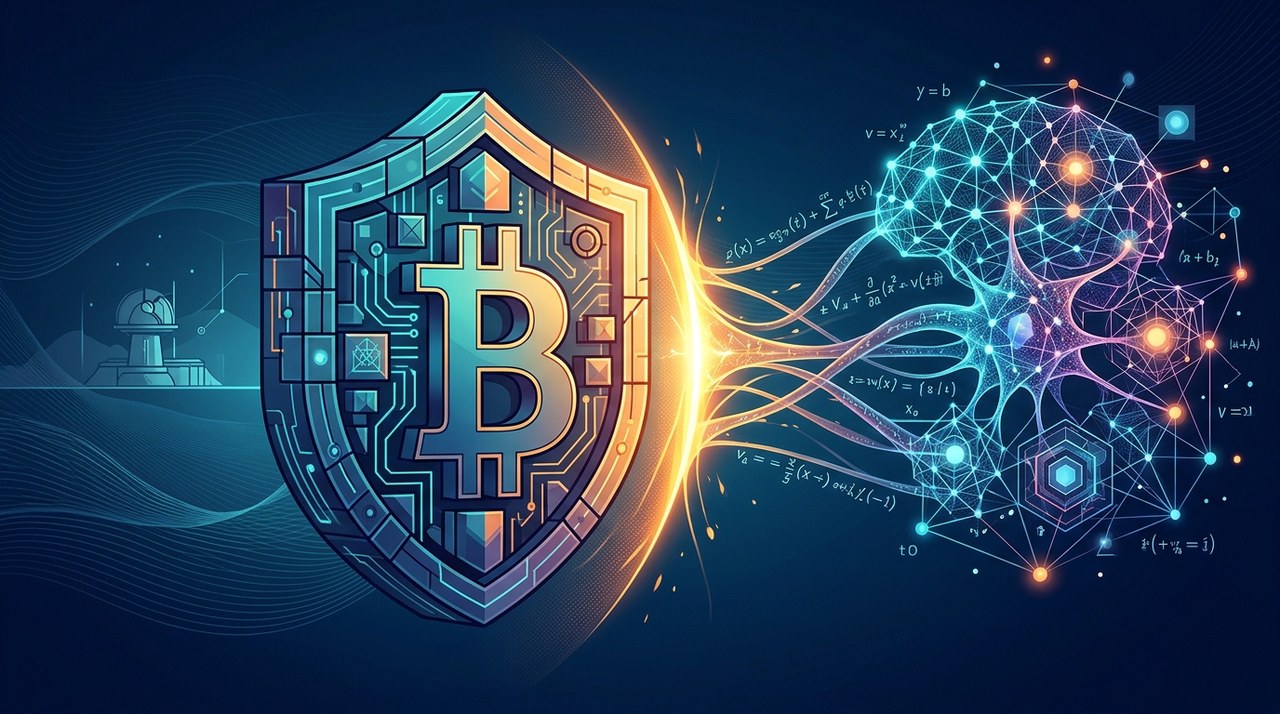
Have you heard recent rumors about Artificial Intelligence breaking the math behind Bitcoin? It sounds like a plot from a futuristic movie. However, according to digital asset research firm K33, there is no reason to panic.
K33 recently evaluated recent breakthroughs in AI-assisted mathematics. They confirmed that these advances have not compromised Bitcoin's underlying cryptography. While any practical threat remains unproven today, K33 advises the crypto community to keep a close eye on AI progress.
What K33 Research Found
The main takeaway from K33 is both simple and reassuring. Recent headlines highlighted that AI systems are becoming remarkably effective at solving complex mathematical problems. This naturally raised questions about whether AI could threaten blockchain security.
K33 clarified that these theoretical math milestones do not equal a real-world breach of Bitcoin's code. There is currently no proof that AI can break the mathematical shields keeping user funds safe.
How Bitcoin Cryptography Protects Your Coins
To understand why cracking Bitcoin is so difficult, it helps to look at the main technical components guarding the network:
- SHA-256 Hashing: This cryptographic algorithm transforms data into a unique 64-character code. It acts like a digital fingerprint that is practically impossible to reverse.
- Elliptic Curve Cryptography (ECDSA): This math structure ensures that only the person holding a private key can sign transactions and spend Bitcoin.
You can think of these systems like digital padlocks with trillions of combinations. Guessing a single private key by raw computing power would take billions of years using traditional methods.
Why AI Math Advances Sparked Concern
So why did people start worrying in the first place? Modern AI models excel at finding hidden patterns in huge datasets. They are now assisting mathematicians with automated theorem proving and discovering new mathematical short cuts.
The fear was that an AI might discover an unforeseen shortcut through elliptic curve math. If an AI found a way around the math, it could theoretically crack private keys without brute force.
Recent mathematical advances had not demonstrated a compromise of Bitcoin's cryptography, while urging closer attention to AI.
Theory Versus Real-World Threat
K33 emphasizes that a big gap exists between abstract math research and an operational security exploit. Solving high-level mathematical puzzles in a controlled lab setting is very different from cracking 256-bit encryption in the wild.
As of now, the practical threat remains completely unproven. Bitcoin's mathematical foundation remains as robust as ever.
Why K33 Urges Ongoing Attention to AI
Even though there is no immediate danger, K33 recommends watching AI developments closely for several reasons:
- Rapid Pace of Innovation: AI capabilities are expanding quickly, making long-term technological forecasting essential.
- Algorithmic Discovery: Future AI models might discover new mathematical techniques that change how encryption strength is evaluated.
- Proactive Security: Blockchain networks need time to prepare and upgrade their protocols long before potential vulnerabilities appear.
How Bitcoin Can Adapt to Future Risks
It is also worth noting that Bitcoin is not a static system. If AI or quantum computing ever poses a real threat to encryption, the Bitcoin protocol can evolve:
- Cryptographic Upgrades: Developers can introduce quantum-resistant algorithms through software updates.
- Network Consensus: The community can agree to adopt stronger address formats to protect funds prior to any threat materializing.
Final Takeaway for Crypto Holders
The research from K33 offers solid reassurance. AI math breakthroughs are impressive, but they have not broken Bitcoin's security.
For regular users, continuing to follow standard security practices remains the best approach. Keep your private keys safe and stay informed about ongoing tech developments.
If you want to view market trends and price details for major cryptocurrencies, check out the Bitkub BTCBTC-2.17% Market. Past performance of digital assets is not an indicator of future results.
Latest blog posts


Cardano Unveils Euler Upgrade Plans Ahead of Dijkstra Fork
Cardano ecosystem group Intersect announced initial discussions for the Euler era as testing for the upcoming Dijkstra upgrade continues toward a Q1 2027 mainnet target.
|

Inside Ethereum's Roadmap: Glamsterdam, Hegotá, and Beyond
Ethereum continues to evolve through planned upgrades like Glamsterdam and Hegotá to make transactions faster, cheaper, and more secure.
|
Ethereum ICO Turnaround: $100 to $555K as Wall Street Sells
Early Ethereum buyers enjoyed massive historical gains, but recent months show Wall Street funds pulling billions from spot ETH ETFs.
|