
AI Data Centers Buying Used Jet Engines Amid Power Delays
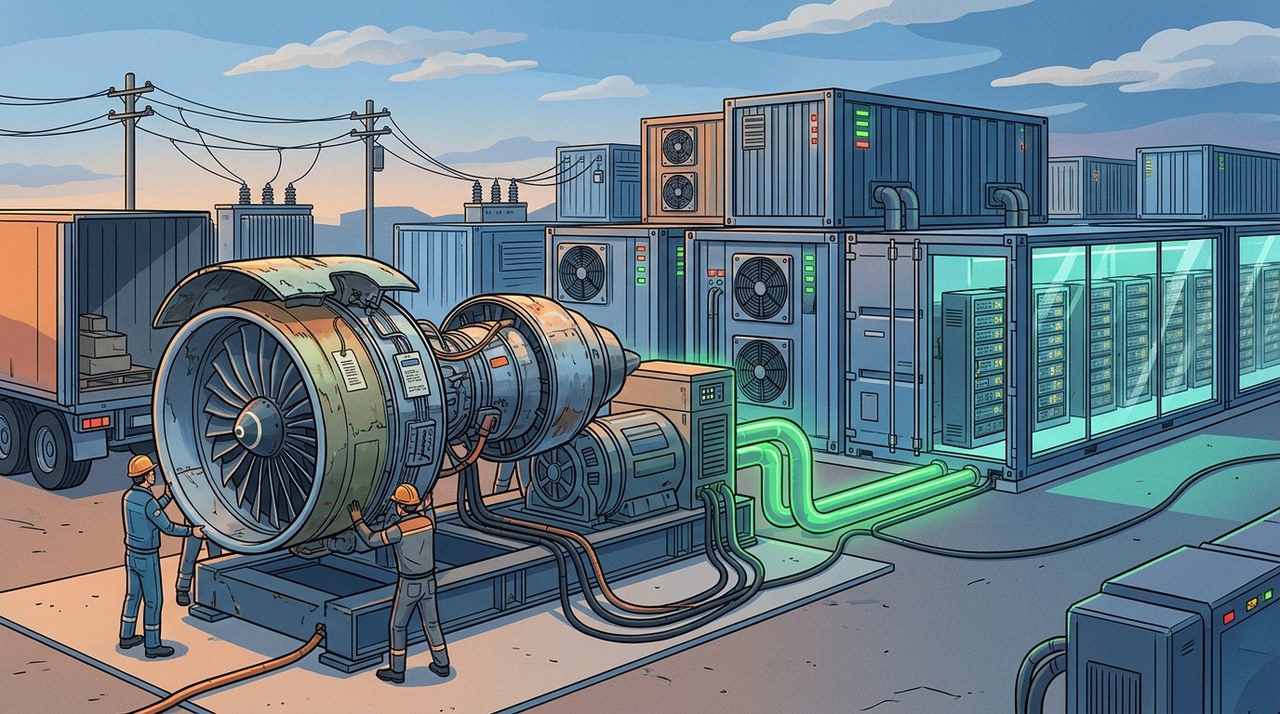
The Urgent Search for Energy in the AI Era
Artificial intelligence is expanding at a rapid pace, but it faces a major real-world hurdle: electrical power. Modern AI data centers require immense amounts of electricity to train complex models and deliver fast responses to users.
Getting traditional power equipment installed takes considerable time. Orders for standard industrial gas turbines currently carry delivery waiting periods of up to six years. To bypass this supply chain bottleneck, data center developers are turning to a surprisingly creative solution: purchasing second-hand aircraft jet engines.
How Jet Engines Power Modern Data Centers
Using airplane engines for ground-based power generation is an established practice known as using aeroderivative gas turbines. Engineers take engines designed for major commercial aircraft and convert them to drive stationary electrical generators.
These modified turbines offer distinct practical advantages for fast-moving tech operations:
- Rapid deployment: Modular units can be delivered on trucks and set up in months rather than years.
- Flexible power delivery: Jet engines can start up quickly to handle peak demand or continuous operations.
- Off-grid capability: Facilities can start operating before official public grid utility connections are finalized.
Understanding the Six-Year Equipment Bottleneck
The massive delay for standard power equipment is driven by global supply chain pressures and high demand across multiple industries. Heavy utility turbines are large, custom-built machines manufactured by only a few global firms.
At the same time, regional power grids are experiencing heavy strain. Renewable energy transitions, industrial electrification, and fast-growing digital networks are all competing for power supply connections. Data center operators cannot wait several years for electrical hookups while competitor companies expand.
Tech Valuations and the Race for Infrastructure
The drive to secure power quickly coincides with major financial expectations across the artificial intelligence and technology sectors. Investors and prediction markets closely monitor company milestones, including potential initial public offerings.
For example, decentralized prediction markets currently track high expectations for market moves over the coming years:
- Anthropic: Prediction markets show a high 95% market probability of an IPO before 2027.
- Remote: Markets track a 6% probability for an IPO within the same timeframe.
- Celonis: Estimated at a 6% market probability for an IPO by 2027.
- Freddie Mac: Currently sits at a 6% market probability for listing changes.
- Rippling: Currently holds a 5% market probability for an IPO prior to 2027.
Because high tech valuations depend heavily on continuous compute capacity, tech firms cannot afford delays caused by electrical shortages.
Environmental and Practical Trade-Offs
While converted jet engines provide fast energy, they also bring operational challenges. Aeroderivative turbines are generally powered by natural gas, refined fuels, or gas blends.
Running jet-powered generation units requires local environmental permits, noise management, and fuel delivery infrastructure. As a result, many operators treat these setups as temporary bridge power until long-term grid connections or greener solutions—like solar, wind, or small modular nuclear reactors—become available.
Broader Impacts on Crypto and Data Networks
The search for reliable power extends beyond centralized AI clusters into decentralized technologies. Computing hardware for blockchain verification and decentralized data networks also requires access to steady electricity.
Projects involved in data ecosystem infrastructure, such as the SIX Network (SIX), highlight how digital assets and data flow interlink. As computing demands scale up across AI and Web3 platforms, securing energy hardware remains a common operational focus.
Past performance of digital assets or tech sectors is not indicative of future market results. Readers should evaluate market trends and risk factors carefully.
Conclusion
The choice to purchase used aircraft engines demonstrates how critical energy access has become for digital growth. As the AI sector advances, creative power generation solutions will play a central role in keeping digital infrastructure running.
Latest blog posts



 +2
Ripple's David Schwartz Clarifies XRP Price Factors
Former Ripple CTO David Schwartz explains why transaction gas fees do not drive XRP price, offering insights into ledger adoption.
|

Vitalik Buterin and Ethereum Foundation Face Lawsuit
A former Ethereum Foundation team lead has filed a federal lawsuit against Vitalik Buterin and the organization following a workplace dispute.
|
Avoiding Australia's 47% Crypto Tax: What to Know
Australian crypto investors facing high tax rates by July 2027 are weighing overseas moves against legal local tax optimization strategies.