

17 Years of Bitcoin: From Satoshi's Forum to Wall Street
A Landmark Anniversary in Bitcoin History
Seventeen years ago, on November 19, an anonymous creator named Satoshi Nakamoto took a quiet step that changed financial history. Satoshi opened a user account on a brand-new internet discussion forum called BitcoinTalk.
At that point in time, the Bitcoin network was barely one year old. Very few people understood what digital cash was or how a decentralized peer-to-peer network could function without banks.
Fast forward to today, and Bitcoin has moved from a niche tech experiment into a major asset class discussed by Wall Street executives and world leaders.
The Early Forum Days and the Famous 10,000 BTCBTC-0.61% Pizza
When Satoshi created the BitcoinTalk account, the main goal was simple. Satoshi wanted to welcome early computer enthusiasts and answer questions about how the software worked.
The forum quickly became the town square for early cryptocurrency discussions long before modern social media platforms took over the web.
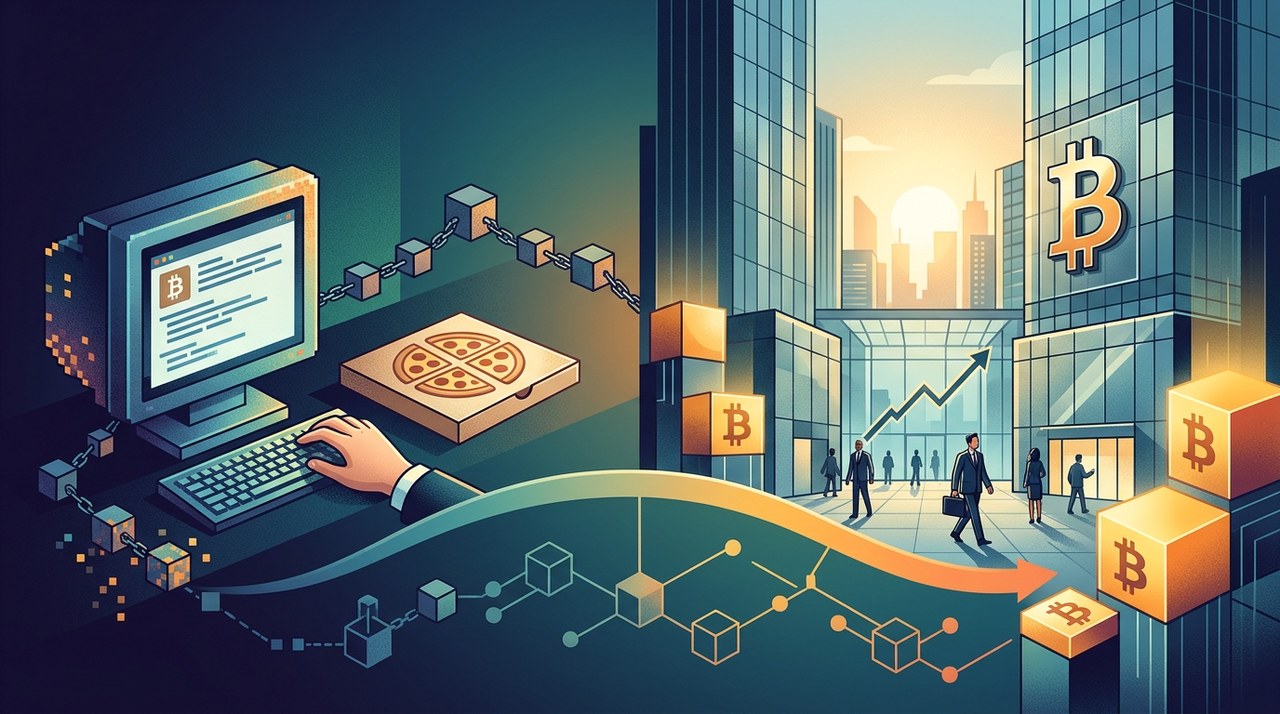
In May 2010, the community reached its first major real-world benchmark. A developer named Laszlo Hanyecz paid 10,000 Bitcoins for two delivered pizzas. At the time, those coins were worth about $41.
That dinner became famous as the most expensive pizza purchase in history. It proved that Bitcoin could actually be traded for real physical goods.
By December 2010, Satoshi Nakamoto published a final message on BitcoinTalk. Satoshi announced a complete farewell from the public forum and stepped away, leaving the project in the hands of the community.
2011–2014: Code Maintenance, Halvings, and the Mt. Gox Crisis
After Satoshi left, Bitcoin transformed into a fully open-source project. Independent software developers around the world began writing code and managing updates together.
In November 2012, Bitcoin hit its very first halving milestone. The network automatically cut the block reward given to miners from 50 BTC down to 25 BTC per block.
This automated mechanism is hardcoded into Bitcoin to control inflation and cap the total lifetime supply at 21 million coins.
However, the early years were not without serious challenges. In 2014, Mt. Gox, which handled over 70% of all global Bitcoin trades at the time, suffered a catastrophic collapse.
The exchange imploded after losing hundreds of thousands of customer coins due to security vulnerabilities. It was the industry's first major exchange crisis, highlighting the security risks of centralized platforms.
2017–2021: Bull Markets, Smart Contracts, and Legal Tender
Between 2017 and 2021, cryptocurrency expanded into global public consciousness. In late 2017, Bitcoin experienced its first massive public retail bull run, carrying prices up toward $20,000 by December.
This era also opened the door to new technological innovations. Developers built smart contracts, decentralized finance protocols, and non-fungible tokens (NFTs).
The following market cycle reached another peak in November 2021, pushing Bitcoin's market price to roughly $69,000.
Adoption extended to sovereign governments as well. In 2021, El Salvador became the first country in the world to establish Bitcoin as official legal tender alongside holding it in state reserves.
2022–2024: Market Crashes and Institutional Wall Street Entry
The year 2022 brought tough market tests. High-profile project crashes like TerraLUNA+17.81% and the collapse of the FTX exchange hurt market confidence worldwide.
FTX had positioned itself as a major trading exchange designed to bridge traditional finance with crypto. Poor risk management and misallocated user funds led to its sudden bankruptcy.
Despite these setbacks, the industry rebuilt its market framework. By 2024, traditional financial institutions stepped in with institutional products.
Regulators approved spot Bitcoin ETFs and exchange-traded products (ETPs), allowing traditional investors to gain exposure through standard brokerage accounts.
2025–2026: Policy Debates, AI, and Quantum Security Questions
Today, in 2026, Bitcoin sits at the center of international policy debates and institutional finance.
New technological challenges have also come into focus. The rapid advancement of artificial intelligence (AI) and developments in quantum computing present fresh questions for network security.
Security across the broader crypto space remains an active topic. For instance, exploits like the recent $1 million vulnerability on Gonka AI demonstrate why protocol security is critical.
Industry executives continue to advocate for self-custody and digital assets. Leaders like the Bitwise CEO have publicly urged investors to consider holding digital assets during times of stress in legacy banking systems.
Historical Price Data and Risk Awareness
Reviewing Bitcoin's journey from pennies in 2009 to nearly $20,000 in 2017 and $69,000 in 2021 highlights how far the network has come over 17 years.
However, every investor should keep market volatility in mind. Past performance of digital assets is not an indication of future performance.
Digital asset markets fluctuate based on macroeconomic conditions, liquidity, and regulations. Readers can inspect live pricing and market data on Bitkub BTC Market.
Timeline Overview of Bitcoin's Key Milestones
- November 2009: Satoshi Nakamoto opens an account on the BitcoinTalk forum.
- May 2010: Laszlo Hanyecz completes the 10,000 BTC pizza trade; Satoshi bids farewell in December.
- November 2012: The first Bitcoin halving reduces block rewards from 50 to 25 BTC.
- 2014: Mt. Gox implodes, highlighting security vulnerabilities in centralized exchanges.
- 2017–2021: Bitcoin reaches ~$20,000 in 2017 and ~$69,000 in 2021; El Salvador accepts BTC as legal tender.
- 2022–2024: Market shakes off FTX collapse; spot Bitcoin ETFs launch on Wall Street.
- 2025–2026: Focus turns to AI security, quantum defense, and macro policy discussions.
Latest blog posts


Ant International Launches Protocol for Tokenized Assets
Ant International has unveiled the Whale Orchestration Protocol to enable instant settlements between tokenized bank deposits and money market funds.
|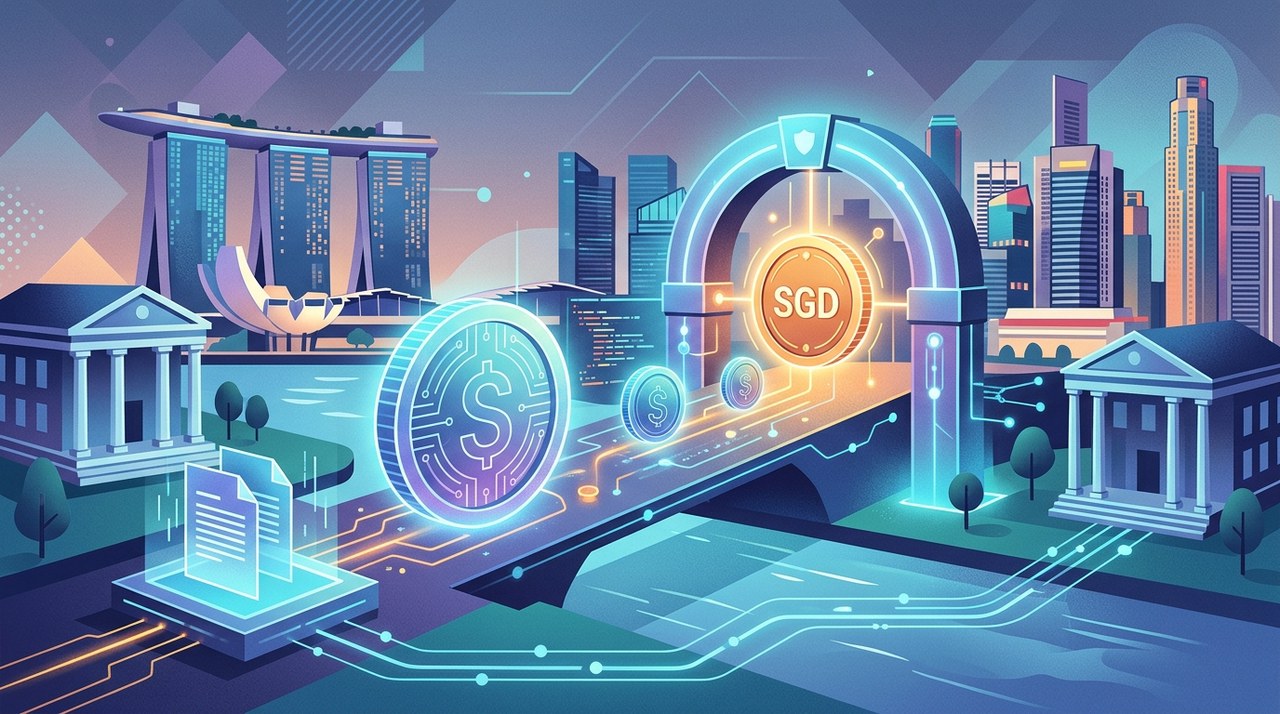
Singapore Settles $77.5M Tokenized Bill via CBDC
Singapore's central bank has processed a $77.5 million tokenized bill settlement using local central bank digital currency, aiming for wider testing by 2027.
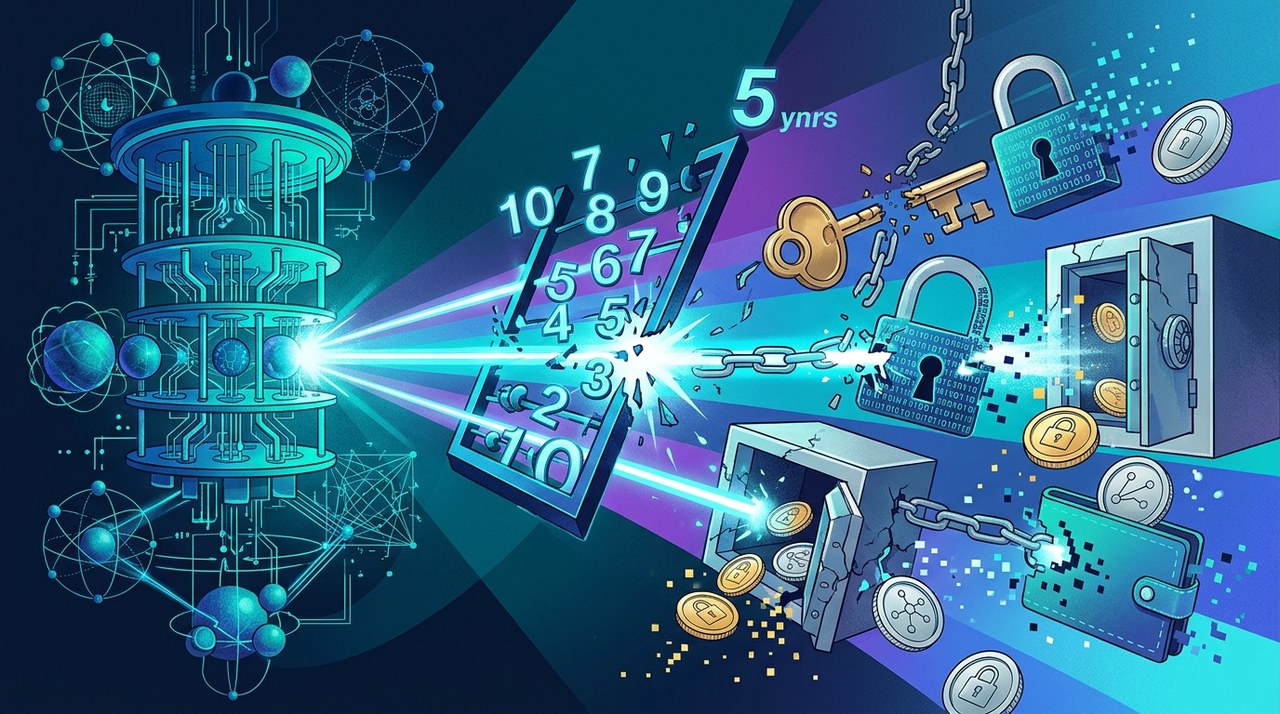

Quantum Computers Could Threaten Financial Security in 5 Years
Financial regulators warn that banks and blockchains face a complex security upgrade before quantum computers can break standard encryption.
|