

Yellow Token Launch Triggers Backlash in XRP Community
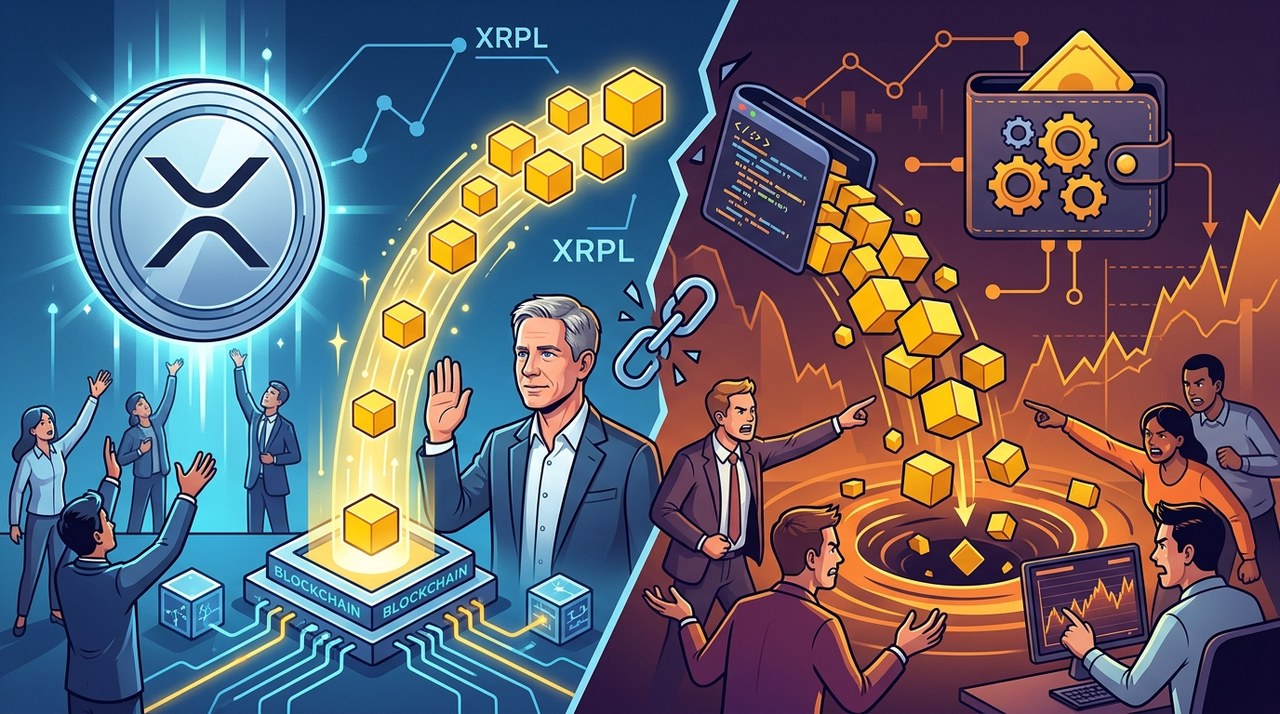
A Promising Start Turns into Community Controversy
Launching a new crypto token is rarely a smooth ride. However, the recent launch of a project called Yellow has sparked a particularly heated debate within the digital asset space. The project recently debuted its native token on two major networks: EthereumETH+1.41% and the XRP Ledger (XRPL).
What makes this launch notable is the big name standing behind it. Yellow previously secured a $10 million personal investment from Chris Larsen, the co-founder of RippleXRP-0.44%. Despite this high-profile backing, the initial trading day was quickly overshadowed by on-chain transaction data that left many retail traders feeling burned.
Shortly after trading went live, members of the XRP community noticed large token sales coming directly from a wallet linked to the development team. The sales triggered an immediate wave of skepticism, raising classic questions about developer behavior, market transparency, and investor protection during token launches.
Who is Behind Yellow and What Does the Project Do?
To understand why this situation caused such a stir, it helps to look at what Yellow is actually building. Yellow is a startup focused on creating clearing solutions designed for artificial intelligence (AI) agents. The idea is to enable automated AI systems to settle financial transactions quickly and efficiently on the blockchain.
Because AI and decentralized finance are two of the most talked-about tech sectors right now, the project naturally attracted significant interest. When Chris Larsen provided $10 million in personal funding, it gave the team strong institutional credibility, especially among supporters of the broader Ripple ecosystem.
However, backing from a prominent figure does not grant immunity from community scrutiny. When trading opened, the real-world execution of the launch quickly took center stage over the project's long-term vision.
The Multi-Chain Launch Dilemma
Yellow decided to roll out its token across two different networks at the same time: Ethereum and the XRP Ledger. While expanding to multiple blockchains can widen a token's audience, it also introduces technical complications if the ecosystems are not seamlessly connected.
In this case, there was no direct cross-chain bridge active between Ethereum and XRPL at launch. A crypto bridge functions like a highway connecting two isolated islands. Without a functioning bridge, tokens cannot automatically flow back and forth between networks to keep prices identical.
Because demand on the XRP Ledger side spiked right after launch, the token's price on XRPL jumped significantly higher than its price on Ethereum. This created a large price gap between the two markets, setting the stage for the controversial events that followed.
The 20,000 XRP Sale That Sparked Outrage
As traders eagerly bought into the launch on the XRP Ledger, blockchain sleuths noticed something suspicious. A developer-linked wallet began selling off tokens directly into the market, offloading an amount worth roughly 20,000 XRP almost instantly.
For early buyers, seeing team-controlled wallets dump tokens right after launch felt like a betrayal. Retail investors who bought at elevated prices watched the market absorb heavy selling pressure from the very team behind the project.
The Team's Defense: 'It Was Just Arbitrage'
In response to growing anger, Burak Cem, a representative from the Yellow project, stepped in to explain the team's actions in private community chats. According to Cem, the transactions were not intended to cash out at the expense of users.
Instead, he stated that the team was performing 'team wallet arbitraging.' The goal, according to the team, was to sell tokens on the overpriced XRPL market to bring the price down to match Ethereum, thereby aligning the token's exchange rates across both ecosystems.
The Counterargument: Can You Arbitrage Without a Bridge?
The team's explanation did not convince ecosystem veterans. Kaj Leroy, a prominent developer within the XRP Ledger community, publicly challenged the startup's reasoning.
Leroy pointed out that true arbitrage typically requires moving assets back and forth between markets to balance supply and demand. Without an operational cross-chain bridge, conducting functional arbitrage trades isn't technically straightforward. Critics argued that selling tokens into a high-demand market without bringing liquidity back in is essentially 'liquidity extraction'—taking funds out of retail hands on day one.
@Jc Rivera @xrplto because they dumped 20k xrp worth on their holders like instantly and said its for arbitrage? onboarding people to extract this obviously is not the way bro
The Broader Debate: Skepticism vs. Safety on XRPL
This incident ignited a wider conversation about how new projects launch within the XRP ecosystem. The drama unfolded alongside a social media debate started by influencer JC Rivera, who had previously chided XRP community members for being overly suspicious of incoming startups.
Critics like Kaj Leroy countered that caution is necessary. On-chain transparency allows the community to verify whether external teams are genuinely building useful tools or simply leveraging 'onboarding' marketing hype to take quick profits from local holders.
- Community Concerns: Developer wallets dumping tokens early can ruin retail trust and suppress price growth.
- Startup Challenges: Managing dual-chain token launches without unified liquidity is technically difficult.
- On-Chain Verification: Blockchain ledgers make every team transaction public, allowing users to hold projects accountable.
Key Takeaways for Everyday Crypto Viewers
Situations like the Yellow launch offer valuable lessons for anyone navigating decentralized markets. Here are three major takeaways to keep in mind:
- Prominent Backers Don't Guarantee Smooth Launches: Even if a project receives millions from industry leaders, early market dynamics can still be volatile.
- Watch Out for Multi-Chain Price Differences: When a token trades on two networks without a direct bridge, prices can diverge drastically. Buying on the higher-priced network carries elevated short-term risk.
- On-Chain Data Tells the Real Story: Marketing claims can easily be tested by checking wallet activities directly on public block explorers.
What Lies Ahead for Yellow?
As of now, the Yellow team has not released further detailed public statements regarding the 20,000 XRP sale beyond their initial chat explanations. Community trust in the startup remains under notable pressure as users wait to see how the team handles future tokenomics and product milestones.
Navigating crypto trading requires constant attention to market volatility and technical setups. Remember that past performance of digital assets is not an indication of future performance. For real-time updates and historical market data, you can check exchange records at bitkub.com/th/market/XRP.
Latest blog posts

Bitcoin Holds Steady as Midterm Election Results Are Priced In
Bitcoin remained stable following the U.S. Midterm elections as market experts noted political outcomes were already factored into asset prices.
|

What Democratic Control Means for Bitcoin and Crypto
Democrats won control of the US Congress in the midterm elections. Here is a clear breakdown of 7 key ways this political shift could shape crypto regulation, market sentiment, and industry oversight.
|

Schroders Brings $1.1 Trillion Fund Strategy to Solana
Global asset manager Schroders is tokenizing an actively managed emerging market bond strategy on the Solana blockchain through Centrifuge.
|