
World Liberty Financial Plans Token Buyback After 66% Drop
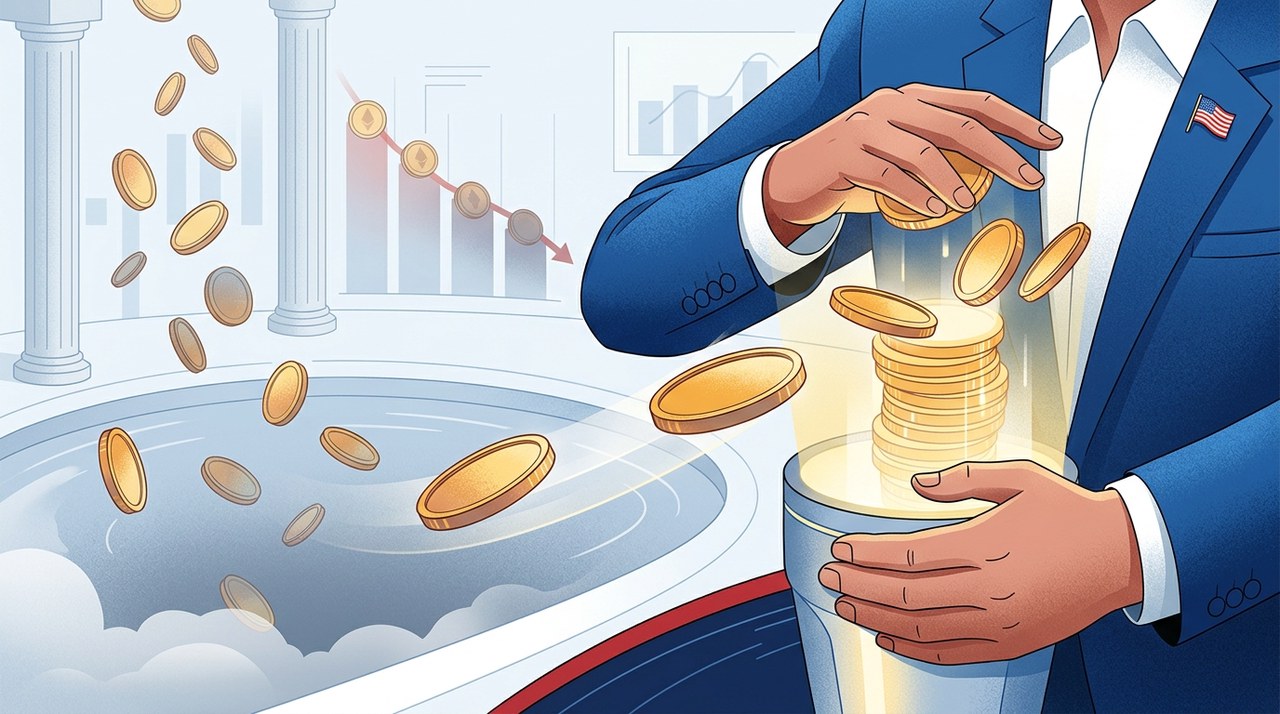
What Is World Liberty FinancialWLFI-4.11% Planning?
Imagine a traditional company buying back its own stock to show confidence and support its ecosystem. That is very similar to what World Liberty Financial is attempting to do in the cryptocurrency space.
The crypto venture, which is backed by former U.S. President Donald Trump and his family, announced plans to initiate a token buyback program.
This strategic move comes after a steep 66% year-to-date decline in the market value of its native governance token, WLFI.
The team aims to purchase WLFI tokens directly from the open market. By doing so, they hope to bolster protocol governance and strengthen their broader financial ecosystem.
The Background Behind World Liberty Financial and WLFI
World Liberty Financial made headlines when it officially launched as a high-profile decentralized finance initiative with political backing.
Promoted heavily by members of the Trump family, the platform promised to make decentralized lending and borrowing more accessible to mainstream users.
However, like many new digital assets, the WLFI token faced significant market pressure following its initial launch.
The token experienced a 66% drop year-to-date, reflecting changing investor sentiment and broader crypto market volatility.
Past performance of digital assets is not an indicator of future results.
To address this downward trend, project leaders are turning to capital allocation strategies common in traditional financial markets.
How Will the Token Buyback Be Funded?
Funding a token repurchase program requires a consistent source of incoming revenue.
Rather than issuing new tokens or taking on debt, World Liberty Financial plans to use cash flow generated from its own product line.
Specifically, the project intends to utilize revenue earned from the reserves that back its proprietary stablecoin, known as USD1.
Stablecoins like USD1 rely on cash, bank deposits, and short-term government debt instruments to maintain their 1-to-1 peg with the U.S. dollar.
These underlying reserve assets accumulate regular yield and management fees for the stablecoin issuer.
World Liberty Financial plans to capture these stablecoin reserve fees and channel them into open-market purchases of WLFI tokens.
Understanding Token Repurchases in Crypto
If you are new to crypto, token buybacks might sound like a complex technical term. In practice, the core concept is quite straightforward.
When a project buys its own tokens back from public markets, it reduces the amount of circulating supply available for trading.
Here is how a typical token buyback mechanism functions in web3 ecosystems:
- Revenue Collection: The protocol earns operational fees from its products, such as stablecoin reserve interest.
- Market Execution: The project team converts those earnings to buy native tokens from decentralized or centralized exchanges.
- Treasury Allocation or Burning: Repurchased tokens are placed into the project treasury, used for ecosystem rewards, or removed from circulation permanently.
While token buybacks can reduce circulating supply, asset prices remain subject to overall market sentiment, liquidity, and macroeconomic factors.
Why Is Protocol Governance a Major Focus?
The official statement from World Liberty Financial highlights a clear purpose for the buyback: boosting protocol governance.
In decentralized platforms, holding governance tokens gives community members voting rights on crucial protocol decisions.
Key decisions controlled by token holders typically include:
- Adjusting transaction fee models across the platform.
- Adding support for new digital collateral assets.
- Allocating project treasury funds toward future software development.
- Updating smart contract parameters to enhance security.
By acquiring tokens for the treasury, the team can reallocate voting power to active governance participants or fund future ecosystem grants.
However, acquiring tokens does not automatically guarantee higher voting activity or long-term community engagement.
How Stablecoin Reserves Generate Revenue
To fully understand this announcement, it helps to examine how stablecoin reserve models generate profits.
When users convert fiat dollars into USD1 stablecoins, the project must hold equal value in secure financial reserves.
Issuers generally invest a significant portion of these reserves into low-risk assets like short-term U.S. Treasury bills.
In modern high-interest-rate environments, short-term government bonds generate consistent annualized yields.
For successful stablecoin operators, this yield creates a powerful income engine that can support ongoing operations and ecosystem expansion.
Risks and Considerations for Market Observers
While buybacks are often viewed as positive signals by project supporters, market participants should stay mindful of potential risks.
First, the buyback plan relies heavily on the success and adoption of the USD1 stablecoin.
If total demand for USD1 contracts, the reserves will shrink, leading to lower interest earnings and smaller buyback budgets.
Second, projects connected to high-profile political leaders attract elevated scrutiny from financial regulators globally.
Regulatory adjustments regarding stablecoin yield models or token distribution could alter the execution of buyback programs.
Finally, token buybacks do not eliminate underlying market risks or guarantee price stability in bearish environments.
What Comes Next for World Liberty Financial?
Market participants will be tracking on-chain updates to verify when and how World Liberty Financial carries out its token purchases.
Key elements to monitor over the coming months include:
- The total circulating supply and market capitalization of the USD1 stablecoin.
- Transparent reports showing reserve composition and interest revenues.
- Official treasury updates detailing repurchased WLFI token quantities.
- Governance proposals submitted by token holders regarding treasury use.
By reviewing verifiable metrics and staying informed on market fundamentals, crypto observers can better evaluate project developments objectively.
Latest blog posts



Base Targets 2027 Quantum Security with Everest Upgrade
Base creator Jesse Pollak announced that the upcoming Everest upgrade will prepare crypto wallets for future quantum threats, alongside ongoing ecosystem updates.
|
Jensen Huang Returns as Nvidia CEO Triggering Viral Memes
Nvidia has reinstated founder Jensen Huang as CEO following 12 days of corporate drama, driving a 35% stock rally and inspiring viral social media memes.
Solo Bitcoin Miner Scores $191,000 Reward Against Long Odds
A solo Bitcoin miner defied immense odds by independently solving a network block, earning a total payout of approximately $191,000.
|