


Why Circle Can’t Freeze the $6.45 Million Stolen From a Crypto Wallet
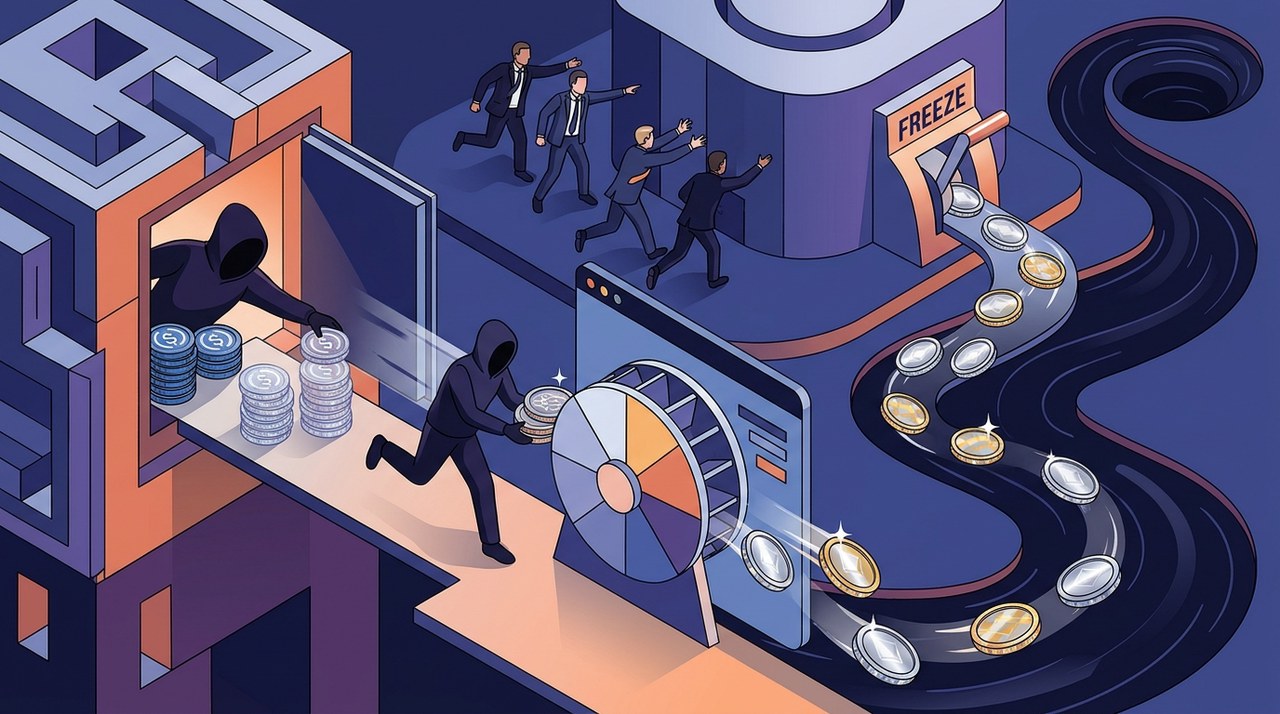
A $6.45 Million Crypto Drain: What Just Happened?
An attacker successfully drained roughly $6.45 million from a shared cryptocurrency wallet on Monday. The intruder quickly converted most of the funds into assets that stablecoin issuer Circle cannot freeze.
On-chain analyst Specter first flagged the suspicious transactions on Telegram. Blockchain security firm PeckShield later amplified the report to warn the wider community.
According to Specter, the total stolen assets included about $4.3 million in USD Coin (USDCUSDC-0.03%) and $1.7 million in syrupUSDC.
Understanding the Assets: What is syrupUSDC?
To understand the scope of the attack, it helps to look at the specific tokens involved in the vault.
While USDC is the well-known dollar-backed stablecoin issued by Circle, syrupUSDC is an interest-earning token. It is issued by institutional lending protocol Maple FinanceSYRUP-3.25% to represent yield-bearing dollar deposits.
Both tokens were held inside the victim wallet before the attacker gained unauthorized control and initiated payouts.
How Did the Attacker Access the Funds?
The targeted wallet was built on Safe, a popular platform for managing shared crypto treasuries through multiple approvals.
Standard Safe wallets require multiple signers to approve any outgoing transaction. However, this particular setup also used an add-on module called Zodiac Roles.
Zodiac Roles allows designated accounts to execute specific actions within custom limits without needing full multisig approval each time. Specter reported that the attacker exploited these pre-configured permissions to withdraw the funds.
The Escape Route: Swapping to ETH and Monero
Once the assets left the Safe wallet, the attacker acted rapidly to prevent recovery efforts.
Etherscan blockchain records show the receiving wallet swapped the stolen USDC into Ether (ETH) in less than an hour.
After converting to EthereumETH+0.22%, the attacker moved a significant portion of the loot into privacy-focused coins:
- Wagyu Swap: Analyst Specter noted that $1.2 million was routed into Monero (XMR) through Wagyu, a non-custodial swap service that does not require identity verification documents.
- HyperliquidHYPE+2.69% Execution: PeckShield reported that approximately $813,000 of Monero was acquired via Hyperliquid, the trading venue through which Wagyu routes orders.
Monero uses specialized cryptographic techniques to hide transaction senders, receivers, and amounts. This makes tracking swapped funds far more challenging for investigators.
Why Circle Can’t Freeze the Stolen Millions
Centralized stablecoin issuers like Circle maintain smart contract function mechanisms that allow them to blacklist specific wallet addresses.
When an address is blacklisted, any USDC held in that account becomes permanently frozen and unusable.
However, this control applies exclusively to USDC itself. Circle has no technical capability or authority to block decentralized native assets like Ether or privacy tokens like Monero.
Because the attacker converted the majority of the stolen USDC into ETH and Monero almost immediately, Circle's blacklist mechanisms were bypassed.
What Funds Remain Within Circle’s Reach?
Not all of the stolen value was converted immediately before security monitoring took notice.
Etherscan data confirmed that one flagged address linked to the incident still held approximately $236,000 in USDC as of Monday afternoon UTC.
Because those funds remain in native USDC form, they remain subject to potential asset freezing action by Circle.
The Industry Debate Over Asset Freezing Controls
The incident highlights an ongoing discussion across the cryptocurrency industry regarding stablecoin compliance features and decentralized sovereignty.
Circle CEO Jeremy Allaire recently argued that built-in freeze-and-seize tools give regulated stablecoins a distinct operational safety advantage over traditional bank wire networks.
Demonstrating that capability, Circle previously froze over $1.1 billion in USDC following the major Binance security incident on October 29.
Meanwhile, Custodia Bank CEO Caitlin Long expects regulators in the United States to increasingly demand standardized, mandatory freeze compliance rules for all dollar-backed stablecoin issuers.
Was Safe’s Underlying Smart Contract Compromised?
Analyst Specter did not state whether a core smart contract software vulnerability was directly exploited in this incident.
Zodiac modules are developed by third parties as extensions for Safe treasuries. Safe previously clarified that its core multisig smart contracts remained unaffected during an earlier Zodiac-related vulnerability.
In June, a separate Zodiac contract flaw permitted unauthorized actors to drain approximately $1.5 million from GnosisGNO+23.58% Pay users.
The identity of the owner of the affected treasury wallet has not yet been publicly disclosed. Industry analysts continue to monitor whether Circle will freeze the remaining $236,000 in USDC and whether the victim will issue a public statement.
Key Considerations for Digital Asset Security
This security event provides critical insights for treasury managers and digital asset investors alike:
- Permission Granularity: Granting broad execution rights through third-party modules can bypass traditional multisig protections if key permissions are compromised.
- Asset Architecture Differences: Centralized tokens carry blacklist controls, whereas native blockchain protocol assets operate without centralized intervention mechanisms.
- Speed of On-Chain Conversions: Automated decentralized exchanges enable rapid asset swaps, reducing the timeframe available for intervention by token issuers.
Past performance of digital assets or security frameworks is not indicative of future results. Digital asset markets involve operational risks and price volatility.
Latest blog posts


3 Altcoins to Watch in the Final Week of November 2026
Bitway, Pieverse, and Pearl recorded notable gains over the past week despite broader market uncertainty. Here is an analysis of their chart patterns, key technical levels, and upcoming market events.
|

 +2
Tom Lee Explains Bullish Ethereum Case and Hard Money Thesis
BitMine Chairman Tom Lee explains why Ethereum's slow supply growth places it alongside Bitcoin as hard money, even as crypto markets face volatility.
|
Ethereum Foundation Doubles Protocol Security Team for Upgrades
The Ethereum Foundation is expanding its protocol security team to handle upcoming network overhauls that carry higher technical complexity than the Merge.
|