
What is MyShell (SHELL)?
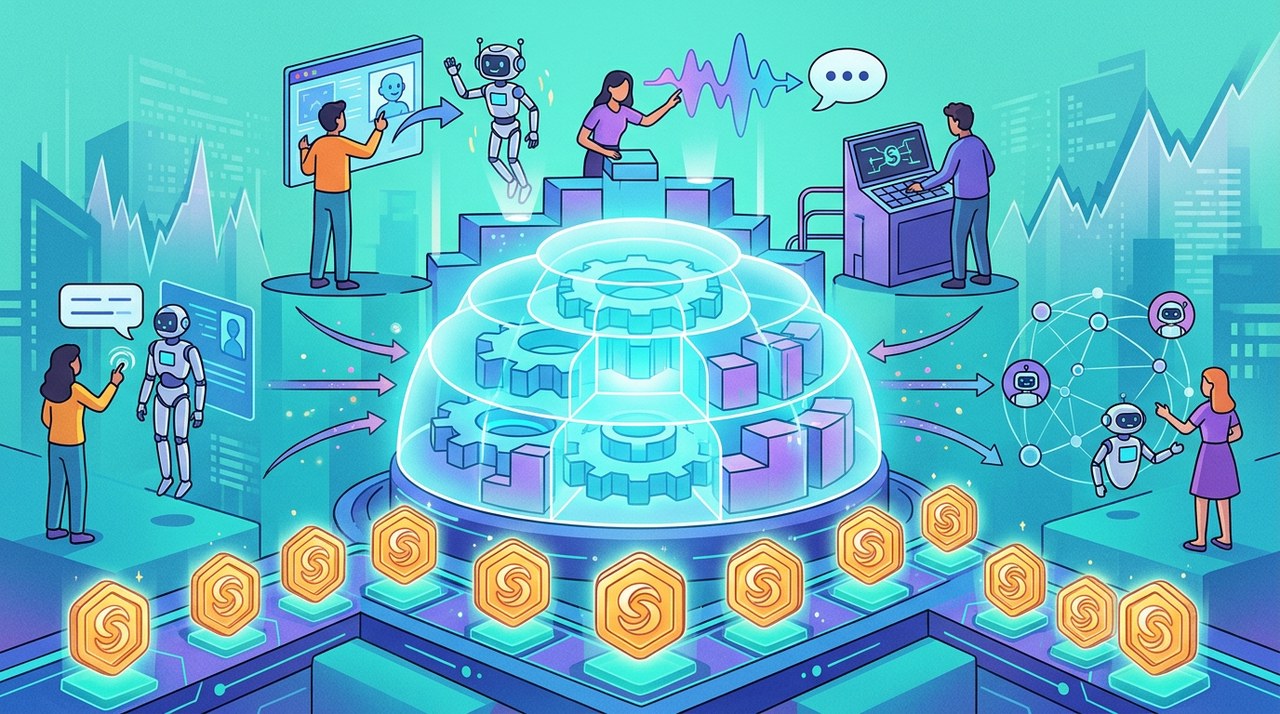
- MyShell is a decentralized AI consumer layer enabling creators to build, share, and monetize modular AI agents and multimodal models.
- Powered by proprietary open-source models like OpenVoice and MeloTTS, MyShell offers an intuitive no-code ecosystem backed by ShellOS.
- The native SHELL token fuels platform governance, creator payouts, compute access, and prompt engineering reward incentives.
- Investors should weigh MyShell's technological innovation against broader crypto market volatility and competition in the AI sector.
1. Introduction - What is MyShell (SHELL)?
MyShell is a pioneering decentralized ecosystem designed to democratize the creation, deployment, and monetization of Artificial Intelligence (AI) applications. Operating at the intersection of Web3 and artificial intelligence, MyShell functions as a consumer-focused AI layer that allows developers, creators, and everyday users to build customizable interactive AI agents—ranging from conversational chatbots and voice synthesis modules to complex automated workflows.
Traditional AI development has historically been dominated by centralized tech conglomerates that retain control over model architecture, proprietary user data, and revenue streams. MyShell challenges this centralized paradigm by introducing an open-source, community-governed platform where creators retain ownership of their intellectual property, receive transparent compensation, and access powerful AI tools without requiring deep software engineering expertise.
At the core of this decentralized ecosystem is the SHELL token. As the native utility and governance token of MyShell, SHELL facilitates value exchange between AI creators, node operators, consumers, and liquidity providers. By aligning incentives across all network participants, MyShell creates a sustainable ecosystem where high-quality AI models and applications are continuously developed, tested, and commercialized.
2. History and Background
MyShell was founded in 2023 by a global collective of AI researchers, blockchain architects, and seasoned tech entrepreneurs. The founding team recognized two critical bottlenecks in the rapidly expanding AI landscape: the centralized lock-in of advanced machine learning models and the lack of viable monetization avenues for independent AI prompt engineers and model fine-tuners.
To address these industry challenges, the team launched MyShell with an initial focus on hyper-realistic voice synthesis and modular chatbot development. Shortly after launch, MyShell gained significant traction by releasing landmark open-source models, including OpenVoice—an instant voice-cloning algorithm—and MeloTTS, a high-performance multilingual text-to-speech engine. These breakthroughs established MyShell not merely as an application host, but as a premier open-source AI research lab.
The platform's rapid technological innovation attracted substantial venture capital backing. MyShell raised capital across seed and strategic funding rounds from top-tier digital asset investors, including Dragonfly, HashKey Capital, Binance Labs, Nominal Crypto, and Delphi Digital. This institutional backing accelerated the expansion of MyShell's underlying infrastructure, culminating in the deployment of ShellOS—an advanced orchestration layer for multimodal AI applications.
3. How SHELL Works (Technical Overview)
MyShell operates through a sophisticated modular framework that seamlessly integrates decentralized compute networks, open-source model libraries, and blockchain-based tokenomics. Understanding its architecture requires exploring several key components that form the foundation of the platform.
ShellOS: The Multimodal AI Orchestration Layer
At the operational core of MyShell is ShellOS, a flexible operating system designed specifically for managing complex AI workloads. ShellOS acts as an abstraction layer that connects underlying foundational models (such as LLMs, text-to-image generators, and voice synthesis modules) into unified, interactive applications. Creators can utilize intuitive drag-and-drop interfaces or script custom logic to chain multiple AI models together, creating highly specialized virtual agents capable of complex tasks.
Open-Source Generative AI Engine
Unlike closed-source platforms, MyShell actively builds and maintains open-source state-of-the-art models. Two primary native models drive its audio intelligence:
- OpenVoice: An advanced instant voice-cloning system that requires only a brief audio sample to replicate pitch, emotion, rhythm, and accent in multiple languages.
- MeloTTS: A fast, resource-efficient text-to-speech model capable of real-time speech generation across diverse platforms, significantly reducing server hosting expenses.
Decentralized Compute & Storage Layer
Running sophisticated AI models requires substantial computational power. MyShell leverages decentralized compute networks to distribute workload requirements across global node providers. By routing inference requests to distributed GPU resources, the platform achieves cost efficiencies, prevents single-point server failures, and guarantees uninterrupted uptime for hosted bots.
Tokenomics and Smart Contract Layer
All economic transactions, creator payouts, platform subscriptions, and governance actions are processed immutably on-chain via smart contracts. When a user interacts with a premium AI agent, micro-payments are automatically executed and programmatically distributed between the bot developer, model provider, and underlying compute nodes.
4. Key Features and Use Cases
MyShell provides a broad range of functionalities tailored to developers, content creators, researchers, and consumers alike.
No-Code & Low-Code AI Agent Workshop
MyShell democratizes software creation by offering visual tools that enable anyone to design customized AI personas. Creators can configure character traits, upload proprietary knowledge bases (RAG), integrate custom voice profiles, and define automated workflows without writing a single line of traditional code.
Creator Monetization & Revenue Sharing
In conventional AI platforms, prompt engineers and bot designers rarely share in platform revenues. MyShell features a transparent revenue-sharing protocol where creators earn passive income based on user engagement, token subscriptions, and pay-per-use interactions with their published AI agents.
AI Voice Cloning and Multilingual Translation
Businesses and digital creators utilize MyShell's voice tech to localize media, generate audiobooks, create virtual avatars, and build dynamic customer service representatives capable of speaking naturally across dozens of languages.
Decentralized Governance & Curation
Holders of the SHELL token actively participate in platform governance. Token holders can vote on protocol upgrades, reward distribution formulas, feature roadmaps, and grant funding for promising third-party AI projects built within the ecosystem.
5. SHELL in the Market
The convergence of artificial intelligence and blockchain technology represents one of the most dynamic sectors in the digital asset landscape. MyShell positions itself as a core infrastructure builder within this space, offering real-world consumer utility alongside developer incentives.
From a market perspective, the value of the SHELL token is intrinsically linked to platform adoption, active user metrics, compute consumption, and overall platform revenue. As more users, developers, and enterprises adopt MyShell for their AI deployment needs, demand for utility tokens to power interactions, stake for governance, and access premium compute features naturally scales.
However, investors should evaluate the market dynamics with a balanced perspective. The decentralized AI sector is highly competitive, featuring competing Web3 initiatives as well as heavily capitalized Web2 technology giants. Digital asset prices in early-stage sectors remain subject to substantial volatility driven by technological developments, macroeconomic trends, and shifting regulatory frameworks.
Past performance of digital assets is not an indication of future performance. Investors should conduct thorough research and evaluate their risk tolerance before allocating capital.
6. How to Buy SHELL on Bitkub
Acquiring SHELL on Bitkub Exchange is a simple process designed for both beginners and experienced traders. Follow these steps to purchase SHELL securely:
- Create and Verify Account: Register for a Bitkub account via the official website or mobile application, and complete the Identity Verification (KYC) process.
- Deposit Funds: Log in to your verified account and deposit Thai Baht (THB) or supported digital assets into your Bitkub wallet.
- Navigate to Market: Access the spot trading interface and select the SHELL trading pair (e.g., SHELL/THB) on the Bitkub Market.
- Place Order: Choose between a Limit Order (setting your desired price) or a Market Order (executing instantly at current market price), enter the amount you wish to purchase, and review the transaction details.
- Confirm and Secure: Confirm the order execution. Once completed, your SHELL tokens will be safely credited to your Bitkub balance.
7. Conclusion
MyShell stands out as a pioneering platform that effectively connects decentralized blockchain infrastructure with cutting-edge consumer AI. By delivering open-source tools like OpenVoice alongside the versatile ShellOS ecosystem, MyShell empowers creators to retain digital ownership and monetize their innovations in a fair, community-driven ecosystem.
As AI integration continues to transform global industries, decentralized frameworks like MyShell offer a compelling alternative to centralized software monopolies. Whether you are an AI developer, prompt creator, or crypto enthusiast exploring the future of Web3 AI, understanding the mechanics and utility of the SHELL token provides valuable insight into this emerging tech sector.