
What is Solayer (LAYER)?
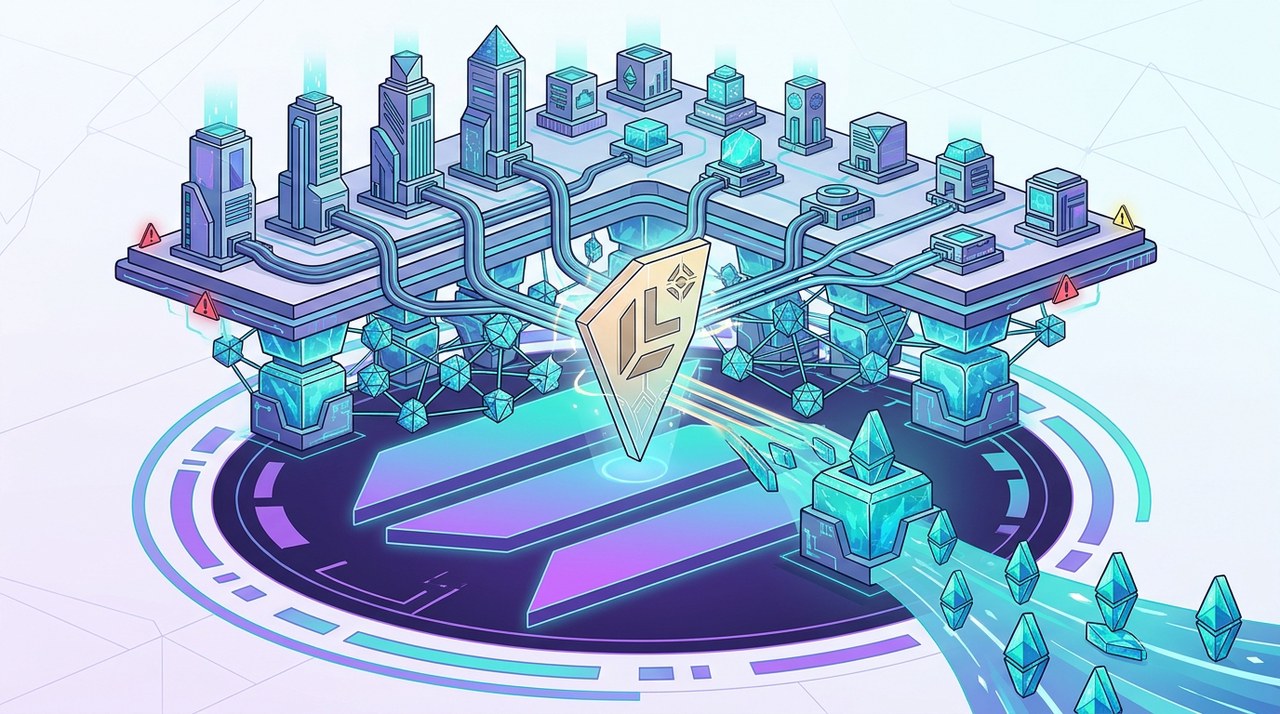
- Solayer is a hardware-accelerated restaking network and SVM execution layer built natively on the Solana blockchain.
- By utilizing Solayer, users can restake SOL and Liquid Staking Tokens (LSTs) to secure Actively Validated Services (AVSs) and customized SVM app-chains.
- The LAYER token serves key utility and governance functions, powering transaction fees, staking collateral, and protocol decision-making.
- While restaking enhances capital efficiency, participants must consider inherent risks such as smart contract vulnerabilities and slashing conditions.
1. Introduction: What is Solayer (LAYER)?
Solayer is a native restaking network and decentralized infrastructure layer built on top of the Solana blockchain. Designed to optimize capital efficiency and scale shared economic security, Solayer allows holders of SOL and Solana Liquid Staking Tokens (LSTs) to re-delegate their staked assets to secure additional decentralized services, known as Actively Validated Services (AVSs), as well as customized Solana Virtual Machine (SVM) execution layers.
In traditional proof-of-stake (PoS) blockchains like Solana, tokens deposited into network staking serve a single primary purpose: securing the base layer consensus mechanism. While validators earn rewards for maintaining consensus, the staked capital remains locked exclusively for that base chain. Solayer changes this paradigm by introducing liquid restaking mechanics natively tailored to Solana's high-throughput architecture. Through Solayer, capital that is already securing the primary Solana network can be re-leveraged to secure secondary protocols, decentralized oracles, cross-chain bridges, data availability layers, and dedicated application chains (app-chains).
The Role of the LAYER Token
At the heart of the Solayer ecosystem is the native utility and governance token, LAYER. The LAYER token fulfills multiple essential functions across the Solayer network infrastructure:
- Governance: LAYER token holders can participate in protocol governance by voting on key proposals, risk parameters, fee structures, and the onboarding of new Actively Validated Services.
- Economic Security & Staking: LAYER can be staked or restaked to provide collateral for specialized network services, aligning economic incentives between protocol operators, validators, and developers.
- Transaction and Execution Fees: LAYER functions as a fee payment mechanism for dApps utilizing Solayer's specialized execution environments and InfiniSVM rollups.
- Validator and Operator Incentives: Operators participating in Solayer's validation network receive rewards denominated in LAYER and underlying yield assets for upholding network integrity.
By combining high-speed execution with pooled economic security, Solayer aims to establish a foundational layer for developers seeking Solana-grade performance without the prohibitive costs and security challenges of bootstrapping independent validator networks from scratch.
2. History and Background of Solayer
The concept of restaking gained widespread attention in the broader blockchain ecosystem through pioneer protocols on Ethereum, such as EigenLayer. Restaking demonstrated that an established layer-1 blockchain's massive economic security could be exported to other infrastructure modules. However, adapting this model to Solana presented unique engineering challenges and opportunities, given Solana's distinct Proof-of-History (PoH) consensus mechanism, high block production speeds, and low transaction latency.
Solayer was established by a core team of distributed systems engineers, cryptography researchers, and Solana ecosystem veterans who recognized the need for a native restaking primitive engineered explicitly for Solana's architecture. Rather than simply porting EVM-based restaking designs onto Solana, the founders constructed Solayer from the ground up to capitalize on Solana's parallel processing capabilities and hardware acceleration.
Ecosystem Growth and Development Milestones
Since its inception, Solayer has progressed through critical milestone phases aimed at expanding Solana's economic security footprint:
- Protocol Architecture Design: Development of native Solana smart contracts optimized for low-latency restaking operations without impeding base-layer transaction processing speed.
- Liquid Restaking Introduction (sSOL): Launch of Solayer Liquid Staked SOL (sSOL), enabling users to deposit native SOL or LSTs (such as mSOL, bSOL, and JitoSOL) to mint sSOL, retaining liquidity while participating in multi-layered yield generation.
- Strategic Capital and Ecosystem Backing: Solayer secured backing from leading Web3 venture capital firms, Solana ecosystem funds, and prominent angel investors, providing financial resources and strategic partnerships across decentralized finance (DeFi) and infrastructure.
- Hardware Acceleration and InfiniSVM: Integration of dedicated execution environments and hardware acceleration frameworks, paving the way for scalable SVM rollups backed by Solayer restakers.
As Solana's ecosystem continues to expand into high-frequency trading, real-world assets (RWA), and decentralized physical infrastructure networks (DePIN), Solayer's background underscores a dedicated effort to ensure infrastructure security scales in parallel with user demand.
3. How Solayer Works: Technical Architecture Explained
To understand how Solayer operates, it is helpful to break down its architecture into core components: Native Restaking, sSOL Liquid Restaking, Actively Validated Services (AVSs), and Hardware-Accelerated SVM Execution.
Native Restaking vs. Liquid Restaking
Solayer provides two main pathways for capital allocation: Native SOL Restaking and Liquid Restaking. Under Native Restaking, users delegate their staked SOL directly to native validators on Solana while configuring execution pointers to Solayer's restaking contracts. This allows native validators to opt into securing external services while continuing their standard validator responsibilities on Solana.
For liquid staking participants, Solayer issues sSOL (Solayer Liquid Staked SOL). When a user deposits SOL or supported Liquid Staking Tokens (such as JitoSOL or mSOL) into Solayer's smart contracts, the protocol issues sSOL in return. sSOL represents the underlying capital plus accrued interest from standard Solana staking rewards and additional restaking rewards. Crucially, sSOL remains fully transferable and usable across supported DeFi protocols, allowing liquidity to remain active in trading, lending, and yield farming.
Actively Validated Services (AVSs)
Actively Validated Services (AVSs) represent off-chain or specialized on-chain modules that require decentralized trust and verification mechanisms. Examples of AVSs include:
- Decentralized Oracles: Data feed networks requiring trustworthy, tamper-proof reporting from distributed node operators.
- Cross-Chain Bridges: Interoperability protocols that verify state transitions across distinct blockchain networks.
- Data Availability (DA) Layers: Infrastructure protocols providing verifiable data storage for layer-2 rollups and application chains.
- Specialized Sequencers: Order-matching and execution engines for decentralized exchanges requiring deterministic execution guarantees.
Instead of issuing their own volatile utility tokens to recruit validators, AVSs can rent economic security from Solayer by paying restaking fees to sSOL holders and validators. This reduces the security bootstrapping cost for developers while offering restakers additional income streams.
InfiniSVM and Hardware Acceleration
A key technological innovation introduced by Solayer is its focus on hardware-accelerated SVM rollups and InfiniSVM. Solana's high performance relies on hardware optimization, including multithreading and GPU-accelerated signature verification. Solayer extends this philosophy to secondary execution layers.
InfiniSVM provides dedicated network bandwidth and processing capacity to high-demand dApps. By decoupling high-throughput execution tasks from the main Solana state while keeping consensus settlement tethered to Solana through Solayer restaking, dApps can eliminate network congestion issues without sacrificing security.
Slashing Mechanics and Security Safeguards
Shared security models inherently introduce multi-layered risks. To ensure node operators act honestly, Solayer implements automated and governance-enforced slashing conditions. If an operator validating an AVS attempts malicious activity (such as double-signing or manipulating state assertions), a portion of their restaked collateral (including delegated sSOL) is slashed and redistributed or burned according to pre-defined smart contract rules.
4. Key Features and Use Cases of LAYER and Solayer
Solayer offers a versatile suite of features designed to serve retail investors, institutional delegators, dApp developers, and infrastructure operators.
Key Features of Solayer
- Multi-Asset Restaking Support: Solayer accepts native SOL along with major liquid staking derivatives, aggregating security across Solana's diverse liquid staking landscape.
- Capital Efficiency Optimization: Users earn baseline Solana yield, liquid staking rewards, and AVS restaking yields simultaneously, maximizing the utility of locked assets.
- SVM Application-Specific Chains: Developers can launch custom SVM execution layers backed by shared economic security, tailored for game-fi, order-book DEXs, or high-speed payments.
- Flexible Restaking Delegation: Token holders can choose specific AVS modules to back based on their individual risk appetite and expected reward ratios.
- Hardware-Optimized Execution: Integration with accelerated hardware clusters ensures deterministic transaction ordering and sub-second execution speeds.
Primary Use Cases
- For SOL & LST Holders: Investors seeking passive income can restake their holdings via Solayer, receiving sSOL to remain liquid in DeFi while earning compound yield.
- For Web3 Infrastructure Developers: Teams building bridges, oracle networks, or DA layers can launch immediately by renting Solayer's pooled security rather than spending years building a standalone validator set.
- For High-Throughput dApps: Applications requiring custom execution environments can deploy InfiniSVM instances with customized gas parameters and prioritized network bandwidth.
- For Governance Participants: Holders of the LAYER token can actively vote on network parameters, slashed asset recovery procedures, fee splits, and new feature implementations.
5. LAYER in the Crypto Market: Metrics, Performance, and Risk Considerations
Within the broader cryptocurrency market, restaking protocols represent one of the fastest-growing sectors in decentralized finance. On Ethereum, restaking attracted tens of billions of dollars in Total Value Locked (TVL). Solayer aims to lead this evolution on Solana by capturing significant market share in liquid restaking and SVM infrastructure execution.
As Solayer integrates more AVS modules and attracts decentralized application partners, the TVL within its restaking vaults serves as a primary metric for protocol health and market adoption. Increased TVL enhances the overall security budget offered to participating AVS networks, which in turn can drive greater demand for LAYER token utility and delegation.
Market Risks and Regulatory Disclaimers
While restaking provides novel yield opportunities and enhanced capital efficiency, potential participants must carefully evaluate the unique risks associated with complex DeFi primitives:
- Smart Contract Vulnerability Risk: Restaking protocols rely on nested smart contract interactions. Bugs or logic errors in Solayer's smart contracts could lead to loss of funds.
- Slashing and Malicious Operator Risk: If a node operator to whom capital is delegated commits a consensus fault on an AVS, restaked assets could be partially slashed.
- Liquid Restaking Depeg Risk: Liquid derivatives such as sSOL rely on secondary market liquidity. During severe market volatility, sSOL could experience price divergence (depegging) relative to native SOL.
- Market Volatility and Regulatory Uncertainty: The market price of LAYER and underlying digital assets is subject to high price fluctuations driven by global market conditions, liquidity shifts, and evolving regulatory frameworks.
Past performance of digital assets or past performance is not a guarantee of future returns or future performance. Historical yields, TVL growth, or price movements should not be interpreted as indicators of guaranteed future results.
Investors are advised to thoroughly assess their risk tolerance and perform independent due diligence before delegating assets or purchasing digital tokens. For real-time price charts, market depth, and order book status, visit bitkub.com/th/market/LAYER.
6. How to Buy LAYER on Bitkub
For users in Thailand looking to acquire LAYER tokens through a secure, SEC-regulated digital asset exchange, Bitkub provides a user-friendly platform for fiat-to-crypto and crypto-to-crypto spot trading.
- Step 1: Create and Verify Your Bitkub Account: Visit the official Bitkub website or download the Bitkub mobile application. Register for an account and complete the mandatory identity verification (KYC) process, including submitting ID documentation and completing suitability tests.
- Step 2: Deposit Thai Baht (THB): Navigate to the Wallet balance section, select Thai Baht deposit, and choose your preferred payment method (such as instant QR payment or bank transfer). Follow the on-screen instructions to fund your Bitkub fiat balance.
- Step 3: Locate the LAYER Market: Go to the Market or Trade tab on Bitkub. Search for LAYER or navigate to the official market page at bitkub.com/th/market/LAYER to view the live order book, price chart, and trading pairs.
- Step 4: Place a Buy Order: Choose your preferred order type. A Limit Order allows you to specify the exact price at which you wish to buy LAYER, whereas a Market Order executes immediately at the best available market price.
- Step 5: Secure Your Tokens: Once your buy order is executed, your LAYER tokens will appear in your Bitkub Wallet. You can safely hold them on the platform or transfer them to a compatible self-custody wallet for on-chain interactions on the Solana network.
Always verify platform security settings, enable Two-Factor Authentication (2FA), and double-check wallet addresses before initiating any transaction.
7. Conclusion
Solayer represents a major step forward in the evolution of Solana's economic security and infrastructure capabilities. By introducing native liquid restaking and hardware-accelerated SVM execution layers, Solayer addresses key challenges faced by growing Web3 ecosystems: capital lockup, security fragmentation, and application scalability.
Through the utility of the LAYER token and the flexibility of sSOL, token holders gain access to multi-tiered yield potential while helping bootstrap the security of next-generation decentralized services, bridges, and oracles. However, as with any advanced financial technology in the Web3 space, participants must balance potential rewards against smart contract risks, slashing conditions, and market volatility. By understanding these technical mechanics and risk factors, users can make well-informed decisions when interacting with Solayer and trading LAYER on Bitkub.