
US Treasury $6B Buyback Shortfall: Impact on Bitcoin
A Weak Result in the US Government Debt Market
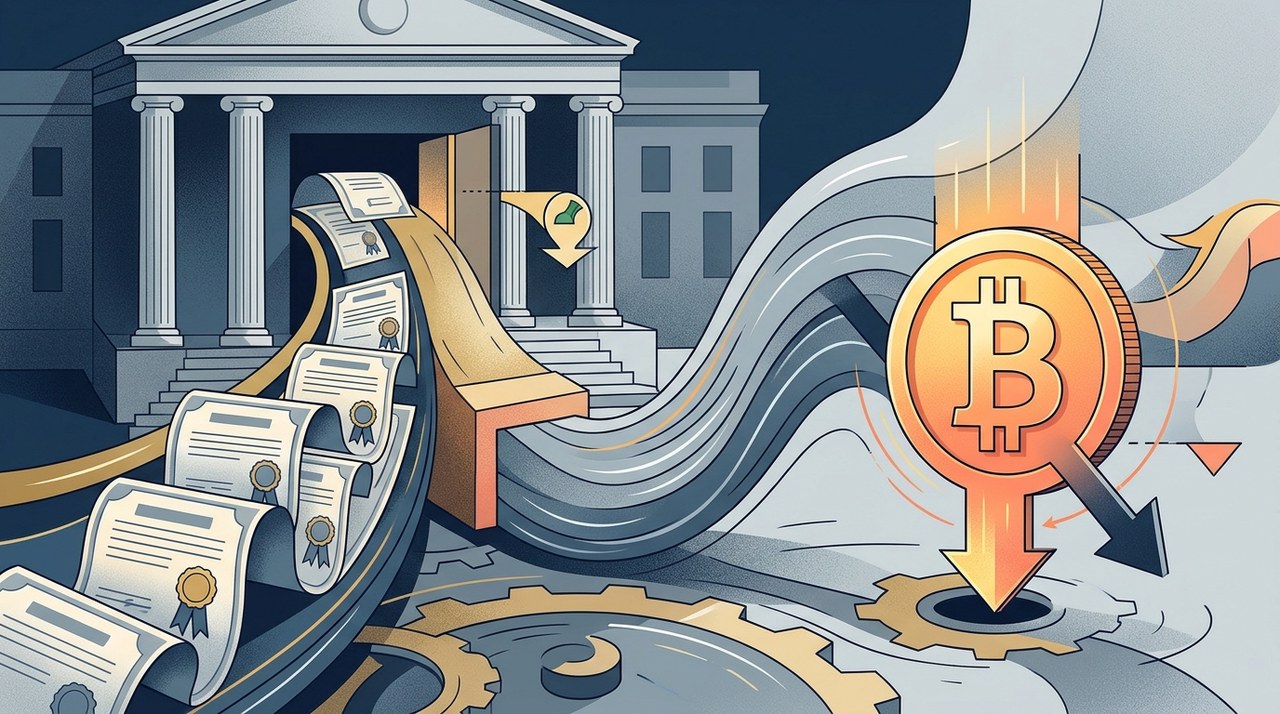
Borrowing money in the United States remains expensive, and recent efforts by the US government to smooth out trading in its debt market have delivered unexpectedly weak results.
On Tuesday, November 17, the US Treasury conducted a long-term bond buyback operation. The government offered to repurchase up to $6 billion worth of older bonds from investors. However, the final outcome fell far short of that maximum target.
While bondholders offered $4.55 billion in debt securities, the Treasury accepted just $1.18 billion. This represents the smallest buyback operation since the Treasury expanded its repurchase initiative back in September.
During the same period, the digital asset market saw downward pressure, with BitcoinBTC-0.10% pulling back toward the $62,000 mark. Naturally, investors are looking closer at how macro debt conditions might be influencing crypto prices.
Understanding the Basics: How Do US Treasury Bonds Work?
To understand why a government debt auction matters to a crypto trader, it helps to review how government borrowing works in simple terms.
When the US government needs cash to finance its operations, it sells debt securities known as Treasury bonds. You can think of a bond as an official IOU. Investors lend money to the government, and in return, the government promises to pay back the full amount on a future date while making regular interest payments along the way.
Over time, as new bonds are issued every month, older bonds become less active. Traders call these older securities 'off-the-run' bonds. Because fewer people actively trade them, buying or selling these older bonds can become difficult or illiquid.
What Is a Treasury Bond Buyback Program?
To prevent the debt market from stalling, the US Treasury uses a buyback program. In simple terms, the Treasury steps in to purchase back older, less liquid bonds directly from market participants.
By buying back older debt and issuing fresh new bonds, the government helps financial institutions trade debt more efficiently. This keeps the world's largest benchmark financial market running smoothly.
It is important to clear up a common misunderstanding: a bond buyback is not money printing. Unlike Quantitative Easing (QE) by the Federal Reserve, a Treasury buyback does not create new money out of thin air. It simply exchanges one existing asset for cash or newer securities.
Why Did the $6 Billion Buyback Fall Short?
During the November 17 operation, the Treasury set a maximum budget of $6 billion for long-term bond purchases. Here is how the numbers broke down:
- Target Cap: Up to $6 billion in long-term bond repurchases.
- Investor Offers: Bondholders offered $4.55 billion worth of bonds.
- Accepted Amount: The Treasury accepted only $1.18 billion of those offers.
Why did the Treasury accept so little? The primary reason comes down to price expectations. Investors wanted higher prices for their bonds than the Treasury was willing to pay. To protect public funds, the government chooses not to execute trades if seller prices are too high.
This gap does not mean that total demand for US debt is collapsing. However, it does highlight ongoing friction and high yield demands within the fixed-income ecosystem.
Why High Bond Yields Compete with Stocks and Bitcoin
The main headwind for riskier investments—like growth stocks and cryptocurrencies—is that US borrowing costs and bond yields remain elevated.
On Tuesday, the yield on the 30-year US Treasury bond reached 5.46%. In financial markets, a bond yield represents the return an investor earns by holding government debt.
When government bonds offer a strong yield around 5.46%, they act like a magnet for capital. Investors can earn an attractive, low-risk return from government debt. As a result, they demand much higher potential returns before taking risks on volatile assets like Bitcoin.
High bond yields also push up everyday borrowing costs. Mortgages, business loans, and credit rates become more expensive, tightening overall liquidity in the broader economy.
Connecting the Macro Picture to Bitcoin
As news of the weak buyback operation emerged, Bitcoin dropped toward $62,000. This price point reflects a decline of approximately 20% compared to its level when the Treasury first announced the buyback expansion in September.
Past performance of digital assets is not an indication of future digital asset performance.
When the expanded buyback plan was introduced in September, some market participants hoped it would improve overall financial market liquidity and support crypto prices. However, economic data shows no confirmed evidence linking Tuesday's buyback result directly to Bitcoin's price drop.
Instead, both traditional equity markets and cryptocurrencies are responding to broader macroeconomic headwinds, including elevated interest rates and persistent net outflows from spot Bitcoin ETFs.
Scenario Analysis: Potential Paths Ahead for Bitcoin
Because financial conditions constantly shift, evaluating potential macroeconomic scenarios can help investors better understand future market dynamics.
Scenario A: Declining Yields and Inflow Recovery (Positive Outlook)
If inflation continues to slow, the Federal Reserve may gradually reduce benchmark interest rates. Under these conditions, 30-year Treasury yields could fall from recent highs.
If bond yields ease and spot Bitcoin ETF flows turn positive again, reduced borrowing costs could encourage investors to seek higher returns in digital assets, supporting potential price stabilization or recovery.
Scenario B: Elevated Rates and Continued Outflows (Cautious Outlook)
If inflation remains sticky, forcing interest rates and bond yields to stay around 5.5% or higher, overall liquidity will remain tight across global markets.
Under this scenario, if institutional capital continues moving out of spot Bitcoin ETFs into safe fixed-income assets, Bitcoin could face ongoing downward price pressure or extended consolidation.
Scenario C: Rangebound Market Behavior (Neutral Outlook)
If economic indicators yield mixed signals, institutional investors may choose to hold cash or short-term debt while waiting for clearer monetary policy directions.
In this environment, Bitcoin could trade within a established sideways range around current levels until macroeconomic clarity returns.
What Key Indicators Should Investors Watch Next?
Rather than reacting to short-term headlines, market participants often keep an eye on a few core indicators to gauge broader financial health:
- US Treasury Yields: Tracking 10-year and 30-year bond yields helps show whether credit conditions are easing or tightening.
- Spot Bitcoin ETF Flows: Net daily institutional inflows or outflows offer valuable clues about large-scale investor demand.
- Future Treasury Buyback Results: Upcoming bond buyback operations will indicate whether pricing gaps in government debt are resolving.
- Federal Reserve Policy Updates: Central bank statements and interest rate guidance remain central drivers for all asset classes.
Summary and Market Disclosures
The Treasury's recent $6 billion bond buyback operation highlights ongoing pricing friction and tight credit conditions across US debt markets. While this specific event did not single-handedly cause Bitcoin's price move, high government bond yields continue to offer strong competition for investment capital.
Understanding how government debt operations intersect with broader market liquidity helps investors maintain a balanced view of digital asset trends.
Disclaimer: Digital assets involve significant risk and high price volatility. Past performance of digital assets is not an indication of future digital asset performance. This content is provided for informational and educational purposes only and does not constitute investment or financial advice.
Latest blog posts



GTA 6 Hype Triggers $200K Meme Coin Surge Amid Confusion
An unofficial meme coin tied to Grand Theft Auto 6 rumors saw dramatic price swings, turning one trader's $300 into $200,000 before ticker confusion triggered market volatility.
|

Variational Takes on Hyperliquid with Wall Street Model
Crypto startup Variational raised at a $1.5 billion valuation to build an onchain brokerage model that challenges Hyperliquid's order book dominance.
|
Bullish Q3 Profit Rises 35% as Shares Jump 10%
Crypto exchange Bullish reported a 35% rise in Q3 adjusted profit and announced a share buyback, despite a 23% dip in digital asset sales.