
US Stock Market Drops $2 Trillion as Tech Shares Fall

What Triggered the Severe Wall Street Sell-Off?
US stock markets experienced a major downturn on Thursday morning, losing roughly $2 trillion in market value within the first hour of trading. Technology and semiconductor companies led the decline as concerns grew over government regulation of AI data centers, weak smartphone demand, and rising spending costs.
The S&P 500 dropped 1.8% in the first 30 minutes of trading, wiping out the gains recorded on Wednesday. By the end of the session, the S&P 500 fell 3.5%, marking its steepest intraday decline since April 2025. Meanwhile, the tech-heavy Nasdaq slipped 5.3% into correction territory, defined as a drop of 10% or more from its recent peak. The Dow Jones Industrial Average dropped 1,000 points, while the overall semiconductor index fell 11.2%, its worst single-day drop since March 2020.
Please note that past performance of financial assets or equity markets is not a guarantee of future results.
Reason 1: Election Results Target AI Data Center Expansion
The primary catalyst behind the market movement involved political shifts in key states following Tuesday's midterm elections. Democrats won both chambers of Congress and secured governor seats in Texas, Georgia, and Ohio. All three newly elected governors campaigned on policies aimed at slowing the rapid expansion of artificial intelligence data centers.
- Texas: Governor-elect Gina Hinojosa, who defeated incumbent Greg Abbott, pledged a moratorium on new data center construction and an end to state subsidies for large developers. Texas is projected to hold nearly 30% of total US data center capacity by 2028, according to data from Bloom Energy.
- Georgia: Governor-elect Keisha Lance Bottoms announced plans for a temporary statewide pause to evaluate how data center energy consumption impacts residential electricity rates.
- Ohio: Governor-elect Amy Acton proposed blocking new projects unless developers commit to paying all associated utility infrastructure costs.
Data centers serve as the primary buyers for high-performance AI hardware produced by companies like Nvidia, AMD, and Broadcom. Policy restrictions in these key regions raised concerns among investors regarding future hardware demand.
"Tech needs to adjust and focus on a slower pace of this AI rollout," said Dan Ives, tech analyst at YorkVille Ives.
Reason 2: Qualcomm Reports a 26% Drop in Phone Chip Revenue
The second key factor came from corporate earnings. Qualcomm reported that its mobile handset chip revenue dropped 26% year-over-year to $5.14 billion, falling short of Wall Street estimates.
Higher costs for component memory chips pushed consumer smartphone prices upward. Global smartphone shipments declined 20% in the September quarter, reaching a 14-year low according to Counterpoint Research. Consequently, Qualcomm shares fell nearly 12% on Thursday, putting additional pressure on the wider semiconductor market.
"...margin outlook is lousy," noted Stacy Rasgon, senior analyst at Bernstein.
Reason 3: Growing Skepticism Over AI Infrastructure Spending
Market pressure had already been accumulating prior to Thursday. During October, the Nasdaq-100 lost approximately $2 trillion in market value as market participants questioned whether heavy spending on artificial intelligence would generate sufficient short-term revenues.
Earlier in the week, shares of Oracle and Marvell declined after both companies detailed extensive funding plans for AI expansion. Financial commentator Jim Cramer had previously identified the midterm elections as one of three potential catalysts that could prolong technology stock volatility.
"To state the obvious, it's AI's fault," said Matthew Sigel, head of digital assets research at VanEck.
Which Stocks Recorded the Largest Losses?
Semiconductor manufacturers and tech hardware firms experienced significant downward movements during early trading hours:
- AMD: Declined nearly 15%
- Micron Technology: Dropped roughly 15%
- Qualcomm: Fell almost 12%
- Tesla: Lower by about 10%
- Nvidia: Decreased between 7% and 8%
- Broadcom: Fell nearly 5%
Cybersecurity firms also recorded declines, with CrowdStrike and Palo Alto Networks each dropping approximately 9%. The selling pressure extended into international markets, where South Korea's Kospi index fell 5.3%, impacted by declines in major memory chip producers Samsung and SK Hynix.
Did the US Treasury's Liquidity Release Impact the Market?
Data from the US Treasury shows that its balance at the Federal Reserve was reduced by approximately $114 billion between October 27 and November 3. When the Treasury reduces its cash balance, it injects liquidity into commercial bank reserves.
While increased banking liquidity historically provides support for asset prices, the recent distribution did not prevent the equity market decline. A substantial portion of the funds went toward standard government obligations, including $87 billion in Medicare payments made on October 30. Treasury projections estimate its account balance will decline to $850 billion by year-end before increasing back to $1 trillion by March.
Outlook for the Tech and Crypto Sectors
Market analysts hold differing perspectives on the long-term outlook for technology infrastructure. Tom Lee, head of research at Fundstrat, characterized the drop in AI-related stocks as a short-term market reaction, noting that states may continue to seek capital investments under revised regulatory frameworks.
Qualcomm CEO Cristiano Amon offered a cautious outlook, stating that Android smartphone sales appear to have stabilized. He also provided guidance for Qualcomm's data center sales of $650 million for the upcoming quarter, exceeding consensus estimates.
Developments in traditional equity markets remain relevant for digital assets. Analysis from Deutsche Bank previously indicated that prolonged weakness in US tech stocks could impact broader market sentiment, affecting equities, foreign exchange rates, and digital assets like Bitcoin (BTCBTC-5.83%). Investors continue to monitor macroeconomic indicators, including upcoming employment data, to evaluate broader economic conditions.
Past performance of digital assets or financial markets is not indicative of future results. Investors should evaluate market conditions carefully and consider potential volatility.
Latest blog posts

US Democrats Eye Broader Crypto Market Structure Bill
Reports suggest U.S. Democrats are planning comprehensive crypto market structure legislation following midterms, as traders monitor Bitcoin price trends.
|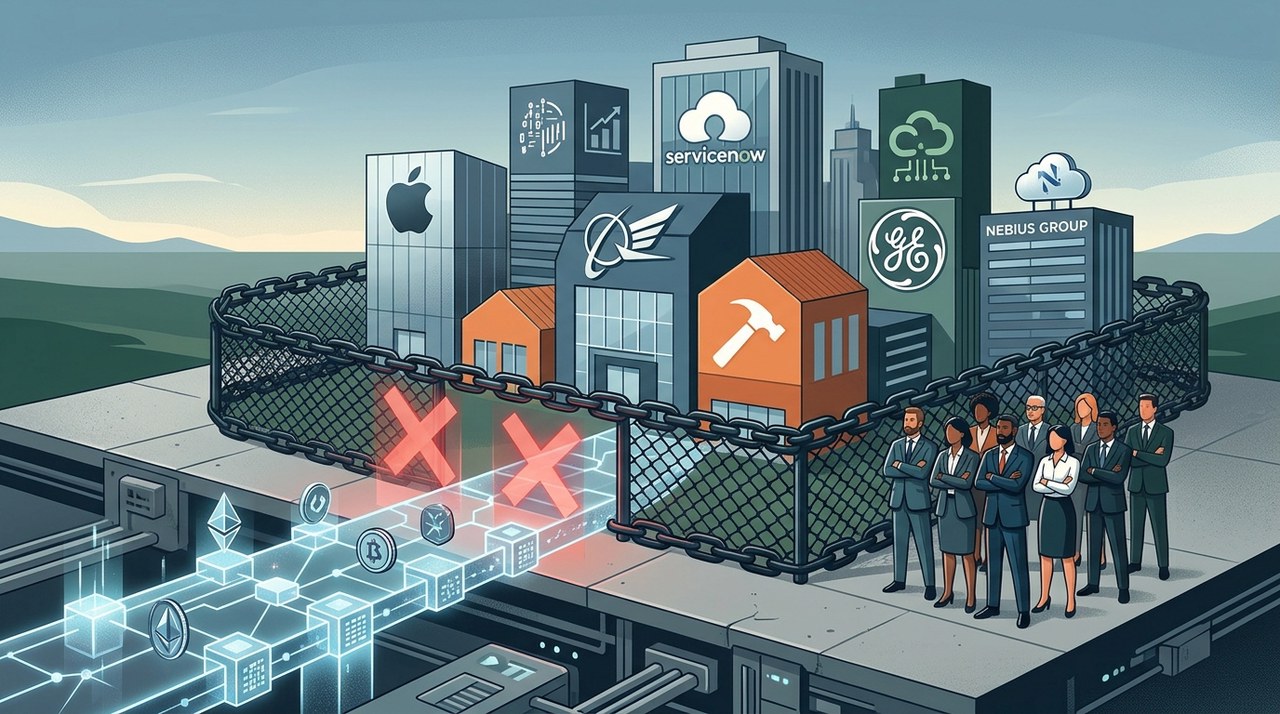

Apple and Boeing Join 60 Companies Opposing OKXICE Plan
A total of 62 companies, including Apple and Boeing, have officially objected to OKXICE's proposed tokenized stock trading platform.
|

Standard Chartered and SBI Back Crypto Insurer Soter
Crypto insurer Soter secured $23.5 million in funding alongside 500 BTC and 2,000 ETH worth $43 million.
|