US Orders Grounding of All Flights: Market Risks Explored
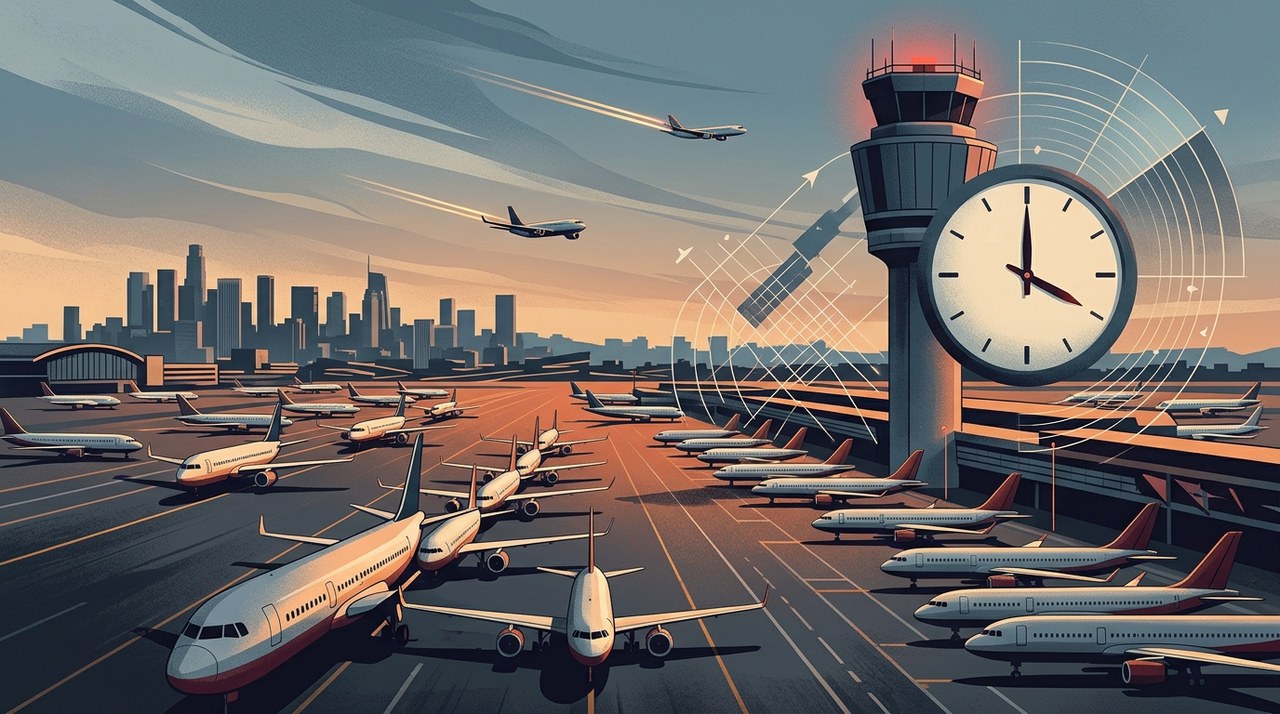
A Sudden Stop: FAA Grounds Departing Flights Nationwide
Imagine standing at a crowded airport gate on a Friday afternoon, ready to take off for the weekend. Suddenly, every departure screen flips to a halt. That exact scenario played out across the United States on Friday afternoon, November 13.
At approximately 3:54 p.m. Eastern time—just six minutes before the Wall Street closing bell—the Federal Aviation Administration (FAA) issued a historic order. The agency directed all departing aircraft across the country to remain grounded on the tarmac.
The FAA issued the nationwide grounding order citing extraordinary circumstances and for reasons of safety.
This dramatic action represents an extremely rare event in modern aviation history. A nationwide operational shutdown of this magnitude has occurred only once before since the tragic events of September 11, 2001.
While departing planes were ordered to stay on the ground, aircraft already in the air were permitted to complete their flights and land safely. Meanwhile, international flights arriving in the United States were handled on an individual, case-by-case basis.
What Caused the Unprecedented Air Traffic Shutdown?
The central issue stems from a critical technology breakdown within America's airspace infrastructure. Transportation Secretary Sean Duffy confirmed that severe communication problems impacted regional air traffic control centers.
These regional control centers are responsible for tracking and guiding aircraft safely across the country. Troubles first surfaced in Chicago, where the FAA temporarily halted air traffic shortly before expanding the grounding order nationwide.
Technical teams are actively investigating the system failure. However, the agency has not yet identified the root cause, nor has it announced an exact timeline for when normal flight departures will resume.
Are Other Technology Outages Connected?
The timing of the aviation outage has raised questions because it coincided with another major tech disturbance. A global Microsoft 365 outage, which began on Thursday, continued to disrupt services like Outlook and Teams through Friday.
Despite the coincidental timing, officials noted that there is currently no confirmed connection between Microsoft's technical issues and the FAA's system failure.
Wall Street Impact: Airline Stocks Face Heavy Pressure
The sudden flight halt arrives at a particularly vulnerable moment for airline investors. Aviation stocks were already experiencing notable declines earlier in the week, long before the FAA issued Friday's grounding order.
Here is how major airline stock prices moved during Thursday's trading session:
- United Airlines (UAL): Fell by 6.0%
- American Airlines (AAL): Dropped by 5.6%
- Delta Air Lines (DAL): Lost 5.2%
Past performance of corporate securities or digital assets is not an indicator of future results.
Broader financial markets also ended Friday's session lower. According to market data from the Associated Press, the tech-heavy Nasdaq Composite lost 0.9%, while the S&P 500 index slipped by 0.4%.
Because the FAA announcement came just six minutes before trading ended on Friday, Wall Street did not have sufficient time to price in the news during regular market hours.
What Lies Ahead for Investors and Travelers?
Investors now enter the weekend facing fresh market uncertainties. If flight cancellations linger over the weekend, major airlines could suffer substantial operational costs and severe schedule disruptions that stretch well into next week.
Market analysts view Monday morning's market opening as the first true test for airline stocks. Market reactions will largely depend on how quickly communications are restored.
If technicians quickly resolve the system failure over the weekend, flight schedules and stock sentiment may stabilize. Conversely, if communication issues remain unresolved, airlines may face rising operational expenses, passenger refund demands, and potential downward pressure on share values.
Latest blog posts


Nakamoto Reduces Bitcoin Holdings by 184 BTC in Q3
David Bailey's Nakamoto Inc. trimmed its Bitcoin treasury to 4,283 BTC in Q3 2026 to manage operational costs and debt obligations.
|

Twenty One Capital Posts $1.09B Q3 Profit Powered by Bitcoin
Twenty One Capital recorded $1.087 billion in net income for Q3 2026 due to Bitcoin price gains, despite negative operating cash flow.
|
Blockstream and Thales Launch Offline Bitcoin Custody
Blockstream has partnered with cybersecurity firm Thales to release a new Bitcoin custody system focused on dedicated offline hardware signing.
|