
US Lawmaker Betting Bill Stalls Ahead of 2026 Midterms
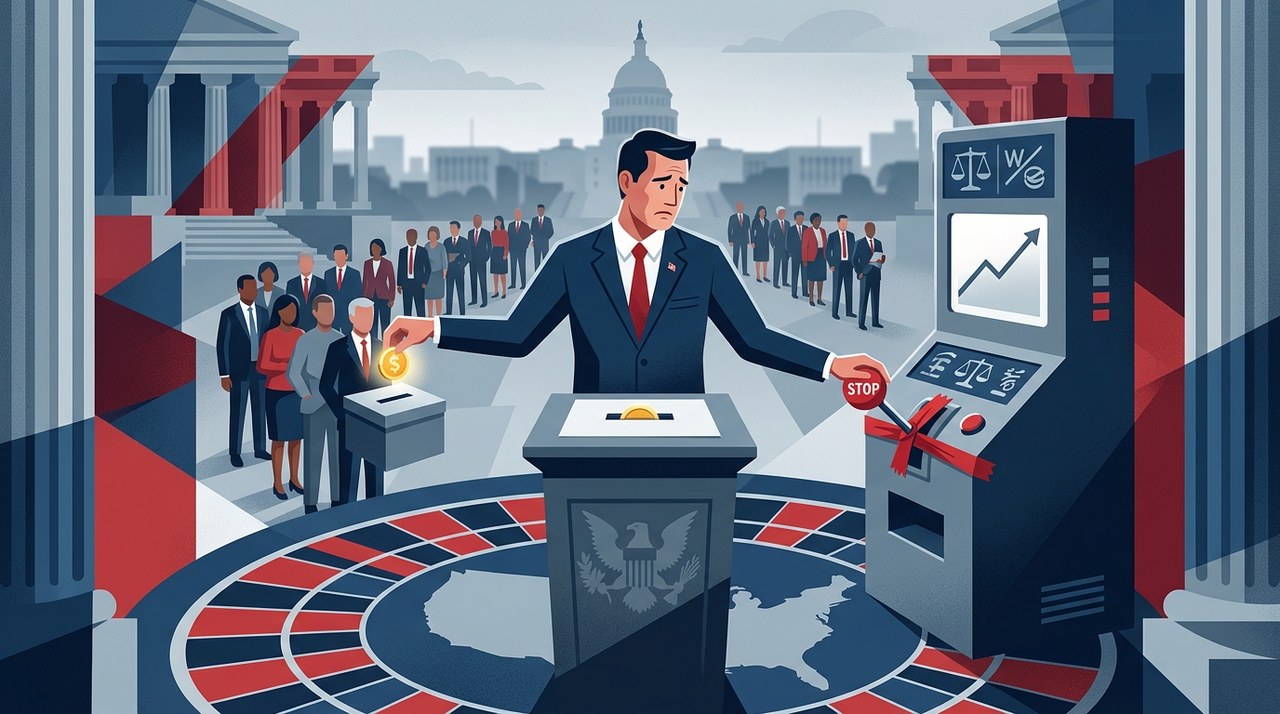
Congress Pauses Action on Lawmaker Election Betting Bill
If you have been keeping an eye on the intersection of politics, finance, and prediction markets, there is a key legislative update to keep on your radar. A proposed federal bill known as the No Betting on Your Own Race Act has officially hit a standstill in Washington. The legislation was drafted with one main goal: to stop U.S. lawmakers and political candidates from placing financial wagers on their own election outcomes.
However, despite growing public discussion around political prediction markets, this bill will not be addressed or voted on before the 2026 U.S. midterm elections. The reason for the delay comes down to timing. Congress has officially gone on recess until after the election is completed, leaving the proposed legislation on hold for the foreseeable future.
What Is the No Betting on Your Own Race Act?
To understand why this bill was created, it helps to look at how election betting has evolved in recent years. In the past, political wagering was mostly limited to foreign betting sites or academic experiments. Today, however, political prediction markets have transformed into multi-billion-dollar platforms where everyday traders, hedge funds, and political enthusiasts buy and sell contracts based on election results.
The No Betting on Your Own Race Act was designed to establish explicit boundaries for political candidates. Under the bill's provisions, running for public office while simultaneously betting on the outcome of that race would be strictly prohibited for politicians and key campaign officials.
Think of it like professional sports. If a head coach or star player were allowed to bet money on their own team losing, it would raise immediate questions about whether the game was fair. Proponents of the bill argue that candidates wagering on political elections creates a very similar financial conflict of interest.
The Rise of Political Prediction Markets
Prediction markets allow users to trade event contracts that pay out based on future real-world events. If a user believes a specific political candidate will win a race, they can purchase contracts backing that candidate. If the candidate wins, the contract settles at full value; if they lose, the contract expires worthless.
In recent years, two primary types of platforms have captured public attention:
- Decentralized Web3 Platforms: Blockchain-based platforms such as Polymarket operate using smart contracts on networks like PolygonPOL+1.52%, allowing users to trade election contracts globally with stablecoins.
- Regulated U.S. Exchanges: Domestic exchanges such as Kalshi offer CFTC-regulated event contracts traded directly in U.S. dollars.
During major election cycles, trading volume on these platforms can reach substantial amounts. Supporters believe that real-money prediction markets offer accurate, real-time statistical forecasts that react faster than conventional opinion polls. Conversely, critics express concern that unchecked financial incentives could lead to market manipulation or undermine public trust in democratic elections.
Why Insider Betting Raises Ethical Concerns
Lawmakers and ethical watchdogs who advocate for banning candidate betting point to several major risks associated with insider involvement in prediction markets:
- Privileged Information: Candidates and campaign insiders frequently possess private data, such as internal polling metrics, fundraising totals, and strategic decision timing, long before the general public.
- Divergent Incentives: Allowing candidates to bet on elections could theoretically incentivize individuals to act in ways that benefit their financial positions rather than their public responsibilities.
- Narrative Control: Large wagers placed on high-profile prediction markets could be used strategically to artificially inflate a candidate's market odds, creating a perception of political momentum.
Why Congress Is on Recess Until After the Midterms
As election dates approach, members of Congress typically return to their home states and congressional districts to meet with constituents and run campaign events. This scheduled legislative break, known as congressional recess, effectively pauses standard legislative activity on Capitol Hill.
Because the No Betting on Your Own Race Act was not brought up for consideration before the recess began, the legislative process cannot move forward. Under standard U.S. legislative rules, bills left unaddressed prior to recess remain suspended until Congress formally resumes regular sessions.
As a direct result, there will be no new statutory restrictions prohibiting political candidates from placing wagers on prediction markets during the upcoming 2026 midterm election cycle.
The Ongoing Legal and Regulatory Landscape
Even with this legislative bill delayed, the legal status of political betting in the United States remains a highly active topic. The Commodity Futures Trading Commission (CFTC) has consistently attempted to restrict event contracts tied to political contests, arguing that political wagering poses risks to public interest and election integrity.
However, legal challenges and court decisions have restricted regulatory overreach in certain instances, allowing political contracts to remain available under specific market guidelines.
The intersection of political forecasting, market incentives, and decentralized technology continues to push the boundaries of existing financial regulations.
Past performance of digital asset platforms or financial exchanges is not indicative of future performance or guaranteed results. Traders and observers should remain aware of potential regulatory developments and market volatility as election season unfolds.
What This Means for Markets and Election Observers
With the bill effectively shelved until post-election sessions, what can market participants and voters expect during the 2026 midterms?
- Continued Market Operation: Prediction platforms will continue operating under current legal frameworks throughout the midterm campaign period.
- High Media Visibility: Election probabilities generated by prediction markets will likely continue to be referenced by news organizations alongside polling figures.
- Future Legislative Focus: Once the new congressional session begins after the election, lawmakers are expected to revisit candidate betting rules and broader event contract regulation.
Summary and Final Thoughts
In summary, the No Betting on Your Own Race Act will not take effect before the 2026 U.S. midterm elections because Congress is officially on recess until after the voting concludes. While the debate over politician participation in prediction markets remains intense, formal legislative changes will have to wait until lawmakers reconvene in Washington.
Latest blog posts


Bitcoin Spot ETFs See $1.8B Outflow in Single Week
US spot Bitcoin ETFs recorded $1.8 billion in weekly outflows, pushing total November redemptions to $4.14 billion as institutional sentiment cools.
|


Has XRP Found Price Bottom Near $0.90 Support?
XRP is holding near $0.90 after testing support three times, but broader market risks mean a recovery is far from guaranteed.
|
MoldyRoost Ad Campaign Targets iPhone Crypto Wallets
Cybersecurity firm Confiant revealed that a malicious ad campaign named MoldyRoost can breach vulnerable iPhones with a single tap, putting crypto seed phrases at risk.