
Two Proposals Aim to Protect Ethereum Contracts in Upgrade
EthereumETH-4.93% Developers Debate How to Protect Legacy Smart Contracts
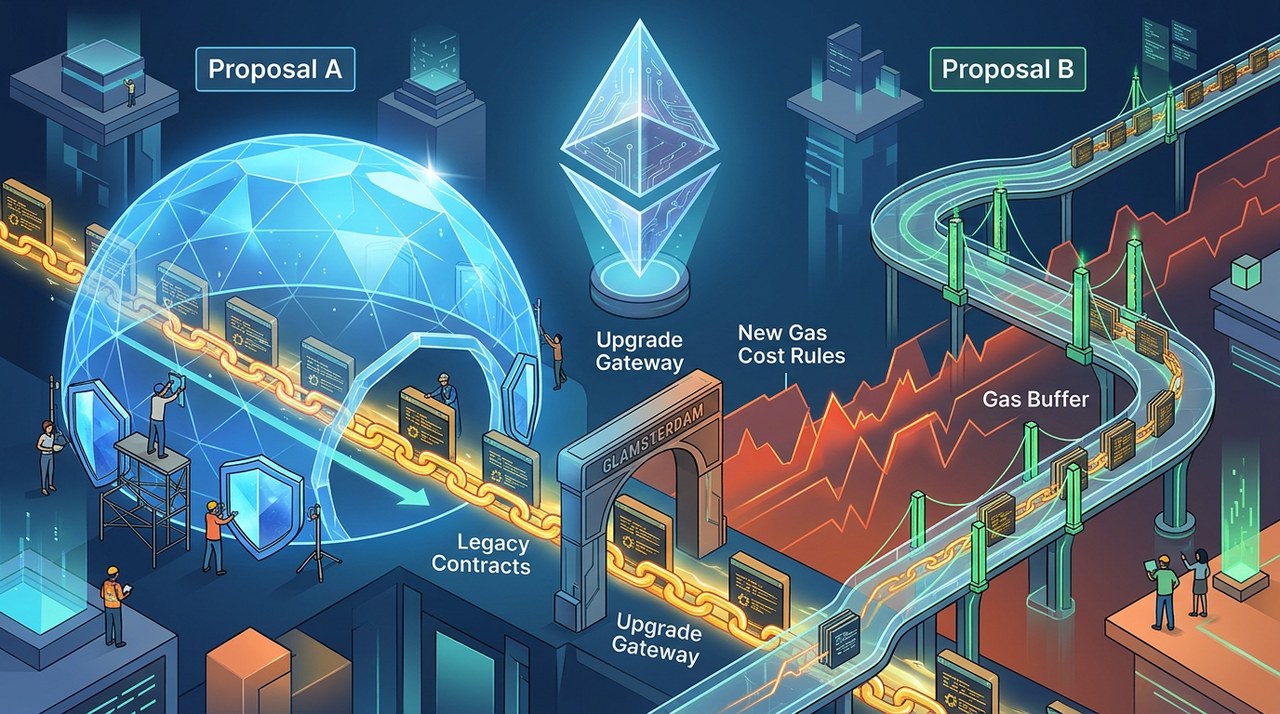
Ethereum developers are currently tackling a key engineering challenge ahead of the planned Glamsterdam upgrade. As the network prepares to update how gas fees work, developers are evaluating two competing proposals. Both proposals aim to prevent new gas changes from breaking older smart contracts already running on the blockchain.
Understanding Gas: The Fuel That Powers Ethereum
To understand why this debate matters, it helps to look at how Ethereum processes transactions. Every action on the Ethereum network requires computational effort. This computational work is measured in units called gas, which users pay for using ETH.
Think of gas like fuel for a car. Simple tasks, like sending ETH from one wallet to another, use very little fuel. Complex tasks, like interacting with a decentralized lending platform or automated market maker, require significantly more fuel.
When developers wrote early smart contracts, they included hardcoded assumptions about how much gas specific actions would cost. If an Ethereum upgrade changes those cost rules, older contracts might run out of gas mid-execution and fail.
The Glamsterdam Dilemma: Upgrading Without Breaking Code
The planned Glamsterdam upgrade forms part of Ethereum's ongoing roadmap to improve network performance, security, and scalability. As part of this update, core engineers want to rebalance the gas costs of specific operational instructions, known as opcodes.
Adjusting opcode gas costs helps prevent network spam attacks and keeps node verification running smoothly. However, changing these costs creates a fundamental dilemma: how do developers upgrade the base engine without breaking applications that rely on old rules?
Why Smart Contract Immutability Matters
One of Ethereum's main security features is immutability. Once a smart contract is deployed to the blockchain, its core code cannot be modified by anyone.
Immutability ensures that decentralized applications remain tamper-proof, but it requires Ethereum core developers to maintain backward compatibility whenever base rules change.
If a hard fork breaks older code, users could potentially lose access to funds stored in older decentralized finance (DeFi) protocols, multi-signature vaults, or automated governance contracts.
Inside the Two Rival Proposals
To solve this problem, core researchers have introduced two competing solutions. Both approaches aim to protect legacy applications, but they use different methods to handle gas accounting.
Proposal 1: Decoupling Contract Perception from User Costs
The first approach separates what a smart contract reads inside the virtual machine from what the end user pays for execution.
- Simulated Contract View: Legacy contracts continue to see traditional gas values, ensuring old logic executes without hitting unexpected limits.
- Updated User Pricing: Users pay true current execution costs, preserving the network's overall economic model.
- High Backwards Compatibility: Older protocols can continue functioning without requiring code updates.
Proposal 2: Dynamic Gas Translation Layers
The second proposal adds a dynamic translation layer to the execution engine. Instead of altering how gas is perceived inside all calls, this system automatically recognizes legacy transaction calls and applies contextual adjustments.
- Context Detection: The execution layer detects whether an incoming request involves an older contract structure.
- Automatic Gas Buffers: The network provides temporary gas buffers for legacy calls that exceed historical boundaries.
- Clean Base Architecture: Keeps base opcode rules simple while using specialized wrappers to absorb compatibility issues.
Comparing the Options
Both options offer distinct advantages. The first option provides seamless operational continuity for legacy contracts but adds complexity to state tracking inside the Ethereum Virtual Machine (EVM).
The second option keeps core pricing models simpler but requires careful engineering to guarantee that translation layers do not create new security vulnerabilities.
What This Means for ETH Users
For regular crypto holders and DeFi users, this debate is a positive signal. It highlights that core developers prioritize asset safety and network reliability during protocol upgrades.
Everyday users do not need to take any direct action with their wallets or tokens. If executed correctly, these proposals will allow legacy smart contracts to function smoothly behind the scenes.
Those interested in following real-time asset trends and market updates can view current prices via Bitkub Market. Please note that past performance of digital assets is not a guarantee of future results.
What Happens Next?
Core developers will continue testing both approaches across testnets and client implementations during upcoming All Core Devs (ACD) meetings. Community consensus and devnet results will determine which design gets included in the final release.
Latest blog posts

California Orders $4.8M Payout to Bitcoin ATM Scam Victims
California regulators ordered Coinflip to pay over $4.8 million to scam victims after identifying widespread compliance failures across its crypto kiosk network.
|
Nvidia Board Probes CEO Jensen Huang Over Controversy
Nvidia's board has appointed an independent special committee to review allegations surrounding CEO Jensen Huang and reported ties to a former tech executive.

Vitalik Buterin Says ETH Fee Burn Won't Drive Ethereum Value
Ethereum co-founder Vitalik Buterin says ETH should focus on being a store of value rather than relying on fee burns.
|