

Trezor Finds Implants in 3 Wallets, Cuts Sellers 80%
Understanding the Trezor Safe 5 Security Alert
On November 12, 2026, hardware wallet maker Trezor confirmed that three Safe 5 devices contained unauthorized physical implants.
These modified devices were purchased through Crypto Bilis, a former authorized reseller operating in Southeast Asia. The purchases occurred between August 20 and September 23, either directly from Crypto Bilis or through its Tokopedia and Shopee online stores.
Trezor confirmed that no customer funds have been lost due to these rogue implants. However, the company took immediate action by issuing emergency firmware updates and removing roughly 80% of its global reseller network.
How the Rogue Hardware Implants Actually Work
Hardware wallets protect private keys offline, acting like small digital safes for crypto assets. In this case, attackers physically modified the devices before customers received them.
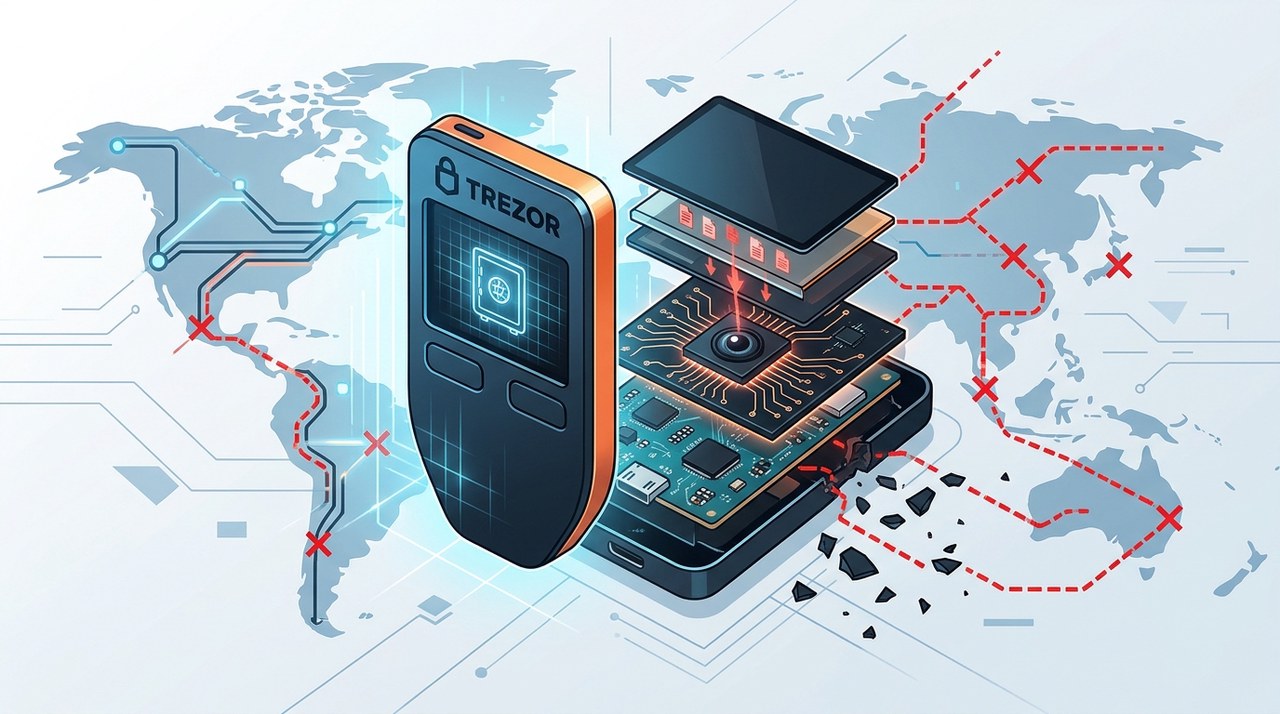
Inside the three affected Safe 5 devices, attackers placed an unauthorized circuit board between the screen and the main circuit board.
Think of this added board like a hidden spy recording what appears on your screen. It copies displayed information without altering the device firmware or touching the Secure Element security chip.
What Secret Information Was Stolen by the Device?
When a user sets up or restores a wallet, the recovery phrase words appear on the device display. The rogue chip recorded these recovery words instantly.
It also recorded displayed passphrases, which are optional custom words used to access hidden wallets.
Once captured, the hidden board encrypted the stolen data and transmitted it over a mobile cellular network to an attacker-controlled server. If no cellular signal was available, the chip stored the data and continuously retried until transmission succeeded.
Comparing Trezor's Findings with Previous Security Incidents
Trezor noted that these physical implants operate very similarly to tampered devices discovered in some Ledger hardware wallets previously.
In those earlier Ledger cases, attackers bought genuine units, modified the hardware inside, and resold them through reseller channels in Southeast Asia. Ledger officially confirmed an unauthorized implant in a customer wallet in October.
For Trezor, the issue remains strictly isolated so far. Tampered hardware was only confirmed in Safe 5 devices purchased via Crypto Bilis.
Trezor inspected hardware from other regional resellers and confirmed no signs of physical manipulation. The company reported no confirmed implants in any other Trezor model.
Trezor's Response: Firmware 2.13.1 and Reseller Overhaul
To counter the vulnerability, Trezor released Firmware version 2.13.1 on November 11, 2026. This software update stops the identified hidden board from reading screen data.
Beyond software updates, Trezor overhauled its supply chain by reducing its reseller network by approximately 80%.
Trezor clarified that many removed reseller partners were trustworthy and posed no immediate threat. However, downsizing the partner network allows much tighter security oversight.
All remaining authorized distributors must now comply with strict rules regarding sourcing, warehouse storage, and physical device access.
Crucial Action Steps for Crypto Bilis Customers
While Firmware 2.13.1 blocks ongoing data capture, it cannot fix recovery phrases exposed before installing the patch.
If your recovery words were displayed on a compromised screen, attackers may already hold a copy. Simply updating the device software while reusing the old recovery phrase leaves your wallet exposed.
Recommended Security Steps
- Create a brand-new wallet setup generating a completely new recovery phrase.
- Transfer all funds from your old wallet address to the new wallet address immediately.
- If you suspect your physical device was tampered with, keep it turned off and do not set it up pending support instructions.
- Contact official Trezor Support to verify your device origin and arrange replacements.
Hardware Replacement and Refund Policy Details
Trezor introduced a replacement policy for impacted buyers. Replacement eligibility covers every model bought from Crypto Bilis from March onward.
Depending on regional shipping rules, customers can select from several resolution options:
- Receiving a different hardware model along with a refund for any price difference.
- Arranging device shipment to an alternative international address.
- Receiving a full refund for the purchase price.
Beware of Scams and Phishing Attempts
Security alerts often trigger fake support scams. Trezor warned users to watch out for impostors posing as staff members offering refunds or replacements.
Trezor will never ask for your recovery phrase under any circumstances.
Always request assistance directly through official Trezor Support channels. Never type your recovery phrase into websites or share it with anyone online.
Trezor is collaborating with SEAL 911, the Security Alliance emergency response service for digital asset incidents. The company also promised a reward for the customer who first brought the Safe 5 implant to light.
Market Context and Security Best Practices
Physical hardware wallets remain a core standard for crypto self-custody, but supply chain security is vital. Purchasing directly from official manufacturers reduces third-party tampering risks.
During the announcement, market benchmark prices stood at $71,390 (-3.53%) for Bitcoin and $2,018 (-1.89%) for EthereumETH+1.49%. Crypto asset prices can move rapidly in response to market conditions.
Past performance of digital assets is no guarantee of future results. You can review current price charts on Bitkub BTCBTC+1.13% Market.
Latest blog posts



 +2
Ripple USD Enters Top 5 Stablecoins as Supply Hits ATH
Ripple USD (RLUSD) has officially reached the top five stablecoins by market cap, achieving a record circulating supply of $2.85 billion.
|


Bitcoin Hits $55,000 Low as 4-Year Cycle Theory Comes into Focus
Bitcoin touched $55,081 in November 2026 before recovering above $60,000, leading market analysts to examine historical four-year cycle patterns.
|

3 XRP Ledger Features Race for 2026 Activation
Three key XRP Ledger amendments—Lending Protocol V1_1, Confidential Transfers, and Single Asset Vault—are seeking final validator votes before the end of 2026.
|