

Trezor Cuts Resellers After $93M Ledger Security Scare
Trezor Tightens Distribution After Massive Industry Scare
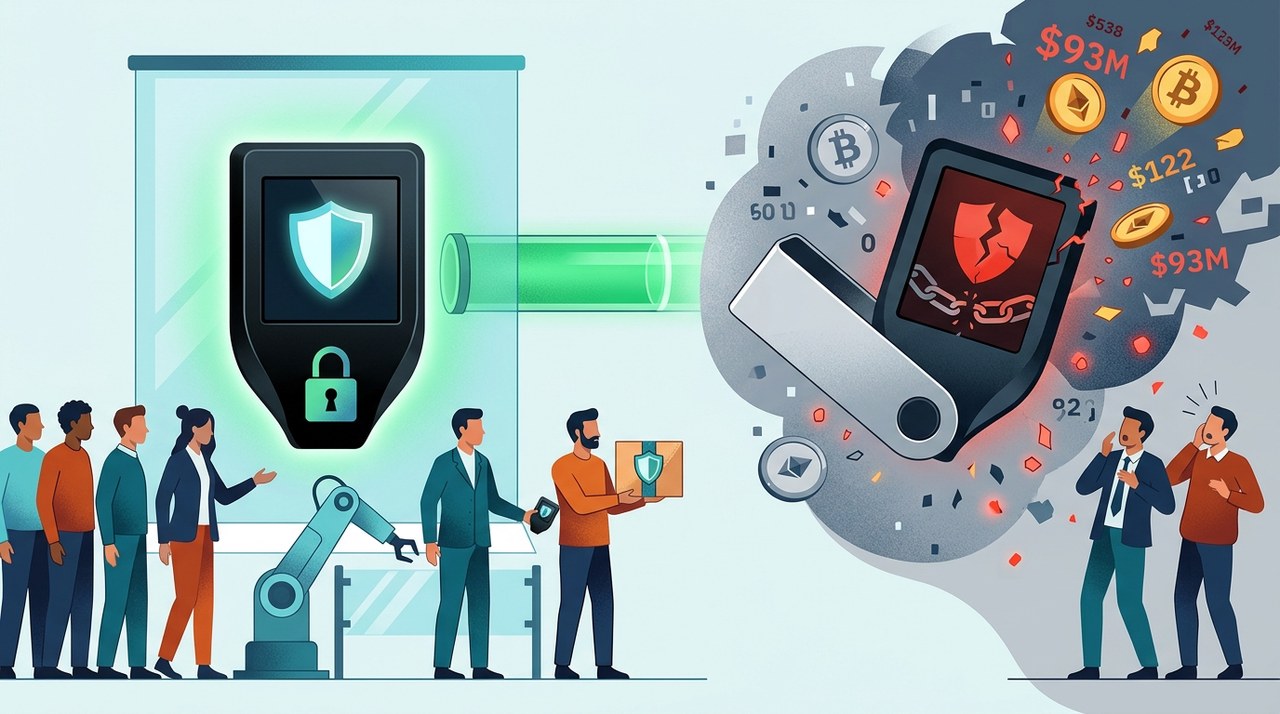
Starting January 1, 2027, hardware wallet maker Trezor will reduce its network of authorized resellers. The company wants fewer partner stores and far greater control over how its security devices reach everyday users.
This major operational decision comes right after a shocking security incident involving its main rival, Ledger. On October 9, 2026, attackers managed to compromise Ledger devices sold through a third-party seller, leading to estimated losses of around $93 million.
Amid these industry developments, major digital assets continue to trade actively. Bitcoin (BTCBTC+3.93%) recently traded near $83,447 (+0.80%), while EthereumETH+6.50% hovered around $2,516 (-0.46%). Please note that past returns of digital assets or past performance do not guarantee future returns or performance. You can check market data anytime at bitkub.com/th/market/BTC.
Understanding the $93 Million Ledger Supply Chain Attack
To understand why Trezor is taking such proactive steps, we need to look closely at what happened to Ledger on October 9, 2026.
Attackers executed a sophisticated physical supply chain exploit. They allegedly intercepted hardware wallets en route to a third-party reseller, opened the physical casings, and soldered hidden hardware implants directly onto the circuit boards.
Think of it like buying a high-security lock from a local retail shop. If a malicious middleman secretly opened the box and added a hidden master key before placing it back on the shelf, your safe would no longer be secure—no matter how strong the original design was.
When unsuspecting customers purchased these modified devices, attackers drained their funds, accumulating an estimated $93 million in total stolen assets.
Trezor's Response: Less Partners, Stronger Oversight
Following the Ledger scare, Trezor Chief Commercial Officer Danny Sanders shared an official letter on X (formerly Twitter) that was sent to select business partners.
The message made it clear that Trezor intends to inspect every single step a device takes from the factory floor to the buyer's doorstep.
The recent supply-chain attack on another hardware wallet brand confirmed what we have always known. A hardware wallet is only as safe as the path it travels to reach its owner, and every device that passes through hands we cannot properly check puts someone’s savings at risk.
To eliminate potential security gaps in retail distribution, Trezor chose to shrink its authorized reseller network down to a manageable size.
So we have made the difficult decision to make our reseller network much smaller, small enough that we can vet and check every partner that remains.
Are Trezor Devices Safe? What the Company Says
If you already own a Trezor device, you might wonder if your funds are affected. Trezor reassured customers that its hardware systems remain uncompromised.
The company clarified that revoking reseller authorizations is strictly a precautionary measure to prevent future supply chain risks, rather than a reaction to an internal flaw.
Let me be very clear: there is not a single piece of evidence that Trezor devices have been compromised. This is a preventive step, taken out of an abundance of caution.
A Challenging Year for Hardware Wallet Security
This latest supply chain breach is part of a broader string of security hurdles facing hardware wallet manufacturers recently. Over the past year, the industry has contended with multiple security challenges:
- Physical Supply Chain Interceptions: Tampered devices distributed through unauthorized or third-party sellers.
- Vendor Data Leaks: Personal customer records exposed through compromised third-party shipping partners.
- Laser Fault Injection: Advanced laboratory attacks where researchers bypass chip protections using physical lasers.
- Firmware Entropy Glitches: Technical vulnerabilities affecting how random cryptographic recovery seeds are generated.
Trezor itself dealt with a third-party security incident back in August 2026. A fulfillment provider suffered a data breach that exposed personal contact details for tens of thousands of Trezor customers.
Furthermore, hackers recently hijacked mailing infrastructure used by Trezor, BitBox, and CoinTracking to send unauthorized phishing emails directly to users. These attacks demonstrate how persistent bad actors are in targeting crypto holders.
Raising Standards Across the Supply Chain
Trezor acknowledged that securing hardware products across complex global logistics channels is a continuous task that requires constant upgrades.
Supply-chain security is never finished, so we are raising the bar for every partner who continues with Trezor, with an updated legal framework and closer checks on how devices are sourced, stored, and handled. We are asking more of everyone in the chain, ourselves included.
For crypto investors, this event highlights an essential best practice: buying hardware wallets directly from the official manufacturer minimizes the risk of supply chain tampering.
While self-custodial wallets offer strong security against online exchange vulnerabilities, digital assets remain subject to high market volatility. Users should carefully assess security practices and risk tolerance when managing crypto investments.
Latest blog posts

 +1
Rich Dad Author Kiyosaki Welcomes Next Bitcoin Crash
Author Robert Kiyosaki views Bitcoin price drops as buying opportunities, arguing that global debt poses a far bigger threat to investors.
|

Circle Q3 Revenue Hits $865M as Firm Cuts Workforce by 5%
Circle generated $865 million in Q3 revenue, boosted by an ARC token presale, while trimming its staff by 5%.
|

Wirex to Host Full Stack London Stablecoin Conference
Wirex is hosting Full Stack London on November 12, bringing together key financial and crypto leaders to discuss stablecoin infrastructure and regulations.
|