
The Economist's 2027 Warning: What It Means for Bitcoin
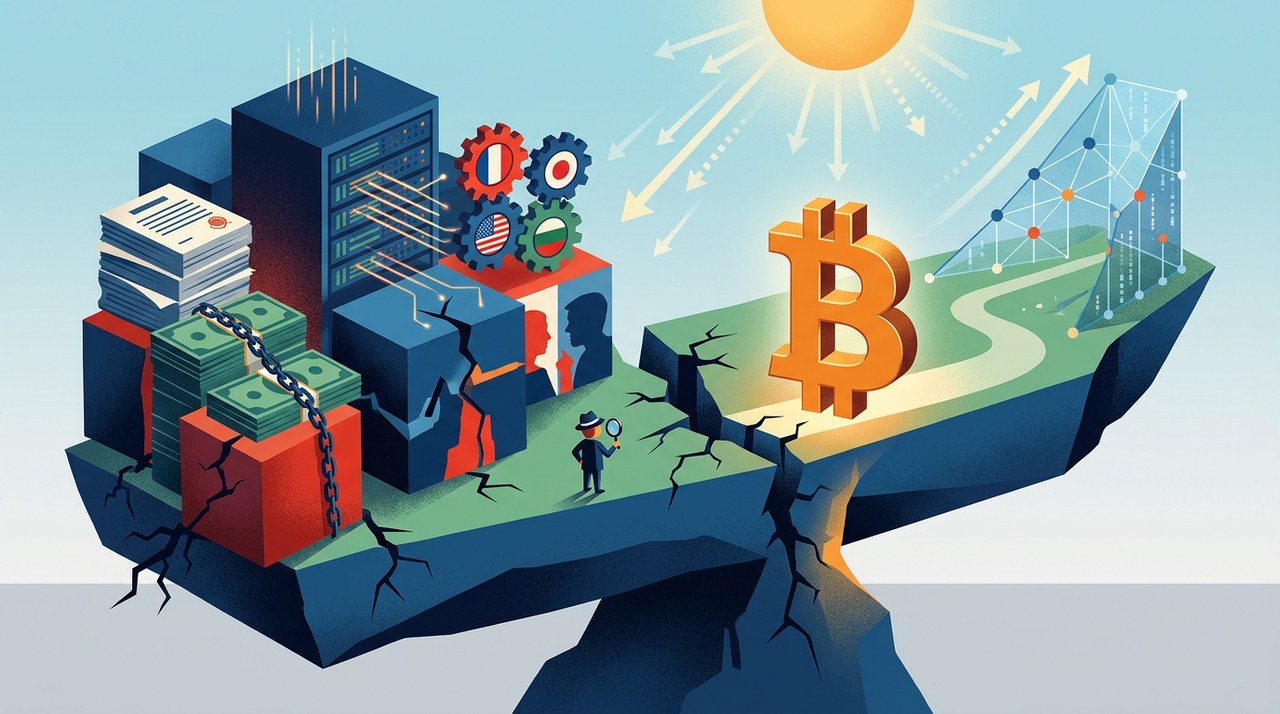
The Economist Issues a Cautionary Outlook for 2027
The Economist has published its annual forecast edition, The World Ahead 2027, outlining significant upcoming global challenges. Executive editor Tom Standage highlights that high national debt, massive spending on artificial intelligence, and heightened geopolitical tensions could push global systems to a breaking point.
The core conclusion of the report is straightforward: something in the global economy will have to give. For cryptocurrency investors, this raises an important question about how digital assets like Bitcoin (BTCBTC-0.90%) might perform during such macro pressures.
Five Key Factors Threatening Global Financial Stability
The Economist points to five major trends that could trigger economic disruption over the coming year:
1. Shifting Political Dynamics in the US
Following Democratic victories in the midterms, Standage expects Donald Trump to adopt an increasingly aggressive and unpredictable approach during the post-Trump transition period.
2. Rising Government Debt and Higher Bond Yields
Data from the International Monetary Fund shows that average 10-year bond yields for G7 nations climbed more than 110 basis points between February and September, hitting levels not seen in nearly two decades. In Europe, France's finance ministry projects public debt to hit roughly 122% of GDP in 2027. Market analysts note that political shifts, including potential success by Marine Le Pen, could further unnerve bond markets.
3. Heavy Borrowing for Artificial Intelligence
Funding for AI infrastructure is expanding rapidly. Goldman Sachs projects that major cloud computing corporations will issue $420 billion in debt in 2027, marking an approximate 60% increase from current levels. The Economist cautions that complex and opaque financing structures could create systemic market vulnerabilities.
4. Commodity Price Spikes Driven by Conflict
Supply chains remain vulnerable to geopolitical risks. The World Bank forecasts a 7% increase in food commodity prices next year, largely due to ongoing instability across the Middle East.
5. Geopolitical Friction Surrounding Taiwan
Taiwan remains a central flashpoint. Former CIA Director William Burns previously noted that President Xi Jinping instructed the Chinese military to be capable of taking Taiwan by 2027, though current US intelligence notes no active invasion plans. Concerns mounted in early November when China launched large, unannounced military drills involving over 100 military and coast guard vessels around Taiwan.
How Macro Pressures Could Impact Bitcoin
These economic warnings arrive during a mixed period for the crypto market. Data from BeInCrypto shows Bitcoin trading near $64,600, reflecting a decline of roughly 25% in 2026 and leaving it about 49% below its all-time peak of $126,080 recorded in October 2025.
Past performance of digital assets is not a guarantee of future results. Investors can check current live asset metrics on Bitkub Market.
Global financial stress creates both potential opportunities and distinct risks for Bitcoin holders.
Potential Advantages: Fixed Supply and Self-Custody
Over the long run, Bitcoin's strictly limited supply of 21 million coins sets it apart from traditional currencies. Central banks cannot mint additional Bitcoin to satisfy national deficits. If governments resort to monetary expansion to pay down rising public debt, fiat purchasing power could decrease, making scarce assets more attractive.
Banking sector friction also highlights the value of self-custody. For example, when regulatory resolution procedures began for Ueno Bank in Paraguay, local Bitcoin markets traded at a 1.7% premium. Direct ownership allows asset holders to maintain liquidity independent of third-party banking solvency.
Short-Term Risks: Tech Correlation and Interest Rates
Despite long-term hedging characteristics, Bitcoin faces short-term vulnerability. Asset manager Grayscale noted that Bitcoin has recently correlated with tech and AI shares. If high tech valuations undergo a significant correction, crypto prices could temporarily experience downward pressure as well.
Additionally, sticky inflation could prompt central banks to keep interest rates elevated, which historically dampens investor risk appetite. Sudden geopolitical shocks also tend to spark immediate risk-off selloffs across all liquid markets.
Political regulatory efforts pose another variable. Key legislative initiatives like the strategic Bitcoin reserve proposal and the GENIUS Act provided initial momentum, but changes in congressional dynamics following the midterm elections could slow regulatory progress.
Evaluating Price Patterns and Technical Scenarios
Market analyst Dr. James E. Thorne noted an inverse head-and-shoulders technical pattern on the charts, with a left shoulder at $59,000, a head at $57,000, and a right shoulder forming near current price levels.
Under a bullish scenario—assuming macroeconomic stabilization and sustained market interest—a successful breakout above $73,000 and confirmation over $87,000 could open a technical path toward $117,000 by mid-2027, potentially testing prior highs of $126,080.
Conversely, under a bearish scenario—triggered by sustained high interest rates or broader market pullbacks—Bitcoin could test support below $57,000, leading to extended consolidation rather than an immediate upward rally.
Conclusion
As macroeconomic and geopolitical challenges approach in 2027, Bitcoin continues to act as both a speculative risk asset in the short term and a fixed-supply alternative over longer horizons. Keeping an eye on broader market trends helps navigate these shifting dynamics.
Latest blog posts


Circle Partners With DBS for Direct USDC Settlement in Asia
Circle has partnered with Singapore's DBS Bank to allow institutional clients to buy and redeem USDC directly as Asian banks develop competing digital payment systems.
|
Why Blaming Anthropic’s IPO for Bitcoin’s Dip Is Flawed
Market analysts explain why connecting Anthropic's potential IPO to Bitcoin's price pullbacks is oversimplified, examining the real liquidity drivers in crypto.
|
Anthropic Sees $10 Billion Investor Orders as IPO Demand Soars
Institutional demand for Anthropic's upcoming IPO has surged to nearly seven times the available share supply as major investors place billion-dollar orders.