

Tether & Kazakhstan Team Up for Tenge Stablecoin
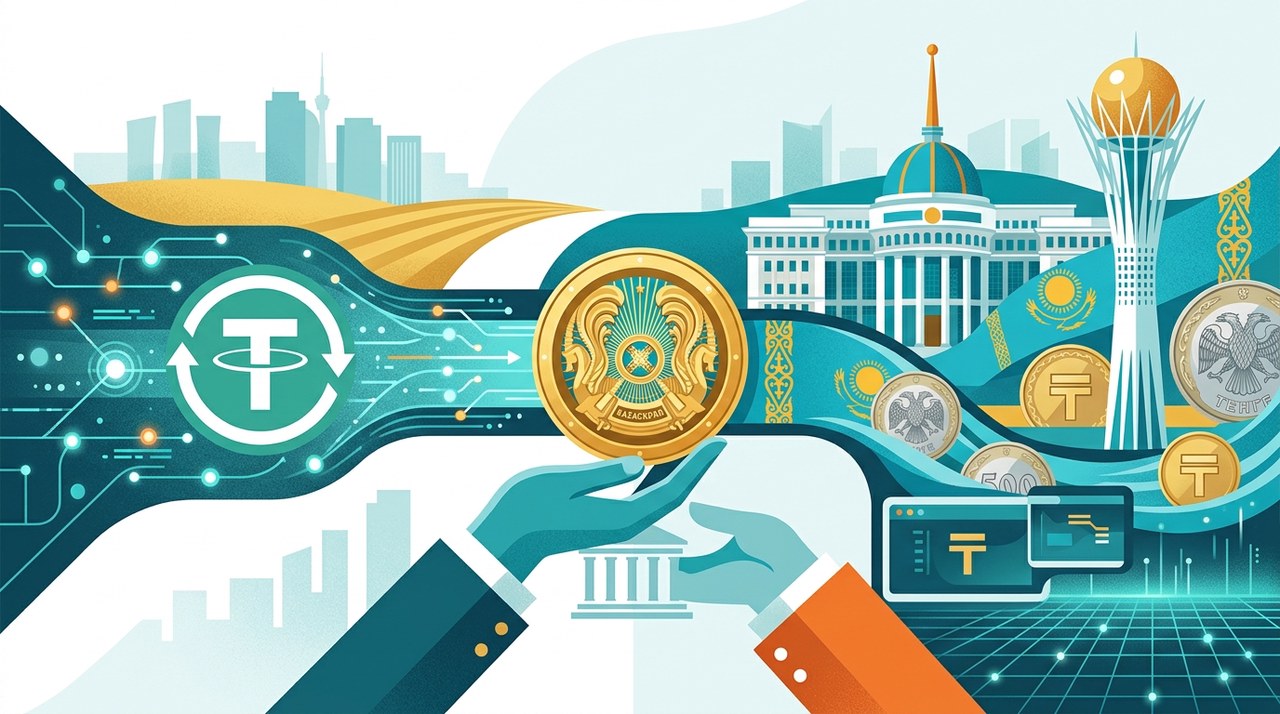
A New Chapter for Crypto in Central Asia
Imagine combining traditional national currency with the speed and efficiency of blockchain technology. That is exactly what is happening in Central Asia right now. TetherUSDT+0.38%, the issuer of the world's most widely used stablecoin USDT, has entered into an agreement with Kazakhstan's central bank infrastructure to explore digital asset innovation.
Under this agreement, both parties are planning to explore two major projects. First, they will test a pilot program for a stablecoin backed by the Kazakhstani tenge. Second, they plan to build a structured framework for tokenizing real-world assets across the country.
This joint initiative shows how government institutions and digital asset companies can work side-by-side. As Kazakhstan expands its digital asset industry, this project could provide a blueprint for other emerging markets.
Understanding the Tenge-Backed Stablecoin Pilot
To understand why this agreement matters, let us look at how stablecoins work. A stablecoin is a digital token whose value is tied to another asset, usually a traditional fiat currency like the US Dollar.
In this project, the proposed stablecoin will be pegged directly to the Kazakhstani tenge (KZT). Think of it like a digital version of local cash running on a secure blockchain network. The goal is to keep its value stable relative to the fiat tenge.
Tether brings deep experience in managing blockchain infrastructure and liquidity from running USDT. By holding a controlled pilot program, Kazakhstan can safely test how a local stablecoin functions in daily payments, business trade, and financial settlements.
However, like all financial tools, stablecoins involve risks. Users must consider factors like reserve transparency, market liquidity, and changing regulatory rules, as digital assets can experience price or liquidity fluctuations during times of market stress.
What Is Real-World Asset Tokenization?
Beyond the stablecoin pilot, the agreement places a strong emphasis on tokenizing real-world assets (RWAs). But what does asset tokenization actually mean?
Tokenization is the process of creating digital tokens on a blockchain that represent real physical or financial assets. These assets can include real estate, government bonds, precious metals, or commodities.
Imagine a commercial building worth millions of dollars. Traditionally, buying or selling that property takes months of legal paperwork. Through tokenization, ownership can be divided into thousands of digital tokens. Investors can then buy or trade smaller shares of that building quickly and transparently.
By building a clear legal framework for tokenization, Kazakhstan aims to make traditional assets more liquid. Local companies could raise funding more easily, and global investors could gain safer access to local economic opportunities.
Why Kazakhstan Is Focusing on Digital Assets
Kazakhstan has quietly become one of the key regions for cryptocurrency activity. Over the past few years, the country attracted significant global BitcoinBTC-1.22% mining activity due to its energy capacity.
Instead of turning away from digital finance, Kazakhstani authorities chose to build a clear regulatory landscape. They established special economic hubs like the Astana International Financial Centre (AIFC) to offer a compliant environment for fintech firms.
Additionally, the National Bank of Kazakhstan has been developing its own Central Bank Digital Currency (CBDC), known as the Digital Tenge. Partnering with Tether shows a willingness to explore both private stablecoin technology and public central bank currencies side-by-side.
Balancing Innovation with Proper Risk Management
While this collaboration is a positive step for blockchain adoption, careful oversight remains essential. Any broad rollout requires strict anti-money laundering controls, regular reserve audits, and strong consumer protection standards.
Past performance of digital assets or previous stablecoin deployments does not guarantee future results or success in new jurisdictions. Investors and observers should evaluate both the technical benefits and economic risks as this pilot develops.
Latest blog posts



Charles Hoskinson Criticizes Crypto CEOs Over PR Use
Cardano founder Charles Hoskinson criticized rival crypto executives who rely on PR teams during a livestream defending his roadmap record.
|


Bitcoin Drops Below $60,000 as Altcoins Face Selling Pressure
Bitcoin has dipped below $60,000 while HYPE and SOL pull back, as analysts point to stock market pressure and upcoming U.S. inflation data.
|

Kalshi Traders See 24% Chance XRP Could Drop to $0.80
Prediction market traders on Kalshi estimate a 24% probability of XRP falling to $0.80 before November ends as the token sits near $0.92.
|