


Tether Asked Up to 20% Fee to Reissue Frozen USDT
TetherUSDT+0.32% Scrutinized Over 20% Fee for Frozen USDT Recovery
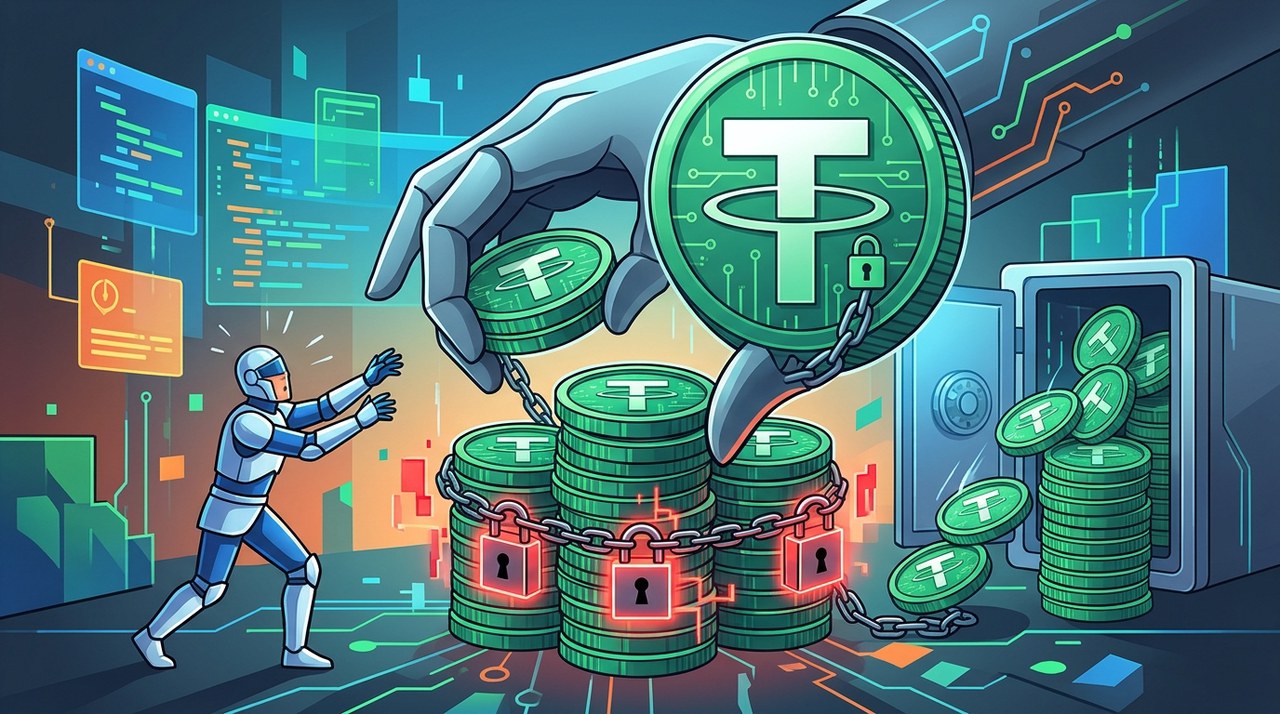
Imagine having your wallet stolen, the police tracking down the thief, and then the money issuer asking for a 20% cut just to hand your funds back. That is the situation surrounding Tether, the issuer of the world's largest stablecoin, USDT.
According to a recent investigation by Bloomberg, Tether has asked for reissuance fees of up to 20% from victims of cryptocurrency hacks who were seeking to recover frozen USDT tokens.
The Case of Bittok's $50 Million Hack
One of the most prominent examples highlighted in the Bloomberg report involves Bittok, a cryptocurrency exchange based in Singapore. Back in 2020, Bittok suffered a major security breach, losing approximately $50 million in digital assets.
Following the security incident, Tether moved to blacklist the blockchain addresses containing the stolen USDT to prevent the hackers from laundering or spending the funds.
However, more than five years after the initial incident, Bittok has still not recovered its frozen USDT. The delay stems from Tether requiring a fee of up to 20% to burn the blacklisted tokens and reissue new USDT to the exchange.
How Does Tether Freeze and Reissue USDT?
To understand why this process is complex, it helps to look at how centralized stablecoins work on public blockchains like EthereumETH-2.35% or TronTRX+0.36%.
Tether's smart contract code includes a built-in feature that allows the company to freeze specific wallet addresses. When an address is blacklisted, any USDT stored in that address becomes permanently immovable.
To help victims recover their funds, Tether must execute a multi-step procedure:
- First, Tether freezes the bad actor's wallet address to stop fund movement.
- Second, Tether verifies the identity and legal ownership of the victim through compliance checks.
- Third, Tether burns (destroys) the frozen tokens from the blacklisted address.
- Finally, Tether mints and reissues an equivalent amount of new USDT to the victim's verified wallet.
Why Does Tether Charge Reissuance Fees?
Recovering frozen tokens is not merely a technical button press; it involves significant administrative and legal resources.
Tether CEO Paolo Ardoino and the company have consistently emphasized that blacklisting and reissuing tokens require thorough legal verification, law enforcement cooperation, and extensive compliance reviews to avoid double-claiming or legal liabilities.
The company maintains that processing fee structures offset the legal risk, operational overhead, and legal expenses involved in assisting hack victims over extended periods.
Critics argue that a fee as high as 20% is steep, particularly for exchanges or users who have already suffered substantial financial losses from cyberattacks.
Centralization and Asset Control in Stablecoins
The situation underscores a fundamental aspect of centralized stablecoins like USDT. Unlike decentralized cryptocurrencies such as BitcoinBTC-1.08%, centralized stablecoins remain under the authority of their issuing entity.
This centralization provides key safety measures, such as the ability to stop illicit funds and assist law enforcement. At the same time, it means users must rely on the issuer's terms, policies, and fee structures when seeking fund recovery.
Traders can review current market data and trading pairs on dedicated pages like Bitkub Market.
Key Implications for the Crypto Community
The Bloomberg investigation highlights several important lessons for cryptocurrency exchanges, institutional investors, and everyday users:
- Cybersecurity remains paramount, as recovering stolen funds can involve long delays and significant costs.
- Centralized stablecoins offer recovery options that decentralized tokens do not, but those options come with issuer-defined conditions.
- Victims of crypto breaches should factor potential administrative and reissuance fees into their recovery plans.
Past performance of digital assets or operators does not guarantee future results. Investors and market participants should carefully evaluate operational risks and legal terms associated with centralized digital assets.
Latest blog posts

OpenVault Raises $2 Million Seed Round at $20M Valuation
OpenVault completes a $2 million seed funding round led by HorizonArc Ventures at a $20 million valuation to expand its AI structured finance platform.
|

XRPL Developers Propose Fix for Disappearing DEX Orders
XRP Ledger developers have submitted a code fix to solve a bug that deleted open trading offers during failed transactions on the decentralized exchange.
|

Monad Price Hits Record Low Following 16B Token Unlock
Monad (MON) dropped to a record low of $0.00914 after releasing 16 billion tokens on its first mainnet anniversary amid broader market weakness.
|