
TeraWulf AI Revenue Surges 774% as Bitcoin Mining Drops
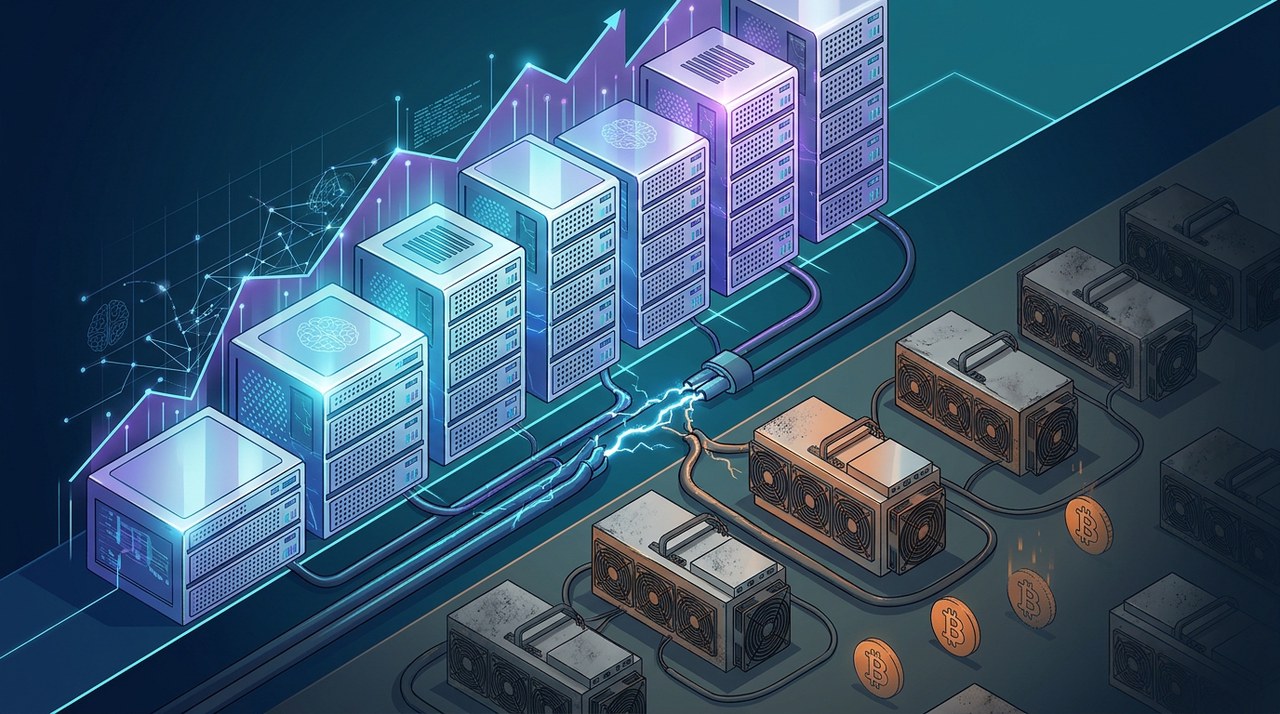
TeraWulf Shift: AI Revenue Outpaces BitcoinBTC-4.30% Mining
TeraWulf has reported a major shift in its quarterly financial performance, driven by expanding investments in artificial intelligence infrastructure. The company recorded $63 million in quarterly high-performance computing (HPC) lease revenue related to AI, representing a 774% increase compared to the same period last year. Meanwhile, TeraWulf's Bitcoin mining revenue declined by 69%.
Inside the Financial Numbers and AI Growth
The surge in TeraWulf's HPC leasing reflects soaring demand for large-scale data center capacity. This demand is being driven by major artificial intelligence buildouts, including infrastructure projects linked to AI developer Anthropic.
While traditional Bitcoin mining revenue fell 69%, the $63 million generated from AI hosting demonstrates how crypto miners are using their power assets to unlock new earnings streams outside of digital asset creation.
Why Bitcoin Mining Companies Are Expanding into AI
Bitcoin mining and AI computing share a fundamental resource requirement: access to massive amounts of electrical power. Bitcoin miners spent years securing high-voltage power capacity and constructing industrial data facilities near grid interconnections.
As tech companies rush to train complex AI models, ready-to-use power infrastructure has become increasingly scarce. Bitcoin miners like TeraWulf are reallocating a portion of their energy capacity to support enterprise AI hardware.
- Predictable Cash Flow: HPC leasing contracts usually provide long-term, fixed payments, offsetting the variable rewards of Bitcoin mining.
- Infrastructure Efficiency: Mining operators can convert existing electrical substations to host high-density graphics processing units (GPUs).
- Business Diversification: Expanding into enterprise tech reduces operational dependence on cryptocurrency price cycles.
Risks and Market Considerations
Although AI infrastructure offers strong growth potential, transitioning facilities from crypto mining to HPC requires substantial capital investment. AI data centers demand enhanced cooling systems, redundant power supplies, and specialized hardware integration.
Additionally, reliance on major corporate AI clients brings customer concentration risk, while remaining mining revenue streams stay exposed to crypto market volatility and changing mining difficulty. Readers should note that past operational performance of digital assets or corporate facilities is not a guarantee of future performance.
The Evolving Hybrid Data Center Model
TeraWulf's financial results highlight a broader structural shift across the technology and energy sectors. As power availability remains a critical constraint for AI development, the lines between Bitcoin mining facilities and mainstream enterprise data centers continue to blur.
Latest blog posts


Bitcoin Volatile as US Jobs Data Beats Expectations
The US added 165,000 jobs in October, crushing forecasts. Bitcoin experienced quick price swings as investors analyzed central bank interest rate policies.
|
Ripple Gains High-Profile Support at Dubai FinTech Summit
Emirates Airline Chairman Sheikh Ahmed bin Saeed Al Maktoum visited Ripple's booth at the Dubai FinTech Summit, highlighting regional enterprise interest.
|
US Jobs Report Beats Expectations: What It Means
The U.S. economy added 165,000 jobs in October, lowering unemployment to 4.1% and sparking fresh discussions about Federal Reserve interest rate policy.
|