
Stacks (STX) 2027 Outlook: Will Bitcoin Staking Fuel Growth?
What Is Happening with Stacks (STX)?
Stacks (STX) caught market attention recently with an 18.2% gain in a single week. As of November 5, STX traded near $0.34, bringing its total market capitalization to roughly $648 million.
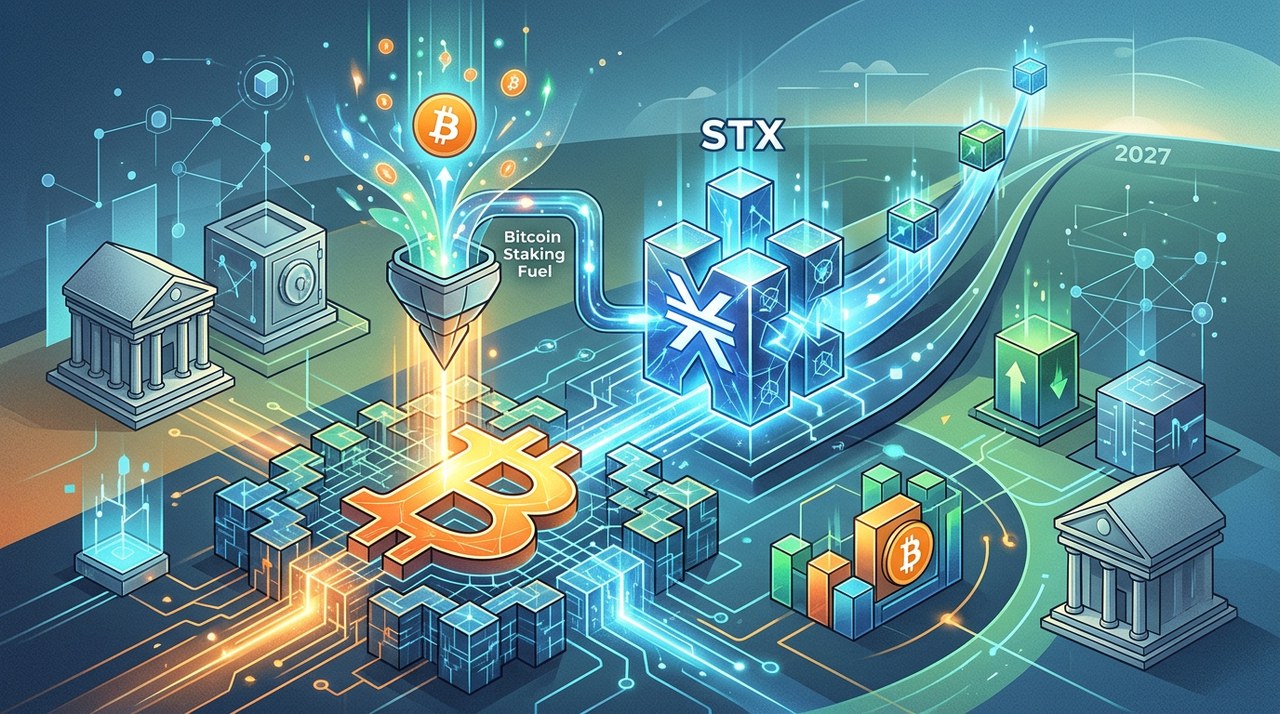
Much of this renewed momentum stems from institutional interest in Bitcoin staking. To understand where STX might head by 2027, we must look at how Stacks connects directly to Bitcoin's economic value.
Please note that past performance of digital assets is not an indication of future returns. You can check real-time market trends on exchanges like bitkub.com. Crypto prices remain volatile, so recent momentum can shift quickly.
Is STX a High-Beta Play on Bitcoin's Growth?
Historically, STX has moved faster than Bitcoin whenever interest in the Bitcoin ecosystem surges. Traders often view STX as a high-beta play on Bitcoin.
For example, back in August 2026, STX rallied over 125% in just seven days. Because STX has a smaller market cap than Bitcoin, its price movements can be strongly amplified in both directions.
While this volatility can boost upside potential during rallies, it also exposes investors to larger losses if market sentiment turns bearish.
Market interest is also rising because Stacks expands Bitcoin's utility. By introducing smart contracts, privacy tools, and scalable infrastructure, Stacks turns passive Bitcoin into productive capital.
Why Are Major Institutions Paying Attention to Stacks?
Institutional Bitcoin staking has become a major pillar supporting the growth story of STX. Since September 2026, Stacks has completed three consecutive sold-out Bitcoin Bond rounds.
These initial three bonding periods pulled in roughly 1,740 BTCBTC-0.26% from institutional investors:
- The Genesis Bond attracted 230 BTC.
- Bond 2 secured 505 BTC.
- Bond 3 brought in another 1,005 BTC.
Prominent institutional players have joined these rounds, including 21shares, UTXO Management, Sypher Capital, and HashKey Cloud. Bullish Capital, the venture arm of publicly traded Bullish, also joined Bond 3 alongside returning participant 21shares.
How Does Institutional Staking Work on Stacks?
Institutions favor Stacks because of its self-custodial path and reward mechanism. Participants timelock their BTC directly on Bitcoin Layer 1 while retaining full control of their assets.
Rewards come from Stacks miners via Proof of Transfer (PoX). Under this consensus system, miners commit BTC to compete for block production. Over 4,200 BTC has been distributed through PoX since January 2021.
Institutional setup options are expanding as well. On November 3, BitGo announced support for Bitcoin staking via BitGo Bank & Trust's qualified custody services. Eligible clients can stake BTC while holding their funds securely on Layer 1.
Bitcoin staking currently targets roughly 3% annual yield for each six-month bonding period. Weekly BTC rewards have been flowing to stakers since September 17.
What Makes STX Economically Unique?
STX plays a direct economic role in Bitcoin staking. Under current network parameters, direct staking requires STX capacity equal to about 5% of the total staked BTC value.
For instance, staking $10 million in Bitcoin requires approximately $500,000 worth of STX capacity.
STX Capacity Requirements by Staked BTC
- 1,740 BTC staked (Bonds 1 to 3) requires STX worth 87 BTC.
- 5,000 BTC staked requires STX worth 250 BTC.
- 10,000 BTC staked requires STX worth 500 BTC.
The exact number of tokens needed depends on BTC and STX prices when positions open. Note that stakers can use existing STX holdings, so higher staking does not automatically trigger open-market purchases.
STX also serves as the native gas asset for transaction fees across Stacks. Financial apps like decentralized exchanges, lending platforms, and stablecoins require transactions to operate. Increased user activity across these apps could drive additional fee demand for STX.
Will Bitcoin Capital Markets Drive Growth Toward 2027?
Bitcoin staking is just the beginning of a larger financial system built on Bitcoin. Stacks founder and Stacks Labs CEO Muneeb Ali envisions a future where Bitcoin earns yield and acts as collateral without being sold.
To achieve this vision, Stacks is developing key network upgrades planned for 2027:
- Self-Custodial Bitcoin Borrowing: Designed to let users take out stablecoin loans against staked BTC while continuing to earn staking rewards.
- PoX-6 Upgrade: Introduces an open auction for staking capacity, expanding participation beyond current whitelist rules.
Financial applications are already active on Stacks today. Zest handles lending and borrowing markets, Bitflow operates decentralized trading infrastructure, and Stacking DAO offers liquid staking services.
What About Privacy and Quantum Security?
Muneeb Ali's long-term vision extends beyond DeFi into two vital infrastructure areas: privacy and post-quantum defense.
Institutional Privacy Infrastructure
Institutions need strict confidentiality for transactions, customer records, and trading strategies. Stacks contributors are developing privacy tools that allow confidential activity paired with selective disclosure for authorized auditors.
Post-Quantum Security and Scalability
Future quantum computing advancements could force Bitcoin to adopt new cryptographic standards. Larger post-quantum signatures could place severe pressure on Bitcoin's Layer 1 block space.
Stacks is building execution layers capable of processing high-volume transactions off Layer 1 while preserving Bitcoin's final settlement security.
Is STX Positioned for Long-Term Growth?
Stacks enters 2027 with operational staking, three sold-out bonding periods, and institutional custody support from players like BitGo.
The long-term outlook for STX depends on clear conditions. If institutional adoption expands and 2027 upgrades succeed, STX could experience sustained network utility and token demand. Conversely, if crypto markets enter a prolonged downturn, competition grows, or upgrades face technical delays, STX prices could suffer severe drops.
Investors must also monitor structural risks. When bond terms mature, locked STX tokens are released back into supply. Additionally, planned fee abstraction could eventually allow users to pay transaction fees in sBTC instead of STX, reducing fee-based demand.
Frequently Asked Questions (FAQ)
What is the STX price prediction for 2027?
STX's 2027 outlook depends on overall crypto market trends, institutional staking growth, and ecosystem usage. If institutional adoption accelerates under favorable market conditions, STX demand could grow. However, if broader crypto markets decline or technical upgrades encounter delays, STX price could fall instead.
Why could STX increase in value?
Key growth drivers include rising institutional Bitcoin staking, the 5% STX capacity requirement, higher transaction fee volume, and upcoming upgrades like self-custodial borrowing and privacy infrastructure.
How does Bitcoin staking create demand for STX?
Direct Bitcoin staking requires participants to hold STX capacity equal to ~5% of their staked BTC value. As more BTC is staked, STX capacity needs grow, though participants can use existing holdings rather than buying new tokens.
Is STX correlated with Bitcoin's price?
STX historically tracks Bitcoin but carries much higher volatility. It can experience bigger gains during crypto market rallies, but can also suffer sharper drops during market downturns.
What are the main risks for STX in 2027?
Main risks include high market volatility, potential supply selling when bond terms mature, competing Bitcoin platforms, upgrade delays, and potential fee abstraction allowing gas payments in sBTC.
Latest blog posts



Cardano vs Solana: 3 AI Models Predict Q4 Performance
Three AI models analyze whether Solana or Cardano is better positioned for a Q4 recovery after recent market headwinds.
|
Bitcoin Buyers Accumulate 14K BTC Despite Market Weakness
While Bitcoin fell below $75,000, larger wallet holders and corporate treasuries purchased thousands of BTC during the sell-off.
|
Asian Tech Stocks Bounce Back as SoftBank Soars 15%
Asian technology shares made a strong recovery on Tuesday, led by a massive 15% jump in SoftBank Group following a Wall Street rally and falling oil prices.