Spain Gives Anti-Laundering Unit Power to Freeze Crypto
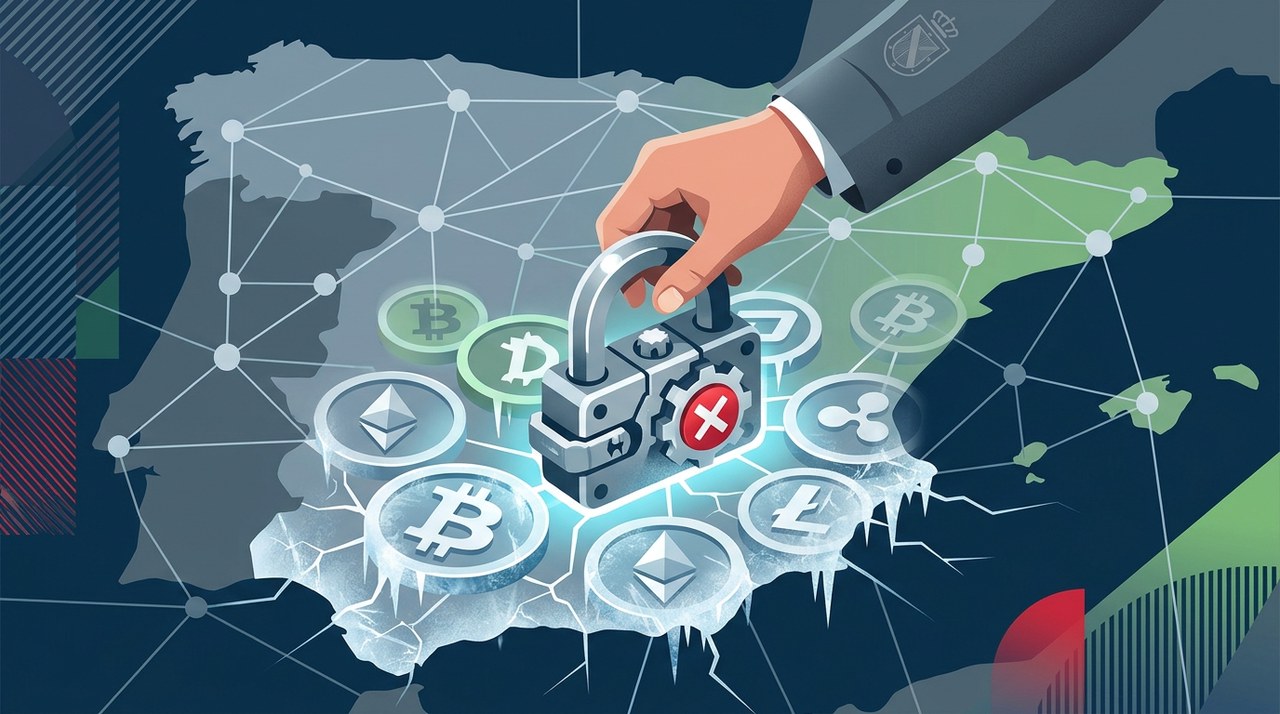
Spain Expands Sepblac Authority Over Cryptocurrency Accounts
Spain is taking a significant step toward tightening financial oversight over digital assets. The Spanish government has officially granted its national anti-money laundering agency the authority to freeze cryptocurrency accounts directly without needing prior approval from a judge.
This rule change alters how legal and financial oversight agencies handle suspicious digital asset transactions within the country.
How the Previous Rules Compare to the New Authority
The agency affected by this update is Sepblac, which stands for the Executive Service of the Commission for the Prevention of Money Laundering and Monetary Offences. Sepblac acts as Spain's financial intelligence unit.
Before this update, Sepblac operated under stricter procedural limitations when dealing with local financial accounts:
- Previous Framework: Sepblac could generally only suspend digital asset accounts when directly requested by a foreign financial intelligence unit.
- New Framework: Sepblac now holds direct administrative power to initiate temporary freezes on cryptocurrency accounts independently, removing the mandatory requirement for an upfront judicial warrant.
Why Spanish Authorities Are Updating the Rules
Financial intelligence units worldwide face unique challenges when combating illegal transactions on modern blockchain networks. Traditional court orders can take days or weeks to process, whereas cryptocurrency transfers happen almost instantly.
By eliminating the requirement to wait for a judge's formal approval before taking preventive action, Spanish authorities aim to prevent illicit funds from being moved beyond reach before an investigation can begin.
What This Means for Crypto Exchanges and Users
For Virtual Asset Service Providers (VASPs) operating in Spain, compliance rules will become more immediate. Exchanges will need to adhere quickly to freeze notices issued directly by Sepblac.
For everyday crypto users, the update underlines the growing emphasis on identity verification and transaction monitoring across global exchanges. While the rule targets financial crimes, regulators will need to balance swift enforcement with fair legal processes to protect everyday consumers.
The European Perspective on Digital Asset Rules
Spain's policy update fits into a broader movement across the European Union to establish unified standards for anti-money laundering (AML) and counter-terrorist financing (CTF) in the crypto ecosystem.
As frameworks like the Markets in Crypto-Assets (MiCA) regulation take effect across Europe, compliance and regulatory reporting are becoming standard practice for cryptocurrency businesses operating within European jurisdictions.
Latest blog posts

FM Summit London 2026 Recaps AI and Digital Asset Trends
The 15th edition of FM Summit London brought industry leaders together to discuss AI trading tools, institutional crypto liquidity, and financial policy.


Solana Reclaims $70 as Japanese Banking Giants Launch Venture
Solana rebounded above $70 following a strategic enterprise partnership with Japanese financial heavyweights SBI Holdings and SMFG.
|

Shiba Inu Nears 22,000 Burn Transactions as Burn Rate Surges
Shiba Inu is just nine transactions away from reaching 22,000 total token burns, permanently removing over 410 trillion SHIB from circulation.
|