South Korea Delays Its Crypto Tax Again to 2029
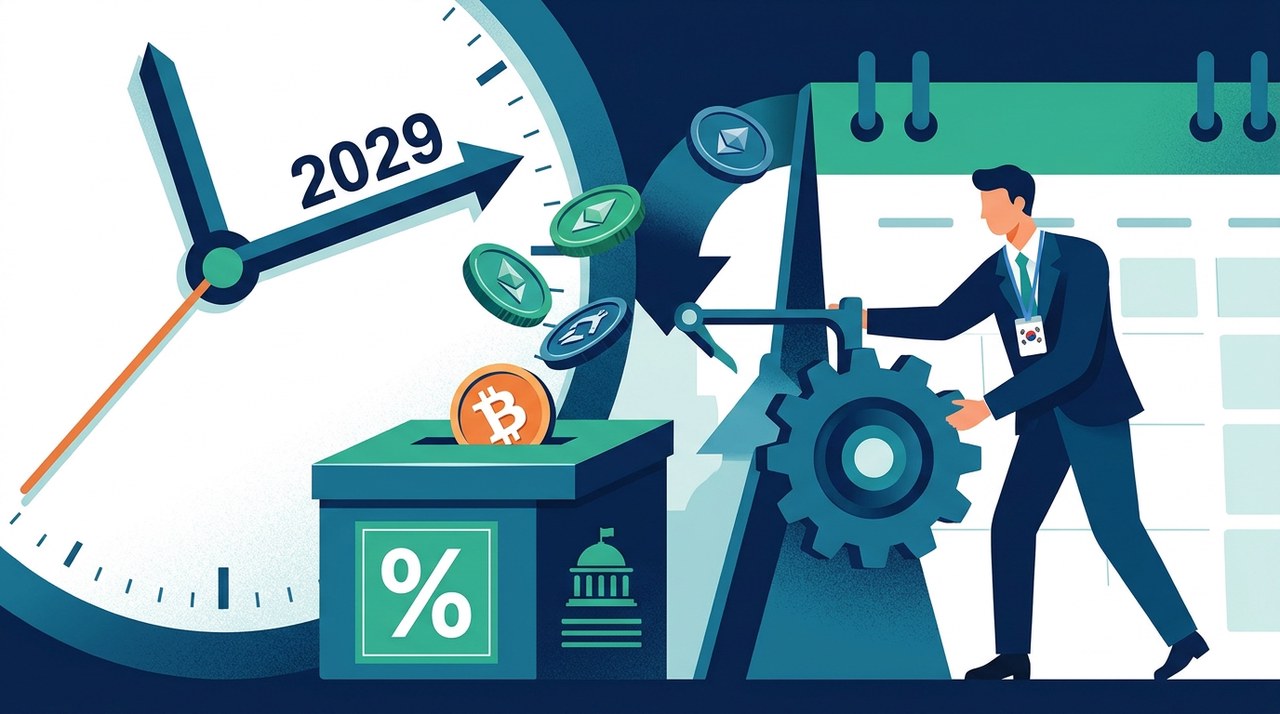
South Korea Postpones Crypto Tax to 2029
South Korean crypto investors have received major news regarding their upcoming tax obligations.
The South Korean government has decided to delay its planned cryptocurrency capital gains tax for the fourth time.
Under the previous schedule, the tax framework was set to go into effect in January 2027.
With this newest deferral, implementation is now pushed back two additional years to 2029.
This policy pause contrasts with other Asian financial centers like Hong Kong, which just approved new digital asset reporting laws.
How the Proposed South Korean Crypto Tax Works
To understand why this decision is making headlines, let us look at how the proposed tax is structured.
The plan introduces a 22% total tax rate on annual cryptocurrency trading profits.
This 22% total levy is broken down into two components: a 20% national income tax and a 2% local tax.
Investors do not pay taxes on all their crypto earnings.
The rules establish an annual tax-free threshold of 2.5 million Korean won, which is roughly equal to $1,870.
Only net profits above this 2.5 million won threshold are subject to the 22% tax rate.
Here is a quick step-by-step example of how the tax calculation works:
- Imagine an investor makes a total annual profit of 5 million Korean won (about $3,730).
- Subtract the 2.5 million won tax-free allowance from the total profit.
- This leaves a remaining taxable balance of 2.5 million won.
- Applying the 22% tax rate to 2.5 million won results in a total tax bill of 550,000 won (about $410).
A Timeline of Four Delays
South Korean lawmakers first introduced the crypto capital gains tax back in 2020.
The law was originally scheduled to take effect in 2022.
However, strong resistance from retail investors prompted lawmakers to repeatedly postpone the implementation date.
Between 2020 and 2024, the government delayed the tax three separate times.
The push for this fourth delay began on Wednesday, when Democratic Party leader Kim Min-seok formally proposed postponing the tax.
According to the Seoul Economic Daily, the government accepted the proposal the following day.
Finance Minister Lee Hyung-il announced the government's stance during an emergency briefing.
I take it seriously that, after three previous postponements, I am now announcing another deferral.
Before the delay becomes official law, it must still be passed by the National Assembly.
The government stated that it will consult with lawmakers to push through the formal two-year deferral.
Key Reasons Behind the Extension
Government officials cited several international, technical, and political factors for postponing the tax once again.
First, global coordination plays a primary role.
The United States is not scheduled to begin exchanging international crypto tax data until 2029.
Without international tax data sharing in place, local enforcement becomes much more difficult for authorities.
Second, the internal tax structure needs substantial adjustments.
Policymakers are still working out specific rules for loss carryforward deductions, which allow traders to offset past trading losses against future gains.
Third, South Korea is preparing broader digital asset legislation.
This comprehensive bill will establish licensing frameworks for cryptocurrency exchanges and stablecoin issuers.
To work out these details, a joint public-private task force will draft precise tax standards by the first half of 2028.
Political considerations were also significant.
Market analysts note that declining support among younger voters was a key factor in the political decision.
On the other hand, critics argue that delaying the tax law four times reduces the consistency and credibility of national tax policy.
Hong Kong Takes the Fast Track
While South Korea delays its tax implementation, Hong Kong is moving in the opposite direction.
On Wednesday, lawmakers in Hong Kong approved a bill adopting the OECD Crypto-Asset Reporting Framework (CARF).
Under this framework, crypto service providers in Hong Kong must begin collecting user financial data in 2027.
Hong Kong will then start sharing this tax information with partner countries in 2028.
As a result, two of Asia's major digital asset markets are taking very different paths regarding taxation timeline and transparency.
What This Means for Crypto Markets
Changes in tax timelines directly influence market behavior and participant expectations.
For South Korean traders, the deferral provides extra time before gains become subject to local taxation.
However, global regulatory trends continue to move toward increased transparency and standardized tax reporting.
Investors should keep in mind that crypto market conditions remain subject to rapid regulatory and price changes.
Latest blog posts


Ripple News Recap and XRP Price Analysis for November 5
Ripple wrapped up a busy October with major institutional deals, while XRP surged past $1.30 following key technical upgrades and network growth.
|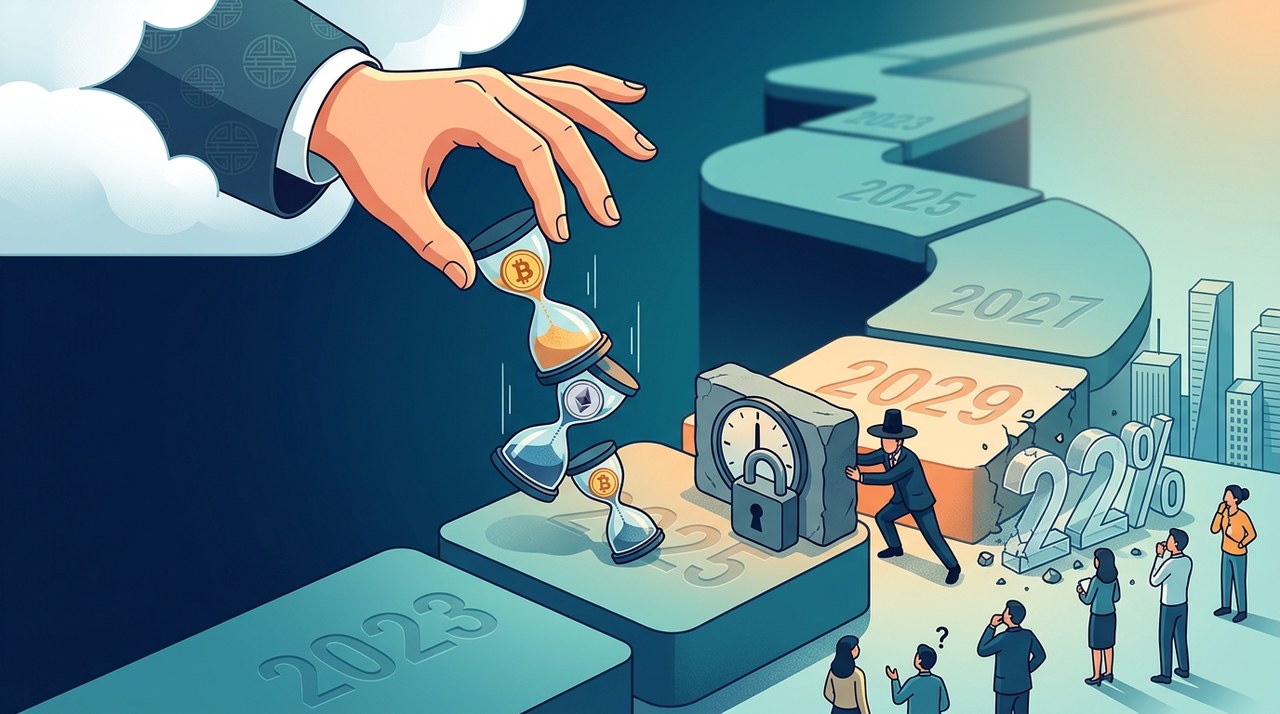
South Korea Seeks 4th Crypto Tax Delay to 2029
South Korea is seeking a fourth delay to its 22% crypto tax, targeting a new start date of 2029.

 +2
Bitcoin Crosses $80,000 as Altcoins Rise and SHIB Struggles
Bitcoin climbed back above $80,000 following short liquidations and ETF inflows, while major altcoins gained and Shiba Inu faced continued selling pressure.
|