South Korea Crypto Bill Could Redefine Stablecoins
What South Korea's New Stablecoin Draft Bill Means for Crypto
South Korea is preparing to take a major step forward in how digital assets operate within its financial system. A new draft bill targets stablecoins, which are digital tokens designed to track the value of regular currencies like the South Korean Won or the US Dollar.
The proposed legislation places traditional financial institutions right at the center of stablecoin creation. Under this draft framework, bank-led models are favored for issuing stablecoins. However, the bill includes a key rule: fintech and technology companies are permitted to become the largest individual shareholders in these stablecoin issuing entities.
This setup creates a hybrid model where traditional banking security meets the fast-moving tech sector. By allowing tech firms to own major stakes while keeping banks directly involved in issuance, South Korea hopes to create a secure yet highly innovative digital payment system.
Understanding the Core Facts of the Draft Bill
To fully grasp how this law works, it helps to break down the main points outlined in the proposal. The legislation seeks to balance regulatory safety with technological adoption.
- Bank-led issuance structure: The draft legislation favors banks taking the primary operational role in issuing stablecoins.
- Fintech ownership room: Technology and fintech companies can own the largest single shareholding stake in stablecoin issuing entities.
- Regulatory oversight: The bill establishes clear guardrails to ensure reserves are fully backed and audited.
- Market integration: The framework aims to integrate digital tokens into daily commerce beyond simple trading on exchanges.
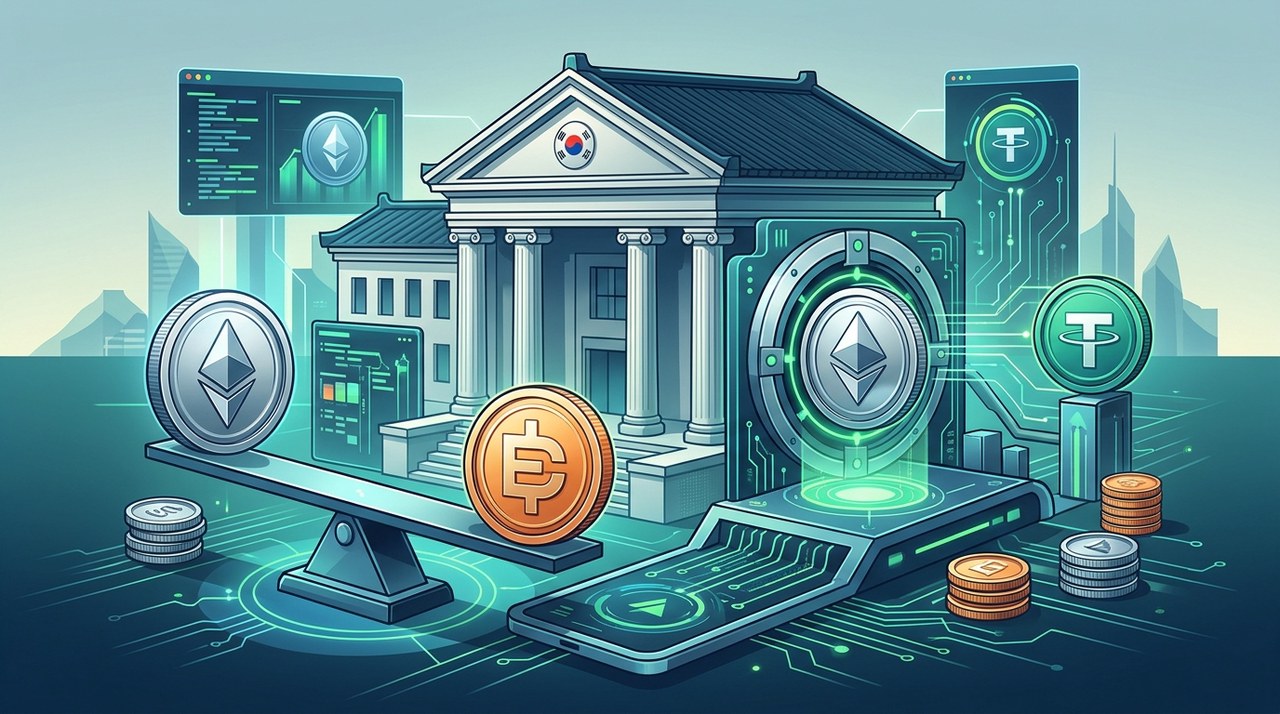
South Korea's draft bill favors bank-led stablecoin issuance but allows fintech and technology companies to become the largest individual shareholders.
Why Bank Involvement Matters for Stablecoins
Stablecoins rely entirely on trust. Users need to know that for every digital coin issued, there is real money or equivalent high-quality liquid assets safely stored in a reserve fund.
By placing banks in a leading role for token issuance, lawmakers want to ensure that reserve management follows strict financial standards. Commercial banks already have established audit practices, risk management teams, and direct access to central banking clearing systems. This makes them well-equipped to handle reserve management and maintain liquidity.
Think of it like building a new bridge. You want experienced structural engineers to handle the foundation so it never collapses, even during heavy traffic. Banks act as those structural engineers for stablecoin reserves.
The Crucial Role of Fintech and Tech Companies
While banks provide stability, traditional financial institutions do not always move quickly when building consumer-facing software. That is where technology and fintech companies come into play.
Allowing tech firms to be the largest individual shareholders in stablecoin issuers gives these companies a strong reason to build useful applications. Tech companies excel at creating mobile apps, payment gateways, and smooth digital user experiences.
If a popular social messaging app or e-commerce platform owns a major stake in a stablecoin provider, it can plug those digital payment tokens directly into everyday services. Users could send payments to friends or buy goods online with just a couple of taps, backed by the safety of bank-held reserves.
South Korea's Position in the Global Crypto Landscape
South Korea has long been one of the world's most active digital asset markets. Domestic retail participation in crypto trading has historically shown high engagement levels across local exchanges.
In past years, trading volume on Korean exchanges sometimes matched or exceeded that of traditional stock markets during active bull runs. However, past digital asset performance or past trading volume is not an indicator of future results.
Because the local market is so active, Korean regulators have worked steadily to introduce structured rules. Previously, the country implemented mandatory real-name bank account verification for crypto exchange users and introduced licensing rules for Virtual Asset Service Providers (VASPs). The new stablecoin bill is the next logical step in structuring the local market.
Comparing Global Approaches to Stablecoin Rules
South Korea is not the only region working to regulate stablecoins. Financial authorities worldwide are crafting rules to govern asset-backed digital tokens.
The European Union Framework
In Europe, the Markets in Crypto-Assets (MiCA) regulation established clear requirements for e-money tokens and asset-referenced tokens. Issuers must hold significant bank reserves and meet tough operational standards before offering stablecoins to European residents.
The United States Approach
In the United States, federal lawmakers have debated several payment stablecoin bills. Debate often centers on whether stablecoin issuers must operate under federal bank charters or if state-level licensing models are sufficient.
South Korea's Hybrid Pathway
South Korea's proposed path combines elements from both approaches. By requiring bank leadership in issuance while encouraging fintech equity ownership, the framework tries to blend traditional oversight with technology-driven growth.
Looking at Future Market Scenarios and Potential Risks
It is helpful to analyze how the stablecoin market could develop under this proposed legislative framework, considering both potential growth drivers and key market risks.
If the draft bill is officially enacted into law and major commercial banks partner smoothly with leading tech firms, stablecoin adoption for everyday domestic transactions could increase over the next several years. A clear regulatory structure could also boost business confidence and encourage institutional settlement systems to use stablecoins.
On the other hand, if regulatory compliance costs prove overly restrictive or if disagreements arise between banking institutions and tech shareholders regarding governance, stablecoin deployment could face delays. Furthermore, macro-economic shifts, liquidity shortages, or broader crypto market fluctuations could limit user adoption regardless of the regulatory outcome.
Key Takeaways for Crypto Users and Businesses
South Korea's draft stablecoin legislation signals a maturing crypto market where regulation aims to provide structure rather than total restriction. For regular consumers, bank involvement could offer clearer consumer protection mechanisms.
For fintech companies, the opportunity to hold major ownership stakes opens new business possibilities. As the draft bill moves through the legislative pipeline, observing how financial institutions and technology companies team up will reveal the future direction of digital payments in South Korea.
Latest blog posts


Solana Devs Move to Stop Wasted Validator Power on Lost Blocks
Solana developers are working on an update to stop validators from wasting processing power on blocks already rejected by the network.
|

Europol Traces $28.5 Million in Crypto Piracy Crackdown
Law enforcement across 11 countries traced $28.5 million in crypto linked to illegal streaming services and shut down 57 unauthorized platforms.
|


CFTC Updates BTC & ETH Rules as Ethereum Boosts Security
The CFTC staff updated financial guidelines for Bitcoin and Ether, while the Ethereum Foundation expanded its security team to tackle growing AI threats.
|