

Solana Launches DvP Settlement Standard With J.P. Morgan
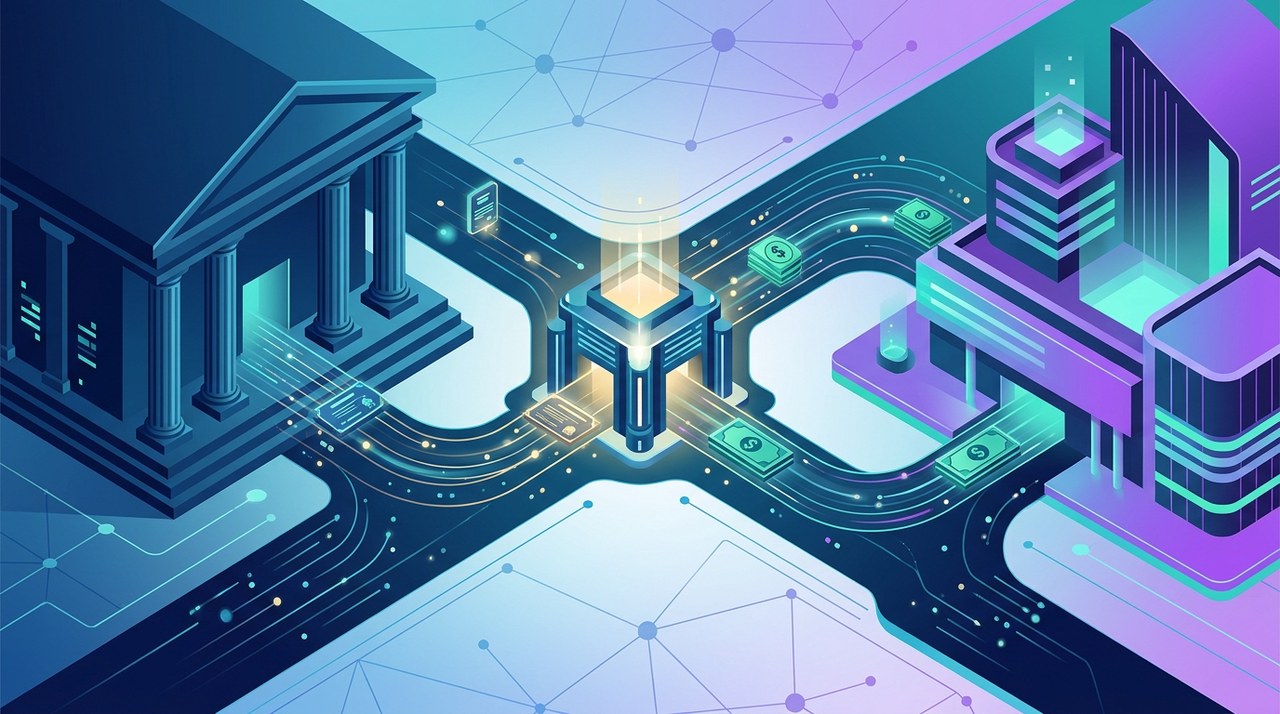
Imagine buying a house where you hand over your money today, but you have to wait two or three days to actually get the keys. During those waiting days, both you and the seller are stuck in financial limbo. That is pretty much how major Wall Street trades work every single day.
To fix this slow and risky waiting game, the SolanaSOL-5.70% Foundation has officially launched Solana DvP. It is an open-source smart contract program created to help large financial institutions settle trades instantly on a public blockchain.
What Exactly Is Delivery-versus-Payment?
In the world of big finance, Delivery-versus-Payment (DvP) is a core rule. It means the asset (like a bond or stock) and the payment (cash) must swap hands at the exact same moment. If one side fails to deliver, the entire trade cancels out. No one gets left hanging.
Right now, banks handle this using custom, proprietary smart contracts or slow off-chain clearing systems. Solana DvP replaces those custom setups with a standardized, reusable Application Programming Interface (API). Released under the free and open MIT license, any bank or financial company can plug it into their software.
J.P. Morgan Input and Executive Insights
Building tools for major banks requires deep knowledge of how global finance works. That is why the Solana Foundation collaborated directly with banking giant J.P. Morgan to design the system according to real-world institutional needs.
Atomic settlement removes counterparty risk that is inherent in traditional finance. The program offers institutions a single open standard with finality in seconds instead of days.
Catherine Gu, Head of Product for Digital Assets at the Solana Foundation, emphasized that this new standard eliminates the waiting period where one party could default on a deal.
A shared, open standard for atomic delivery-versus-payment is exactly the kind of foundational infrastructure institutional market participants require.
Rhodel D'souza, Head of Markets Digital Assets at J.P. Morgan, shared a similar view, pointing out that banks need trusted, standardized rails before moving serious market volume on-chain.
Old-School Wall Street vs. Atomic Settlement
To appreciate why this launch matters, it helps to look at how traditional trading compares to blockchain settlement:
- Traditional Markets: A trade moves through clearinghouses, central depositories, and custodian banks. This process takes 1 to 2 business days (known as T+1 or T+2) and ties up valuable capital.
- Solana DvP: The trade uses an atomic transaction. Think of it like a vending machine: you put your money in, and the soda falls out at the exact same instant. If the soda gets stuck, your money drops back into the tray. Both legs settle together in seconds, or neither does.
Built for Enterprise Rules and Privacy
Banks face strict regulatory laws, which means they cannot just use standard crypto tokens. Solana DvP is built to support both regular SPL Tokens and advanced Token-2022 features that regulated entities need.
These built-in technical features include:
- Permanent Delegates: Allows authorized administrators to manage assets when legally required.
- Pausable Tokens: Gives issuers the ability to freeze trading during emergency security checks or compliance reviews.
- Transfer Hooks: Ensures automated compliance checks execute every time a token changes hands.
- Audited Security: The codebase has already passed rigorous external security audits.
- Upcoming Privacy Features: The foundation plans to add confidential transaction mechanisms so banks can keep sensitive financial details private.
Solana's Growing Push Into Real-World Assets
This announcement is part of a larger trend where Wall Street institutions are bringing real-world assets (RWAs) like stocks, bonds, and treasury funds onto public blockchains.
For example, BlackRock, the world's largest asset manager, recently launched a tokenized money market fund that records ownership on Solana alongside EthereumETH-2.54%, designed to meet cash reserve requirements under the GENIUS Act.
Similarly, major crypto exchange Kraken selected Solana for its xStocks product, enabling overseas customers to trade tokenized shares of U.S. equities.
Looking Ahead: Opportunities and Market Risks
Standardized settlement tools like Solana DvP lower technical barriers for big institutions. By reducing operational delays and settlement risk, public networks like Solana (SOL) are positioning themselves as core infrastructure for modern capital markets.
However, investors should remember that enterprise adoption is an ongoing process. Blockchain networks still face potential challenges, including regulatory changes, technological updates, and general crypto market volatility.
Past returns of digital assets do not guarantee future performance. Investors should always research thoroughly and weigh market risks before making financial decisions.
Latest blog posts

 +1
Nadex Adds Shiba Inu (SHIB) Derivatives to Regulated US Market
Nadex has self-certified a new Shiba Inu strike event contract with the U.S. CFTC, expanding SHIB's exposure in regulated derivatives markets.
|

Saylor's Strategy Faces $7B Paper Loss on Bitcoin Bet
Strategy's massive Bitcoin stash is down over $7 billion on paper after prices dropped below $67,000, though cash reserves remain fully intact.
|

Will AI Agents Start Paying for News Content Soon?
As traditional search traffic falls, media outlets are exploring whether autonomous AI agents might become their next paying audience using micro-crypto payments.
|