Senators Urge Treasury for State Stablecoin Protections
U.S. Lawmakers Raise Concerns Over Stablecoin Rules
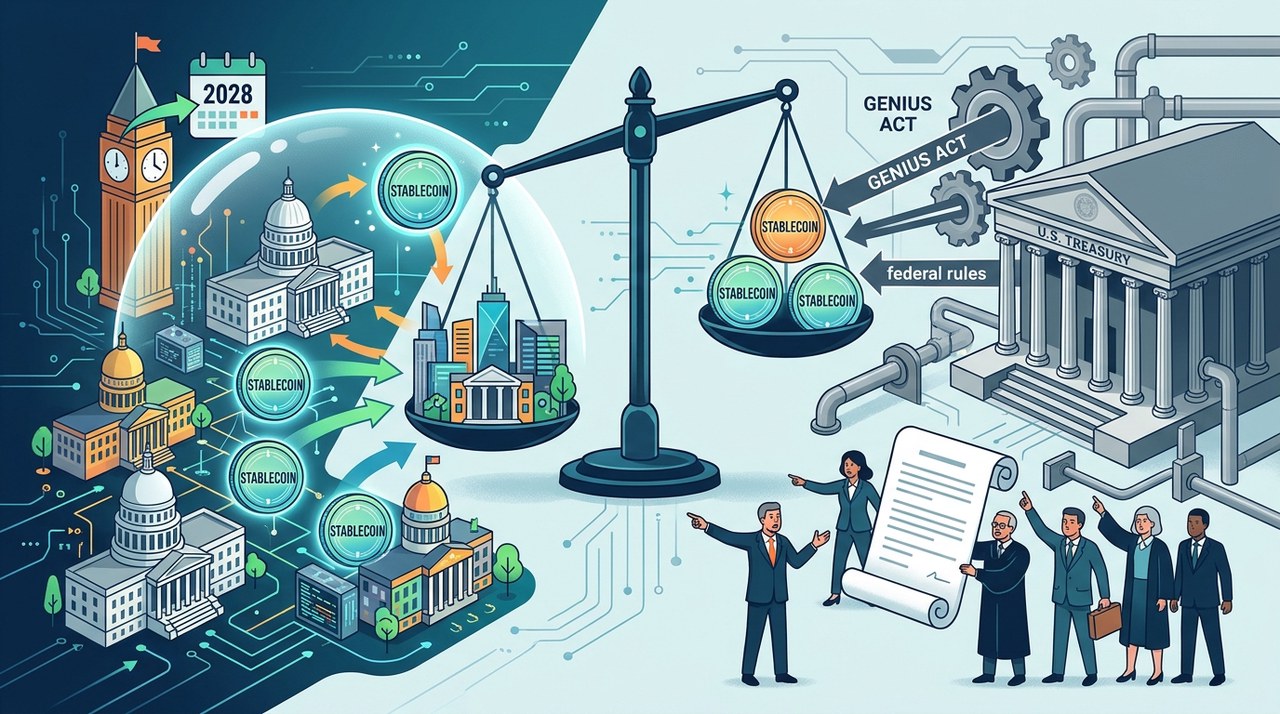
A group of U.S. Senators has raised important questions about the future of digital currency regulation in the United States. They caution that strict provisions under proposed legislation, such as the GENIUS Act, could unintentionally force stablecoin issuers away from state supervision and into heavy federal oversight.
The lawmakers sent a formal message to the U.S. Department of the Treasury. They stressed that forcing every stablecoin company into a single federal framework could harm local innovation and disrupt existing state-approved businesses.
What Are Lawmakers Asking the Treasury to Do?
To prevent an abrupt shift in how stablecoin companies operate, the lawmakers urged Treasury officials to extend safe harbor protections to stablecoin issuers operating in states that plan to establish qualifying regulatory frameworks before January 2028.
Lawmakers urged Treasury to extend safe harbor protections to stablecoin issuers in states expected to establish qualifying regulatory frameworks before January 2028.
By establishing a clear deadline of January 2028, lawmakers hope to give state regulators enough time to build detailed oversight rules. This cushion prevents companies currently licensed at the state level from facing sudden regulatory uncertainty.
Understanding State vs. Federal Oversight in Crypto
To understand why this request matters, it helps to look at how financial rules work in America. The U.S. uses a dual regulatory system where financial institutions can be regulated by individual states or by the federal government.
States like New York, Wyoming, and Texas have been pioneers in creating custom frameworks for crypto companies. These state rules often allow young companies to test new ideas under close local supervision.
Why State-Level Rules Matter
- Faster Innovation: State regulators can react quickly to technological changes.
- Tailored Protections: Local agencies can craft rules that fit specific business models.
- Lower Barriers to Entry: Small startups can comply with state licenses before taking on massive federal compliance costs.
The Risk of Forced Federal Oversight
If federal rules override state systems without a transition period, smaller stablecoin issuers might struggle. Federal compliance can require tens of millions of dollars in legal fees and administrative costs.
- Market Concentration: High compliance costs could leave only huge wall-street banks in the stablecoin market.
- Disrupted Services: Existing state-compliant issuers might have to suspend services while waiting for federal approvals.
- Loss of State Sovereignty: States that spent years building regulatory sandboxes could see their efforts sidelined.
What Is a Safe Harbor Provision?
A safe harbor is a legal provision that protects companies from penalties under new regulations, provided they meet specific temporary conditions. Think of it like a temporary driver's permit while the permanent licensing system gets updated.
If the Treasury grants this safe harbor, stablecoin firms can continue servicing customers under state supervision. They won't have to worry about immediate federal enforcement as long as their state is working on a approved framework prior to 2028.
How This Impacts Everyday Crypto Users
Stablecoins play a fundamental role in the digital asset market. Traders and everyday users rely on them to transfer value, access decentralized finance protocols, and hedge against price swings.
Clear regulatory guardrails help build long-term trust in the industry. However, sudden rule changes can disrupt liquidity or limit access to popular stablecoins. A balanced approach allows regulators to protect consumers while keeping the market stable and competitive.
Investors should keep in mind that regulatory decisions can influence market conditions. Past performance of digital assets or financial institutions is not a guarantee of future performance. Market participants should always evaluate risks carefully.
Looking Ahead to 2028
The conversation between U.S. Senators and the Treasury shows that stablecoin legislation is entering a critical phase. Lawmakers are striving to balance federal safety standards with state-level flexibility.
As the January 2028 timeline approaches, the crypto industry will be watching closely to see if the Treasury accepts these recommendations. Creating a fair transition period could help ensure that digital payments in America remain innovative, secure, and accessible to everyone.
Latest blog posts


Ethereum Builders Capture Most Funds in $3.4M Vault Exploit
An automated trading bot copied an attack on K3 Capital's sBOLD vault, paying block builders most of the proceeds to process its transaction first.
|


Why Cathie Wood Sold Nvidia to Buy Crypto Stocks
Cathie Wood's ARK Invest recently sold $84.8 million in Nvidia stock before earnings while buying up shares in crypto companies and SpaceX.
|
Hyperscale Data Needs $74.8M for AI Project After BTC Sale
Former Bitcoin miner Hyperscale Data warns it may run short of cash for its $1.2 billion AI expansion after selling its remaining BTC.
|