


Russia Opens Bitcoin Trading Amid Heavy US Sanctions
A Major Pivot on Cryptocurrency Policy
Four years ago, Russia's central bank wanted to ban crypto exchanges completely. In January 2022, officials proposed prohibiting trading platforms across the country.
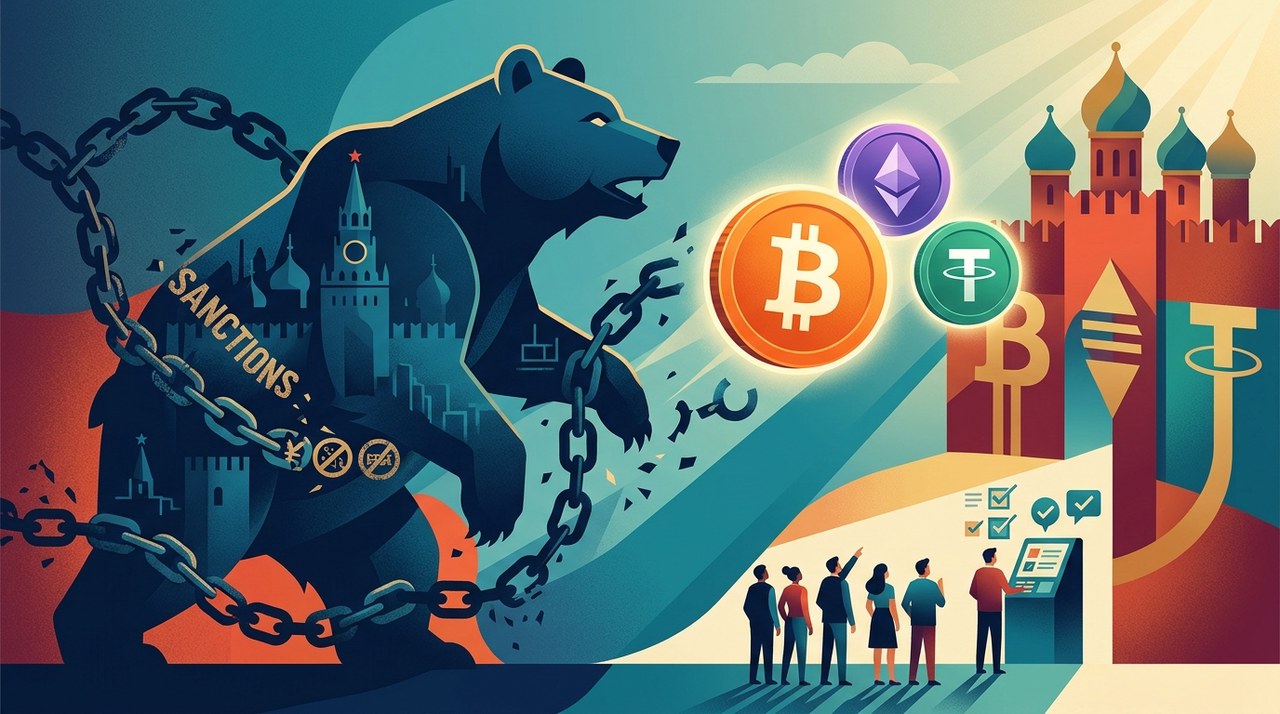
Now, the financial regulator has reversed its position. Under Russia's new crypto framework, approved exchanges can officially offer Bitcoin trading.
However, platforms must follow strict guidelines first. According to state news agency TASS, exchanges need central bank approval for their trading rules and must report every transaction.
What Coins Can Russians Buy and What Are the Limits?
The new rules keep the asset menu very small. Only three digital assets qualified for the initial rollout: Bitcoin (BTCBTC+1.29%), EthereumETH+2.62%, and TetherUSDT+0.36%.
To be eligible for approval, a cryptocurrency must maintain an average market value of roughly $60 billion over a two-year period.
Everyday retail buyers face annual limits too. Non-qualified investors can spend up to 300,000 rubles per year, which is around $3,630.
Before placing a single trade, ordinary investors must also pass a mandatory financial knowledge test.
Major Russian institutions are moving quickly. Commercial lender VTB plans to launch services this month. Sberbank and the Moscow Exchange aim to start on December 1, according to Interfax.
The Impact of International Sanctions
While local trading is becoming legal, key institutions involved face major international restrictions. Russia's biggest platform, the Moscow Exchange, sits directly on a US sanctions list.
The US Treasury sanctioned the Moscow Exchange and its national clearing house in June 2024. Sberbank has been under full US sanctions since April 2022.
This creates structural challenges for traders. Crypto transactions on the Moscow Exchange will clear through the exact same clearing house blacklisted by Washington.
Why Tether (USDT) Brings Extra Risk
One of the approved assets presents unique legal risks for local buyers: Tether (USDT). Because USDT tracks the US dollar, its issuer actively enforces US sanctions.
Tether has previously frozen funds tied to sanctioned entities. In March 2025, Tether locked $23 million linked to Garantex, a sanctioned Russian exchange, while working with the US Secret Service.
"Tether's ability to track transactions and freeze USDt linked to illicit activity sets it apart..." explained Tether Chief Executive Paolo Ardoino in an official statement following the freeze.
Warnings are also coming from inside Russia. In August, Petr Fradkov, chairman of lender PSB, publicly cautioned that Tether retains technical power to block tokens at any address.
Despite these warnings, there is currently no public record of mass freezes targeting small individual Russian wallets.
Closing Exits Abroad and Local Price Gaps
As local legal trading expands, international trading options for Russian citizens are shrinking fast.
Recently, KuCoin became the third major global crypto exchange within two weeks to restrict users located in Russia and Belarus.
Traders now fear that international isolation could distort market prices. Many worry that local prices on Moscow exchanges might trade below global market values.
What This Means for Investors
Russia's shift toward regulated crypto trading opens legal access for domestic buyers, but it arrives with unique regulatory and technical constraints.
Traders exploring these domestic channels should carefully weigh local availability against potential geopolitical and wallet risks.
Please keep in mind that crypto asset prices can be highly volatile and regulations can change rapidly. Past performance of digital assets is no guarantee of future results.
Latest blog posts


BitMine Nears 5% Ethereum Cap: Where Future Coins Will Come From
BitMine is preparing to stop its weekly Ethereum purchases as it approaches a self-imposed 5% supply cap, turning to network staking rewards as its primary source of new coins.
|
Bitcoin Squeeze Watch: Options Traders Eye Sub-$70K Odds
Bitcoin traded below $74,000 following five consecutive weekly losses, as options platform Derive signals a 31% chance of a sub-$70,000 price by Christmas.
|
Bitcoin Core Mining Node Fix: Turn It Off and On Again
Bitcoin Core developers disclosed a high-severity bug that stalled block creation, revealing that a simple node restart provided a temporary fix.
|