

Ripple Treasury Mints 30 Million RLUSD Tokens
What Happened with RippleXRP-3.28%'s Latest RLUSD Mint?
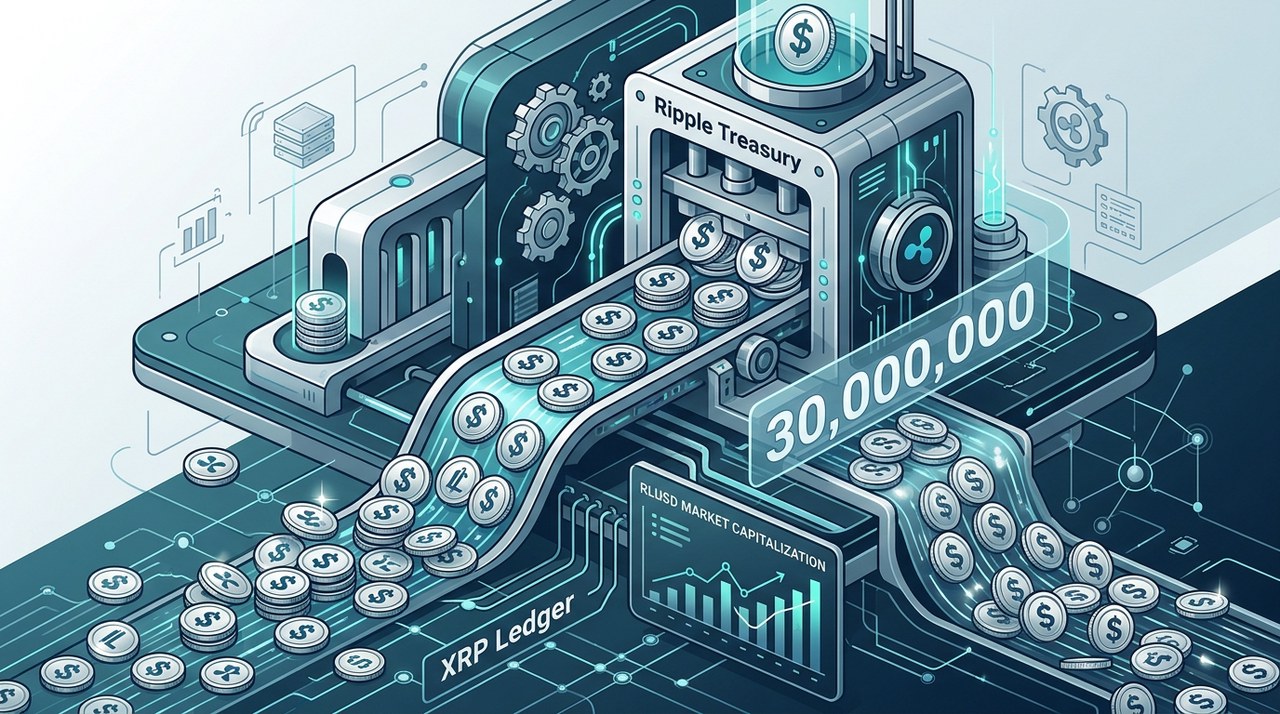
Ripple has officially created another large batch of its USD-pegged stablecoin. According to data from the Ripple Stablecoin Tracker, the Ripple Treasury minted 30 million Ripple USDRLUSD-0.07% tokens in a single transaction on October 7, 2026.
This latest creation of tokens adds to a steady stream of larger transactions over recent weeks. Data from CoinGecko shows that RLUSD now boasts an estimated market capitalization of around $2.53 billion.
A Closer Look at Recent RLUSD Treasury Activity
If you have been following Ripple's stablecoin developments, you probably know that this 30 million mint is part of a broader pattern. Treasury activity has been especially energetic throughout September and early October.
Here is a quick recap of how the recent minting events stacked up:
- September 1: The XRP Ledger recorded a massive minting day with approximately 143.1 million RLUSD created.
- September 11: The treasury minted 10 million RLUSD in a single transaction, bringing total minting on the XRP Ledger that day to roughly 21.9 million tokens.
- September 21: The treasury executed two mints—one for 20 million RLUSD and another for 20.5 million RLUSD—totaling 40.5 million tokens in 24 hours.
- September 22: Another 19 million RLUSD was minted, bringing the two-day total across September 21 and 22 to 59.5 million tokens.
Why Mints Do Not Always Mean a Permanent Supply Increase
When you see millions of new stablecoins created, it is easy to think that the total circulating supply is growing permanently. However, that is not always the case.
Alongside token creation, the Ripple Treasury also performs regular token burns. For instance, on September 22—the same day 19 million RLUSD was minted—the treasury destroyed 14.9 million RLUSD and another 14.95 million RLUSD across two transactions. That meant 29.85 million RLUSD was burned on a single day.
So, why do minting and burning happen so frequently?
How Ripple Handles Issuance and Redemptions
Think of the treasury like a foreign currency exchange booth at an airport. The creation and destruction of tokens directly match customer demand:
- Issuing tokens (Minting): Institutional customers deposit traditional cash (fiat USD) with Ripple. Ripple then mints and transfers an equivalent amount of RLUSD tokens to the customer.
- Redeeming tokens (Burning): When customers want their fiat cash back, they return their RLUSD to Ripple. Ripple refunds the USD and permanently burns the returned RLUSD tokens.
Because institutional clients are constantly moving funds in and out, Ripple routinely creates and destroys tokens to keep liquidity balanced and preserve the 1:1 dollar peg.
Minting and burning activities reflect real-time operational flows as institutional clients deposit and withdraw fiat reserves.
What This Means for the Crypto Market
The ongoing activity in the RLUSD treasury signals active institutional participation in Ripple's stablecoin ecosystem. Increased stablecoin liquidity can facilitate smoother cross-border settlements across the XRP Ledger and partner networks.
However, traders and readers should keep in mind that stablecoin volumes fluctuate rapidly based on institutional settlement needs. Past performance or historical growth of digital assets is not a guarantee of future results. To review live market prices and trading pairs, you can visit Bitkub Market.
Moving forward, tracking both mints and burns gives a much clearer picture of actual market demand than looking at minting numbers alone.
Latest blog posts

Greece Passes Crypto Tax Law With 10% Gains Levy, 15% on Staking
Greece has approved a new crypto tax framework, introducing a 10% capital gains tax and a 15% rate on staking and DeFi income.

US Treasury Drops Proposed Crypto Travel Rule Expansion
The U.S. Department of the Treasury has officially withdrawn a controversial proposal that aimed to expand transaction monitoring for cryptocurrency users.


Gnosis Pay Data Breach: User Info Exposed, Funds Safe
Gnosis Pay reported a security incident exposing card and personal data, but confirmed that customer crypto funds remain secure.
|