
Paraguay Bank Crisis Sparks Bitcoin Self-Custody Debate
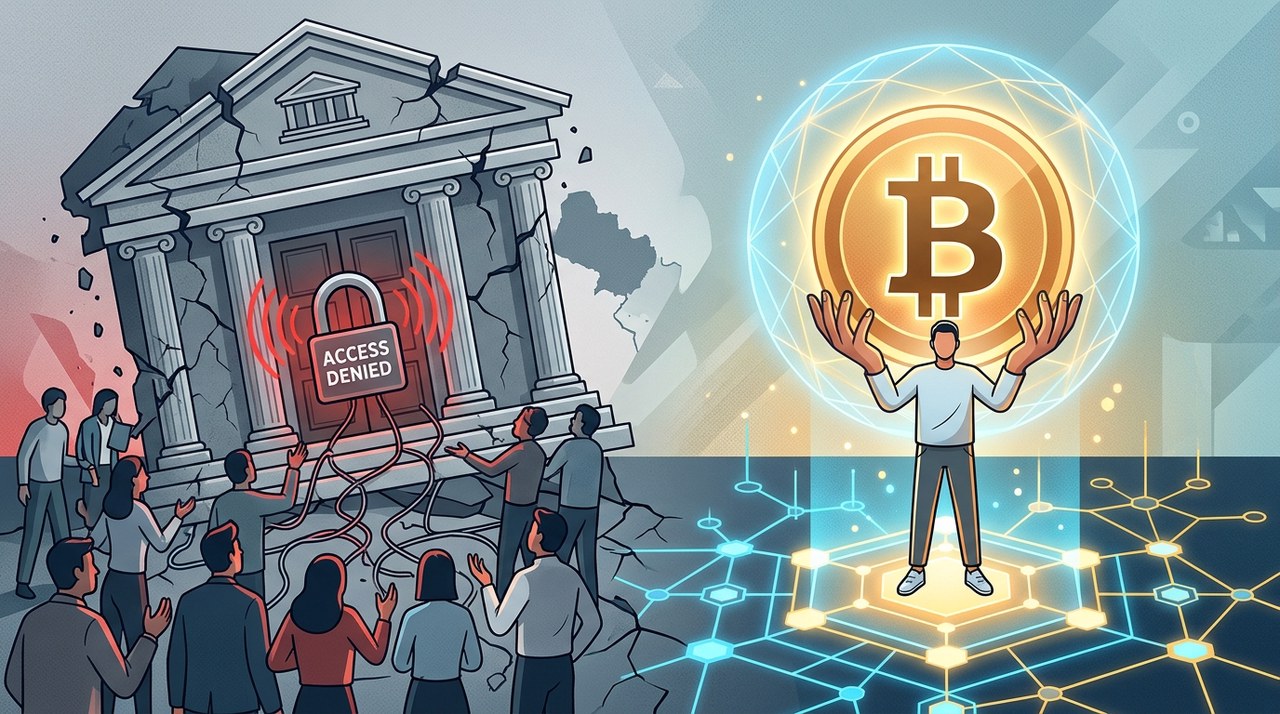
A Massive Banking Crisis Shakes Paraguay
Imagine waking up, opening your banking app, and finding out your money is completely locked away. That nightmare scenario recently became reality for millions of people in Paraguay.
A massive system lockout restricted banking access for roughly 60% of the country's population. The widespread panic and economic disruption ultimately led to the resignation of Paraguay's President.
This event highlights the single points of failure present in traditional financial networks. When a central institution fails, everyday citizens bear the immediate burden.
Why Crypto Advocates Say 'BitcoinBTC-5.94% Fixes This'
During banking failures, community members often repeat a popular phrase across social platforms: Bitcoin fixes this. But what does that mean in practical terms?
Traditional banks act as centralized custodians. They control account access, set transaction rules, and can freeze funds during institutional emergencies.
In contrast, Bitcoin operates as a decentralized, peer-to-peer network. It runs on distributed computer code rather than centralized corporate servers.
- True Ownership: Using non-custodial crypto wallets means you hold your own private keys, preventing third parties from blocking your account.
- Continuous Access: The Bitcoin blockchain operates 24/7 without bank holidays, business hours, or systemic lockouts.
- Censorship Resistance: Peer-to-peer transactions process directly between users without central approval requirements.
Understanding the Trade-Offs and Risks
While self-custody offers freedom from banking lockouts, taking full control of your money comes with critical personal responsibilities.
Digital asset self-custody lacks official deposit insurance protection. If you misplace private seed phrases or fall victim to phishing attacks, stolen funds cannot be recovered.
Additionally, digital assets experience regular price swings. While traditional banking issues affect system access, market fluctuations directly impact asset values.
Bitcoin Market Sentiment and Prediction Data
Alongside conversations about financial independence, traders continue monitoring market expectations for Bitcoin's price trajectory.
Prediction market contract data reveals how participants previously priced probabilities for potential Bitcoin peak levels:
- $80,000 Target: Assigned a 50% probability by market traders.
- $90,000 Target: Placed at an 11% probability.
- $92,500 Target: Estimated at a 6% probability.
- $95,000 Target: Reflecting a 3% probability.
- $97,500 Target: Estimated at a 3% probability.
These figures reflect speculative probabilities within prediction markets rather than guaranteed outcomes. Achieving higher valuation milestones depends on specific market conditions.
For example, reaching higher target levels requires sustained institutional ETF inflows, expanding market liquidity, and supportive regulatory developments. Conversely, if global interest rates rise or market liquidity dries up, prices could face sharp downward corrections.
Past performance of digital assets is not an indicator of future returns. Investors should monitor live market data and evaluate trends directly through established sources like Bitkub Market.
Final Thoughts: Balancing Security and Innovation
The banking crisis in Paraguay underlines why financial diversification remains an important consideration for individuals everywhere.
Traditional financial institutions offer familiar convenience, but centralized systems remain vulnerable to systemic disruptions and political instability.
Meanwhile, decentralized cryptocurrencies provide alternative access methods, provided users carefully manage their own security and understand inherent market risks.
Latest blog posts


Hyperliquid Files CFTC Application with $13.3M Revenue
Hyperliquid Strategies reported $13.3M in revenue and filed for CFTC registration to offer regulated perpetual markets in the US.
|
Stacks Bond 3 Sells Out with Bullish and 21shares
Stacks has sold out its Bond 3 Bitcoin staking pool, attracting major institutions like 21shares and NYSE-listed Bullish.
|
Asian Exchanges Boost Security Amid AI Hack Threats
Asian crypto exchanges are upgrading cybersecurity against AI-assisted threats while regional governments advance tokenization and stablecoins.