OCBC and StraitsX Test Stablecoins for Business Payments
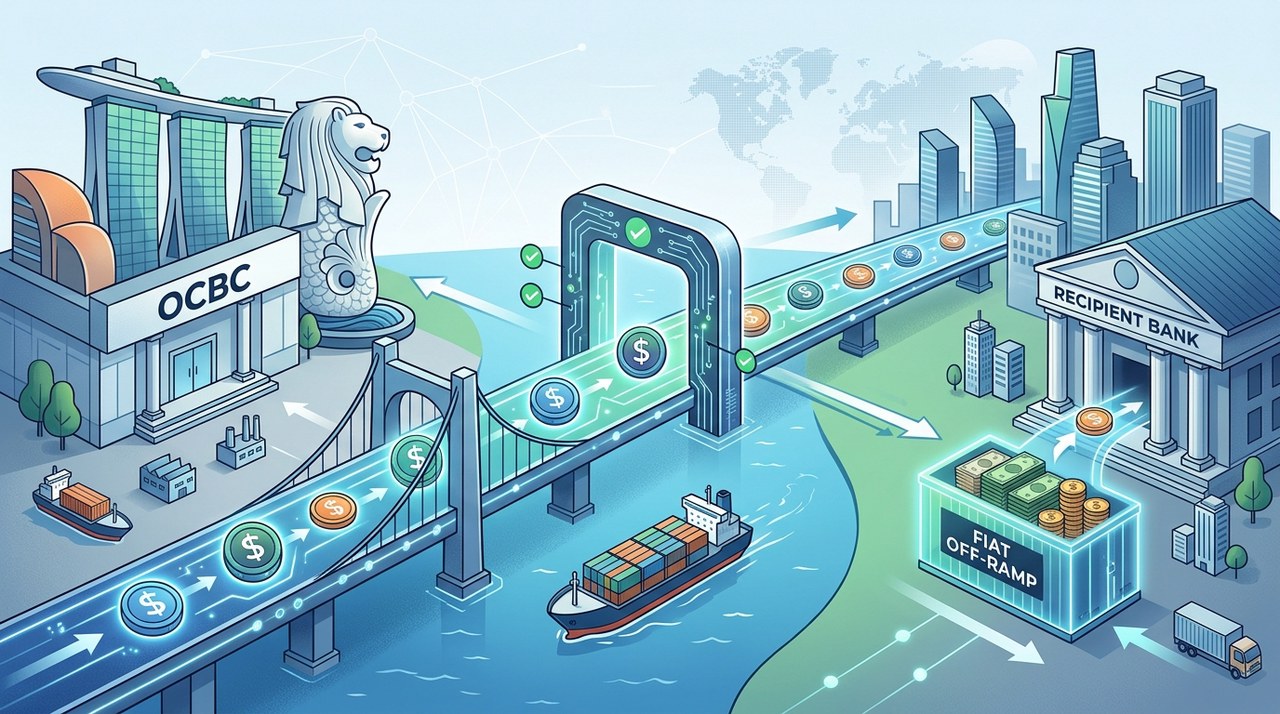
A New Era for Cross-Border Business Payments
Singaporean banking giant OCBC and digital payment infrastructure firm StraitsX have launched a joint pilot project. This initiative focuses on cross-border business payments using stablecoins.
The collaboration aims to speed up international settlements for commercial clients while lowering transaction costs. By blending blockchain tech with traditional banking, the two firms hope to make cross-border cash flows smoother and more efficient.
How the OCBC and StraitsX Pilot Works
The pilot project divides responsibilities between two specialized entities. Each institution brings its primary strength to the table.
- StraitsX Infrastructure: Handles the on-chain collection of funds and manages regulatory compliance checks.
- OCBC Bank: Acts as the traditional financial gateway, managing the fiat off-ramp to convert digital tokens into regular currency.
This clear division of labor combines the speed of blockchain networks with the security and liquidity reserves of a major commercial bank.
Understanding On-Chain Collection and Compliance
When a business makes a cross-border payment using stablecoins, the transaction takes place on a public or enterprise blockchain network. StraitsX provides the underlying infrastructure to process these token transfers.
However, speed is only half the equation in institutional finance. Compliance is equally vital.
StraitsX ensures that all transactions adhere to Anti-Money Laundering (AML) and Know Your Customer (KYC) standards. This step verifies that funds moving through the system come from legitimate sources before reaching traditional bank accounts.
What is a Fiat Off-Ramp?
To understand why OCBC's role is critical, it helps to understand what a 'fiat off-ramp' actually does.
Think of a fiat off-ramp as a bridge connecting the digital asset world to traditional banking. While stablecoins exist as digital tokens on a blockchain, businesses still need traditional currency like Singapore Dollars or US Dollars to pay staff, suppliers, and operational expenses.
OCBC manages this off-ramp process. Once StraitsX collects and verifies the stablecoin funds on-chain, OCBC converts those tokens back into fiat money and deposits them directly into the recipient's bank account.
Why Traditional Business Payments Need Innovation
For decades, international business payments have relied on legacy networks like SWIFT. While reliable, these traditional networks often suffer from structural inefficiencies.
- High Fees: Intermediary correspondent banks charge fees at every step of the payment journey.
- Slow Settlements: Payments can take anywhere from two to five business days to clear, especially across different time zones.
- Lack of Transparency: Tracking the exact status of an international wire transfer can be difficult for small and medium enterprises.
Stablecoins offer a potential fix. Transactions can settle in seconds or minutes at a fraction of traditional correspondent banking fees.
The Strategic Importance of Singapore's Regulatory Framework
This pilot does not exist in a vacuum. Singapore has consistently positioned itself as a global leader in regulated digital asset innovation.
The Monetary Authority of Singapore (MAS) has established clear guidelines for stablecoins and digital payment token services. This clear regulatory backdrop gives traditional institutions like OCBC the confidence to test blockchain integrations safely.
By launching compliant pilots, financial firms in Singapore are building safe blueprints for institutional crypto adoption across the broader Asian market.
Risks and Important Considerations
While cross-border stablecoin payments offer clear advantages in speed and efficiency, businesses and market participants must consider inherent risks.
- Regulatory Changes: Rules surrounding digital assets and stablecoin reserve backing continue to evolve across global jurisdictions.
- Technology and Smart Contract Risks: Blockchain infrastructure relies on code, which requires continuous security auditing to prevent technical glitches.
- Market Volatility and Liquidity: Although stablecoins aim to hold a 1:1 peg with fiat currencies, broader crypto market stress can occasionally impact liquidity.
Because of these potential challenges, institutions are taking a cautious, pilot-based approach rather than immediately rolling out full-scale operations.
Looking Ahead: What This Means for Business Banking
The collaboration between OCBC and StraitsX highlights a growing trend in global finance: traditional banks are no longer ignoring blockchain technology; they are actively integrating it.
If this pilot succeeds, it could lead to broader commercial rollouts, offering businesses faster, cheaper, and fully compliant international payment options in the near future.
Latest blog posts



 +1
US Economic Events to Watch as Crypto Seeks Relief
Upcoming US inflation and employment reports could shape Federal Reserve rate expectations after a volatile week for cryptocurrency markets.
|
South Korea to Release Draft Crypto Legal Framework This Week
South Korea is set to publish a comprehensive crypto draft framework featuring business licensing rules and bank-centered stablecoin regulations.


US Inflation and Thanksgiving: Crypto Week Ahead
A breakdown of US inflation data and Thanksgiving liquidity impacts on the crypto market for the week of November 23.
|