
Nvidia Turmoil Tests Bitcoin Miners' AI Expansion
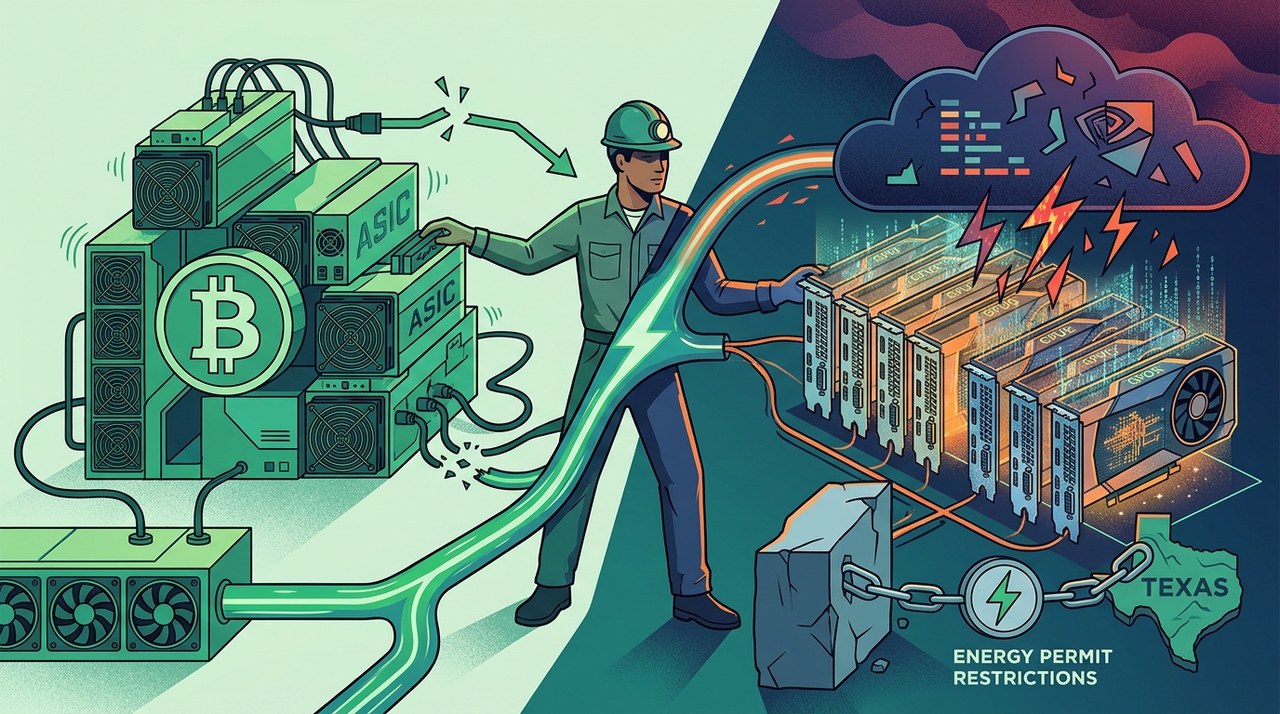
The Shift from BitcoinBTC+4.43% Mining to High-Performance Computing
Imagine owning a massive warehouse with a dedicated connection directly to a power plant. For years, you used that facility to run thousands of Bitcoin mining rigs. But as block rewards decreased after the recent halving event, you noticed a massive demand spike right next door: Artificial Intelligence.
Over the past year, many prominent Bitcoin mining companies began expanding into digital infrastructure providers. They realized that their high-voltage power contracts and industrial cooling systems were ideal for housing AI hardware.
However, making the leap from mining crypto to hosting AI models is not simple. A sudden mix of executive turmoil at Nvidia and stricter energy permit restrictions in Texas is creating a sharp divide between established operators and struggling newcomers.
Why Are Bitcoin Miners Pivoting to AI?
To understand why this current friction matters, we first need to look at how the traditional mining business works. Bitcoin miners use specialized hardware called ASICs (Application-Specific Integrated Circuits). These computers perform specific mathematical calculations to secure the network and earn block rewards.
While ASICs excel at hashing algorithms, they cannot process machine learning tasks. On the other hand, AI compute relies heavily on Graphics Processing Units (GPUs). Nvidia is the dominant global supplier of these advanced chips.
Converting a data center from Bitcoin mining to AI hosting offers several strategic points:
- Diversified revenue streams: AI hosting contracts often provide longer-term, steady multi-year hosting agreements.
- High power utilization: Large-scale power contracts can be repurposed to meet growing demand for cloud compute.
- Infrastructure leverage: Existing real estate, electrical transformers, and fiber-optic networks can be adapted for high-density server racks.
The Nvidia Factor: Leadership Upheaval and Hardware Demand
Nvidia sits at the center of the artificial intelligence ecosystem. Almost every major tech enterprise, cloud provider, and data center builder is competing to secure top-tier chips like the H100, H200, or next-generation architectures.
Recent leadership shifts and operational realignments within Nvidia have created uncertainty regarding hardware allocation schedules. When chip delivery timelines shift, financing structures for large-scale data centers often stall.
Miners who already secured binding purchase agreements and firm allocation dates early remain on stable ground. However, miners still in the planning stages are finding it much harder to guarantee hardware delivery timelines.
Without confirmed GPU delivery allocations, institutional capital providers are hesitant to commit massive funding for data center retrofits.
Texas Permit Restrictions Add Energy Grid Complexity
Texas has long been a primary hub for North American Bitcoin mining. The state offers expansive land, direct access to wholesale energy markets, and a business-friendly regulatory framework managed by ERCOT (Electric Reliability Council of Texas).
However, as aggregate energy demand from both crypto facilities and AI compute hubs surged, regional grid operators began tightening oversight on new interconnection requests.
Texas authorities have introduced stricter permit criteria for high-density facilities. These rules aim to ensure grid stability during extreme weather conditions, such as summer heatwaves or winter cold snaps.
Securing local energy permits now involves longer review timelines, detailed load-impact assessments, and higher financial commitments, slowing down quick expansions.
A Growing Divide: Funded Projects vs. Unapproved Applicants
The combination of Nvidia supply chains and Texas permit approvals is creating a visible split across the crypto mining industry.
1. Well-Capitalized Miners with Approved Permits
The first group consists of well-capitalized operators who secured their hardware orders early and finalized grid interconnection agreements before new permit requirements took effect.
These entities possess operational data centers or fully backed construction capital. Their clear path to execution allows them to maintain institutional investor confidence.
2. Miners Still Seeking Capital and Regulatory Clearances
The second group includes smaller or later-entering miners who announced grand AI expansion plans without locking in verified hardware deliveries or official power permits.
For these operations, securing fresh capital has become increasingly difficult. Lenders and equity investors want proof of hardware allocation from vendors like Nvidia and formal grid approval before releasing funds.
Understanding the Operational Risks
While integrating AI compute with crypto infrastructure presents genuine opportunities, market participants must also consider the underlying risks inherent to both industries:
- Capital Expenditure: Converting basic mining sheds into liquid-cooled, high-density AI data centers requires tens to hundreds of millions of dollars.
- Rapid Hardware Obsolescence: GPU architectures evolve quickly, creating ongoing reinvestment cycles for operators.
- Regulatory Shifts: Utility commissions and environmental regulators frequently update policies surrounding large electrical loads.
- Crypto Volatility: Fluctuations in Bitcoin revenue can impact baseline cash flows during multi-year facility conversion phases.
Historically, digital assets and related mining equities experience significant price cycles. Past performance of digital assets or mining operations is not indicative of future performance. Readers interested in tracking cryptocurrency market trends can review real-time data at Bitkub Market.
Looking Ahead
The evolution of Bitcoin mining facilities into multi-purpose compute hubs remains a major theme across the digital asset landscape. How Nvidia resolves its internal leadership dynamics and allocates hardware will heavily influence project timelines.
At the same time, regional power grid operators will continue balancing heavy industrial demand with overall system reliability. Operators that hold both secured hardware and fully compliant energy permits will likely lead this ongoing transition.
Latest blog posts


Bitcoin Reclaims $60K Following Michael Saylor Post
Bitcoin recovered above $60,000 on Nov 21 after dropping near $55,000, following a brief social media message from Strategy's Michael Saylor.
|
 +2
Chainflip Faces Second Security Exploit Draining Vaults
Decentralized protocol Chainflip suffered a second security breach in ten weeks, losing Bitcoin, Ethereum, and stablecoins while offering a 10% bounty for returned funds.
|
Robert Kiyosaki Urges Crypto Buyers to Wait Out the Crash
Author Robert Kiyosaki advises crypto investors to wait for a market bottom before buying Bitcoin, citing limited supply and rising debt.
|