
Nvidia Shipments Paused in Southeast Asia Amid U.S. Curbs

The Big Picture: Nvidia AI Server Shipments Paused
Imagine trying to build a state-of-the-art supercomputer, but the key components suddenly stop arriving.
That is precisely what is happening right now in Southeast Asia.
Recent U.S. export controls have halted Nvidia server shipments to four countries in the region.
As a result, billions of dollars in planned data center financing are currently under strict review.
Why Did the U.S. Limit Nvidia Exports?
High-performance graphics processing units, or GPUs, power modern artificial intelligence applications.
The U.S. government has updated trade rules to limit advanced technology exports.
Regulators worry that high-end AI chips could be rerouted through third-party countries.
To prevent this, officials paused deliveries until suppliers verify final delivery destinations and customer compliance.
Billions in Data Center Funding on Hold
Southeast Asia has recently emerged as a major hub for global data center expansion.
Global tech firms and local companies have planned massive facilities to support cloud services and AI tools.
Building these large data centers requires substantial capital from international banks and private investors.
Because facilities cannot operate without hardware, lenders are pausing financing packages worth billions of dollars.
AI Stocks and Tech Markets Experience Pressure
News of the shipment pause created immediate ripples across global financial markets.
Shares of Nvidia and related artificial intelligence companies came under downward pressure following the report.
Market participants are evaluating how these trade bottlenecks might influence corporate hardware sales.
When key supply chains face regulatory hurdles, short-term market sentiment often shifts toward caution.
How Does This News Affect AI Crypto Tokens Like CHIP?
Hardware supply disruptions in traditional tech frequently impact the digital asset sector.
Projects like CHIP focus on decentralized computing networks and artificial intelligence infrastructure.
When central cloud providers encounter physical server shortages, interest in decentralized compute alternatives often grows.
Decentralized networks allow users to rent out unused computing capacity across a global blockchain system.
However, decentralized networks also face operational challenges if total hardware supply remains restricted globally.
Understanding Decentralized Physical Infrastructure Networks (DePIN)
Decentralized Physical Infrastructure Networks, commonly called DePIN, attempt to solve compute bottlenecks.
Think of DePIN like a peer-to-peer sharing economy, but designed specifically for computer hardware.
Instead of relying on one centralized mega-server facility, independent operators pool their GPU power.
AI developers can then rent this distributed compute capacity to train machine learning models.
Tokens within this sector, such as CHIP, aim to facilitate transactions and incentivize compute providers.
Technological supply chains require balance between strict regulatory compliance and continuous infrastructure expansion.
Market Risks and Key Considerations
Navigating international trade developments and high-tech markets requires a realistic view of risks.
Government policy changes can alter supply timelines quickly, creating unexpected delays for data projects.
Additionally, technology equities and digital assets inherently carry market price volatility.
Crypto projects tied to AI infrastructure depend heavily on broader technological adoption and network security.
What to Watch Moving Forward
Industry experts are watching several key developments to gauge the full impact of these controls.
- Official updates from Nvidia regarding regulatory compliance and shipment timelines.
- Announcements from banking syndicates regarding paused data center funding deals.
- Development progress in decentralized AI protocols and compute tokens like CHIP.
- Potential policy updates from U.S. trade authorities regarding technology export rules.
Staying informed on trade rules and supply chain dynamics helps market participants better understand industry trends.
Latest blog posts
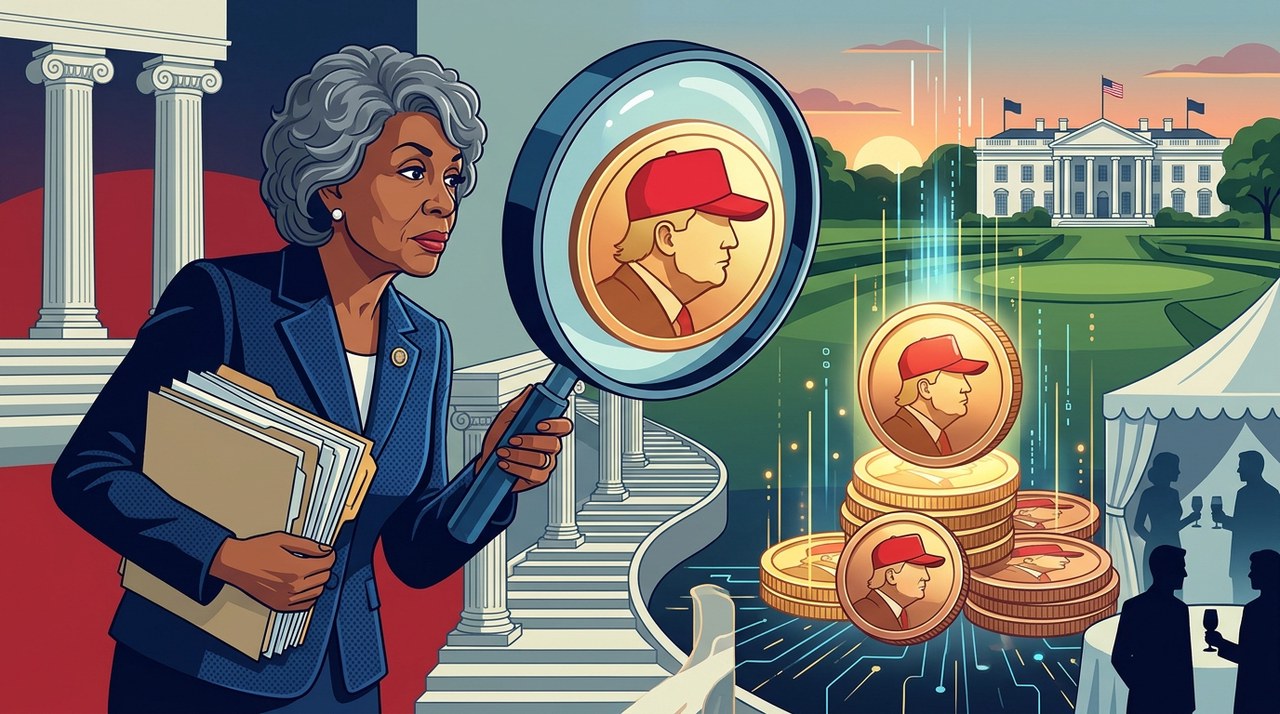


Maxine Waters Vows to Probe TRUMP Meme Coin in Congress
Representative Maxine Waters announced plans to investigate Donald Trump's meme coin projects after Democrats gained control of Congress.
|
New York Court Orders NovaTech Founders to Pay $1.4 Billion
A New York court ordered NovaTech founders Cynthia and Eddie Petion to pay $1.37 billion after defrauding hundreds of thousands of investors.

Morgan Stanley Bucks Trend as Bitcoin ETFs See $5.39B Outflows
US spot Bitcoin ETFs registered $5.39 billion in monthly net outflows through Wednesday, while Morgan Stanley's Bitcoin trust bucked the trend with $114.1 million in inflows.
|