
Microsoft Declares Code Red After Major 365 Outage
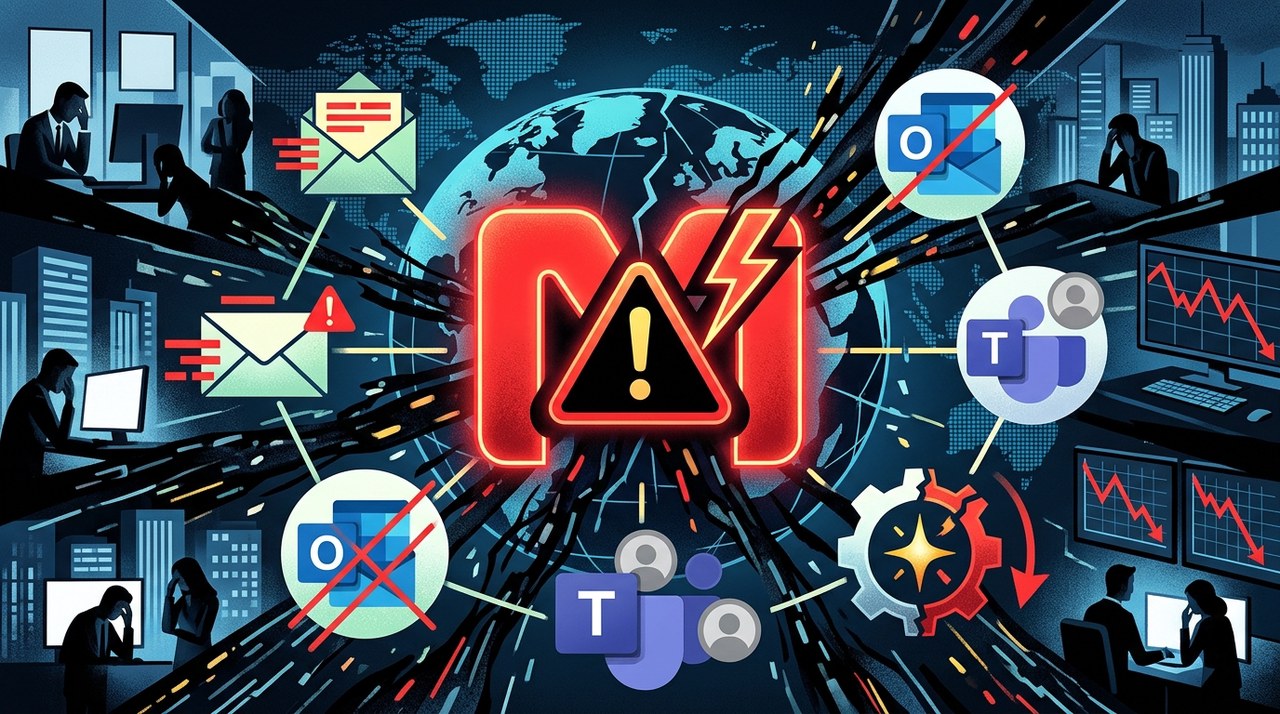
Inside the 24-Hour Microsoft 365 System Outage
Imagine starting your morning work routine only to find your email, workplace chat, and AI tools completely frozen. That exact scenario unfolded for millions of users around the globe on November 12 and 13.
Microsoft experienced a severe system breakdown that lasted nearly 24 hours. The failure disrupted productivity across global corporations, government agencies, and financial markets.
Which Core Services Went Offline?
The outage was not limited to a single application. It knocked out key components of Microsoft's cloud platform, leaving workers without essential tools.
- Exchange Online: Email servers suffered critical delivery bottlenecks and access failures.
- Outlook: Millions of users lost direct access to their primary communication portal.
- Microsoft Teams: Collaboration and internal video meetings stopped abruptly worldwide.
- Microsoft 365 Copilot: The integrated AI tool went completely offline, halting automated tasks.
Global Disruptions Hit Governments and Financial Firms
The widespread technical failure impacted key public services and commercial operations across continents.
Government institutions in the United States, Japan, and Australia reported severe operational friction. Administrative teams faced challenges responding to inquiries and processing daily paperwork during the disruption.
Financial trading firms were also hit hard. Fast-moving trading desks rely on instant communication and continuous data feeds, meaning even brief cloud delays can slow down trade execution.
Microsoft Triggers Internal Code Red Alert
Following the extensive downtime, Microsoft leadership took immediate action by declaring an internal Code Red status.
Declaring a Code Red puts all primary product rollouts on pause so engineering teams can focus entirely on system stability.
Fixing the underlying technical issues is now at the absolute top of the agenda for Microsoft's core engineering team. Engineers are focused on rebuilding fragile system architectures to prevent future failures.
Lessons for Financial and Tech Infrastructure
This major outage highlights the risks associated with heavy reliance on centralized cloud platforms. When central cloud services fail, the knock-on effects can disrupt entire economic sectors.
Financial trading operations require reliable infrastructure. Past network stability is not a guarantee of future uptime, making emergency contingency plans vital for market participants.
What Happens Next?
Microsoft is working around the clock to ensure full system recovery and harden its server infrastructure. Business leaders will be watching closely to see how the company prevents similar failures in the future.
Latest blog posts


Bitcoin Faces Longest Bear Run, But Is It Oversold?
Bitcoin has entered its longest duration bear market on record, yet Grayscale suggests fundamentals remain strong despite near-term headwinds.
|
XRP Drops Below $1: Market Analysis and Future Outlook
Ripple's native token XRP recently slipped to $0.92 after briefly touching $0.86. Here is a breakdown of analyst views, technical indicators, and institutional ETF trends.
|

Why Bitcoin, Ethereum, and XRP Prices Are Slipping
Major cryptocurrencies gave back earlier gains on Wednesday as a short-lived rally sparked by tech sector news began to fade.
|