Is the Stock Market in Denial? Michael Burry Points to History
Michael Burry Issues a New Stock Market Warning
Famous investor Michael Burry is sounding the alarm on Wall Street once again. Even though major stock indexes like the Nasdaq are trading near record highs, Burry believes investors are currently living in denial.
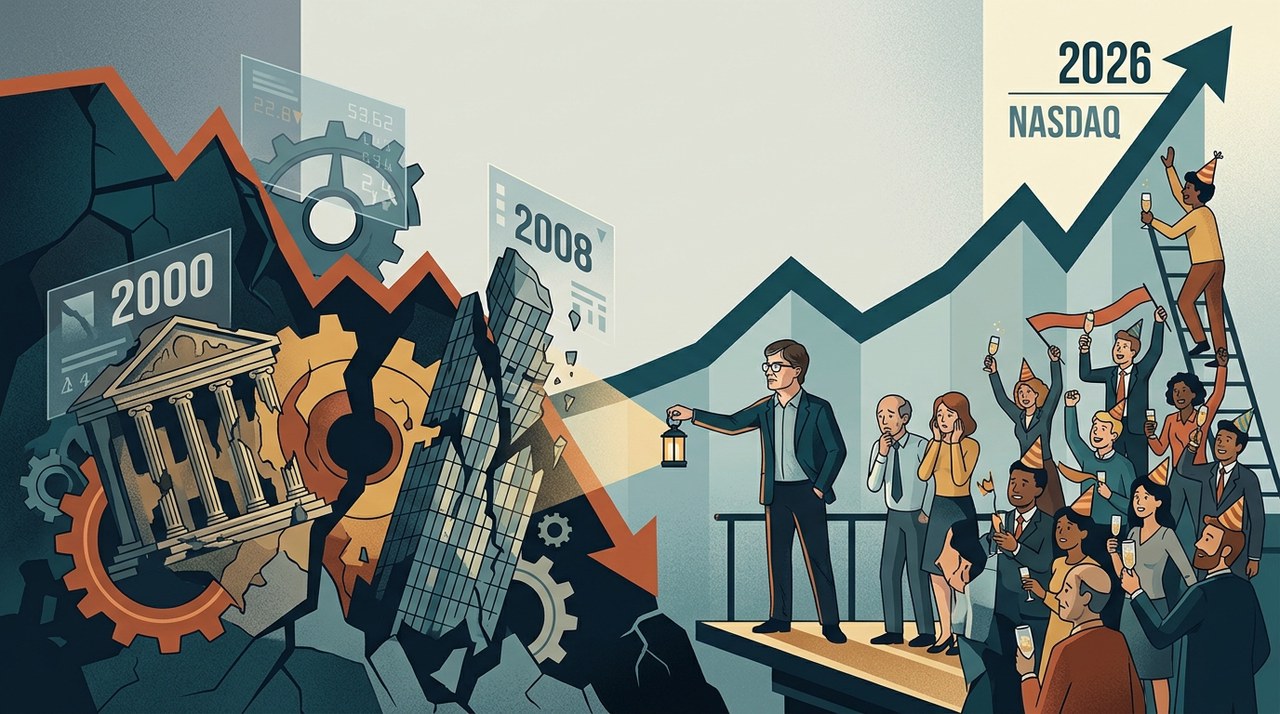
The famous investor expects this psychological phase of denial to last anywhere from six to nine months. On the surface, recent stock market numbers seem strong. However, Burry points to historical market downturns in 2000 and 2008 as evidence that early resilience can quickly give way to deeper losses.
Understanding the Five Stages of Market Grief
In a social media post on X on October 6, 2026, Burry explained his view using a well-known psychological concept.
"The stock market is quite obviously in its first stage of grief, denial. Per 2000 and 2008, this stage lasts 6-9 months." — Cassandra Unchained (@michaeljburry), October 6, 2026
His perspective relies on the five stages of grief model developed by psychiatrist Elisabeth Kübler-Ross. The sequential stages include:
- Denial: Traders view initial market weakness as a buying opportunity rather than a warning sign.
- Anger: Frustration grows as stock prices fail to bounce back as quickly as expected.
- Bargaining: Investors try to restructure their portfolios to hold onto remaining profits.
- Depression: Broad pessimism spreads across the financial market.
- Acceptance: Market participants finally adjust to lower economic valuations.
In financial terms, denial occurs when traders ignore broader economic slowdowns and treat temporary price dips as routine bargains.
Historical Lessons from the 2000 and 2008 Crashes
To better understand Burry's market warning, it helps to review the historical events he cited. Both major crashes started slowly before worsening significantly.
After the dot-com bubble reached its peak in March 2000, tech stocks drifted over several months. Eventually, the S&P 500 lost nearly 50% of its value before bottoming out.
Similarly, stock prices actually rallied into May 2008. However, the unexpected collapse of Lehman Brothers in September 2008 triggered the worst wave of selling.
Investors should keep in mind that past performance of financial markets or individual assets does not guarantee future results. While history provides helpful context, market dynamics can evolve differently over time.
Burry Shifts His Portfolio Toward AI Put Options
Burry is not just talking about potential risks; he is backing his statements with real trades. In late September, he swapped out direct short positions for put options on major technology names.
His options strategy targets well-known companies, including:
- Micron
- Nvidia
- Palantir
Burry noted that fresh research moved his expected timeline forward for a potential artificial intelligence bubble burst. He has even stated that stock markets should fall enough to halt planned public offerings from AI developers like OpenAI and Anthropic.
Market Resilience versus Economic Reality
For now, buyers remain active in equity markets. On October 5, the tech-focused Nasdaq Composite jumped 1.05% to reach 27,477 after touching a record intraday high in the prior session.
However, behind the impressive index numbers, several economic indicators show underlying cracks:
- Weakening Market Breadth: Roughly 75% of individual stocks in the S&P 500 dropped during September, even though the main index closed slightly higher.
- Slowing Job Growth: US employers added only 29,000 jobs in September, falling well short of Wall Street estimates of 84,000.
- Rising Borrowing Costs: The 10-year US Treasury yield continues to trade above 5%, keeping pressure on consumer and business loans.
While stock markets have shown short-term strength, high interest rates and weaker employment figures introduce ongoing market risks that require careful tracking.
The Bull Case: Why Analysts Disagree with Burry
Not everyone on Wall Street shares Burry's cautious outlook. Many optimistic analysts view the current market climate as a genuine technology expansion.
For instance, Wedbush Securities analyst Dan Ives maintains that Nvidia remains the core growth engine driving the broader AI market rally.
If Burry's projected six-to-nine-month timeline proves accurate, the denial stage would conclude around mid-2027. That window aligns closely with the June expiry date of his put options on Micron and Nebius, as well as Anthropic's expected public listing schedule.
Ultimately, whether stock markets experience a correction or continue upwards depends on macroeconomic trends like interest rate policies and enterprise earnings. Investors should evaluate both potential growth drivers and economic downside risks when managing their investments.
Latest blog posts

Greece Passes Crypto Tax Law With 10% Gains Levy, 15% on Staking
Greece has approved a new crypto tax framework, introducing a 10% capital gains tax and a 15% rate on staking and DeFi income.

US Treasury Drops Proposed Crypto Travel Rule Expansion
The U.S. Department of the Treasury has officially withdrawn a controversial proposal that aimed to expand transaction monitoring for cryptocurrency users.


Gnosis Pay Data Breach: User Info Exposed, Funds Safe
Gnosis Pay reported a security incident exposing card and personal data, but confirmed that customer crypto funds remain secure.
|