
Is Bitcoin Repeating Its 2022 Bear Market? Key Gaps Remain
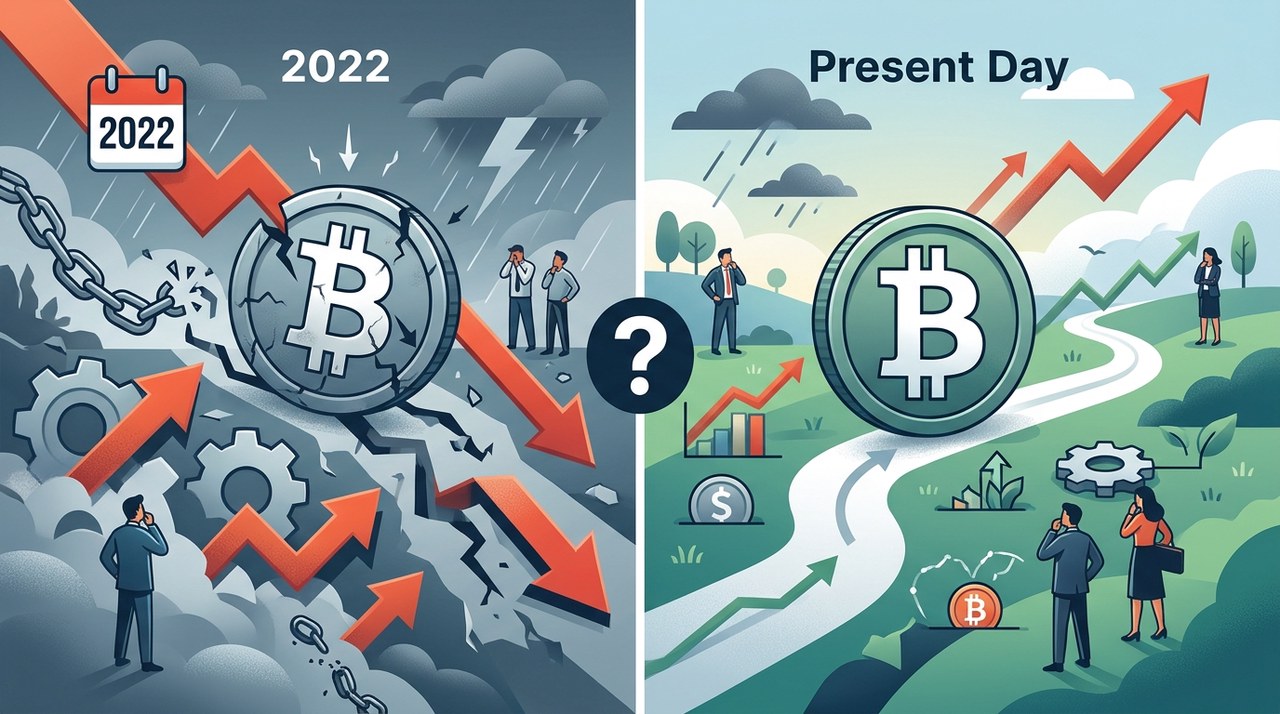
Understanding the Current Bitcoin Market Landscape
If you have been watching the crypto market lately, you might feel a sense of deja vu. Bitcoin (BTCBTC+0.01%) has been navigating a bear market for over 400 days now. With central banks tightening monetary policy, high-profile security incidents, and fluctuating stock markets, many investors are asking a simple question: Are we watching a rerun of the brutal 2022 crypto crash?
It is a very understandable question to ask. After all, market sentiment can feel heavy, and memories of previous downturns remain fresh. However, when we look closely at the actual economic figures and industry events, clear differences emerge. While some warning signs look familiar on the surface, the broader economic foundation today is quite different from what the market experienced two years ago.
Macroeconomic Comparison: 2022 vs. Present Day
To understand where Bitcoin stands right now, it helps to look at the surrounding economic climate. Digital assets do not trade in isolation. They are closely linked to central bank interest rates, consumer inflation figures, and broader liquidity across global financial markets.
Interest Rates and Federal Reserve Policy
Back in 2022, the U.S. Federal Reserve was aggressively raising interest rates to combat rising inflation. Over the course of that single year, the Fed hiked interest rates by a massive 425 basis points (or 4.25%). That rapid shift drained liquidity out of financial markets and pushed risk-on assets, including cryptocurrencies, into a steep decline.
Fast forward to this year, and central bank activity looks noticeably different. Instead of rapid, massive rate hikes, the Fed has raised interest rates just once by 25 basis points. While central bank officials largely expect a potential second 25-basis-point hike in December, the overall rate of tightening is far less aggressive than the historic cycle seen in 2022.
Inflation Figures Tell a Different Story
Inflation was the primary driver behind central bank rate hikes back in 2022. At its highest point that year, U.S. inflation surged to a peak reading of 9.1%. High inflation eats into consumer purchasing power and forces policymakers to cool economic activity.
By comparison, the latest annual inflation reading through September came in at 3.7%. While 3.7% is still elevated enough to keep Fed officials cautious and maintain market expectations for a December rate hike, it is significantly lower than the extreme levels recorded during 2022.
Stock Markets: Market Correction vs. Bear Market
Traditional stock markets provide another key comparison point. On November 20, major U.S. indexes including the S&P 500 and the Dow Jones Industrial Average closed more than 10% below their previous peak records.
In financial market definitions, a drop of 10% from record highs represents a market correction. By comparison, by June 2022, the S&P 500 had dropped over 20% from its peak, placing traditional equities firmly in a bear market. While traditional equities have faced pressure recently, the pullbacks remain milder than the broader market crash seen in mid-2022.
Geopolitics and International Trade Developments
Broader geopolitical dynamics also continue to play a role in market sentiment. The Russia-Ukraine war is now nearly five years old, while ongoing tensions involving the U.S. and Iran continue to create potential supply risks in the oil market.
On the trade front, Washington proposed new duties on 14 trading partners on November 25, with administration estimates indicating an implementation timeline starting in January at the earliest. These elements add layers of market uncertainty, but they operate alongside a different monetary backdrop than in 2022.
Analyzing Market Signals: The 2022 Checklist Comparison
Popular crypto commentator Ash Crypto pointed out these market dynamics in a post on X (formerly Twitter) on November 26, 2026. The commentary contrasted the conditions present when the crypto market bottomed out in 2022 against today's economic environment.
When the market hit its bottom during 2022, a long list of negative factors converged at once:
- Aggressive Federal Reserve rate hikes
- Major crypto exchange bankruptcies and insolvencies
- A full bear market across traditional stock indexes
- Record-high annual inflation rates
- Outbreak of the Russia-Ukraine war
- A developing housing market crisis
- Widespread liquidity contagion throughout the crypto ecosystem
Looking at current conditions, while markets face a cautious Fed, elevated inflation data, stock market corrections, and ongoing geopolitical conflicts, the industry has not seen the same structural collapse of crypto platforms.
Exchange Events: FTX Collapse vs. Binance Security Hack
One of the clearest differences between the two periods lies in how major exchange incidents unfolded. In 2022, systemic insolvency created a widespread domino effect. Recently, security incidents have been handled with direct capital reserves.
The 2022 Insolvency of FTX
On November 8, 2022, crypto exchange FTX abruptly suspended customer withdrawals. Just three days later, on November 11, the company filed for bankruptcy protection. Because FTX had extensive credit relationships across the industry, its collapse quickly dragged down institutional lenders such as BlockFi, spreading contagion across the sector.
The Binance Security Incident
In contrast, leading exchange Binance suffered a security hack linked to North Korean groups on October 29, resulting in approximately $6.3 billion in compromised funds. However, the operational response was entirely different from the FTX crisis.
Binance immediately pledged to cover all lost funds using its corporate reserves, ensuring user balances remained intact. Additionally, the exchange successfully obtained a court order to freeze and work toward recovering the stolen funds.
Nikhil Raghuveera, co-founder of on-chain compliance firm Predicate, shared insights with Yahoo Finance regarding the event. He noted that Binance's commitment to absorb the losses played a key role in preventing systemic contagion, protecting market participants from a cascading failure similar to 2022.
Market Duration and Depth: Comparing Downturn Data
Data tracked by digital asset manager Grayscale offers clear perspective on the length of the current trend. As of November 23, Grayscale recorded 411 days in the present bear market cycle, making it the longest bear market period on record.
While this period has lasted longer, the actual drop in price has been less severe than in previous cycles. The current decline stands at roughly 56%, whereas the overall price drop during the 2022 bear market reached between 75% and 77%.
Analyst Perspectives and Potential Market Scenarios
James Butterfill, Head of Research at digital asset management firm CoinShares, noted that the continuation of the bear market is largely linked to ongoing sell-offs from large holders, often referred to as 'whales'.
Historically, major market bottoms often follow sharp market resets caused by corporate failures. Without a major exchange collapse to clear out leverage quickly, a shallower bear market may take longer to complete its reset process.
Potential Market Scenarios moving forward
To evaluate how the market might move in the coming months, consider these potential scenarios based on economic and industry factors:
- Bullish Scenario (Central Bank Pause and Reduced Selling): If central banks pause rate increases and whale selling pressure diminishes, investor sentiment could recover, potentially allowing Bitcoin to build support and trend upward.
- Bearish Scenario (Persistent Inflation and Tightening): If inflation stays hot and prompts further rate hikes, or if global trade and geopolitical conflicts escalate, investor risk appetite could drop, leading to further price corrections.
- Neutral Scenario (Extended Consolidation): If macroeconomic conditions remain stable without clear catalysts, Bitcoin may continue trading within a sideways range, slowly establishing a longer-term valuation floor.
Key Summary for Crypto Market Participants
While market conditions feel challenging, notable gaps remain between today's environment and the 2022 crash. Inflation is significantly lower, interest rate policy is moving at a slower pace, and major market institutions have absorbed security losses rather than collapsing.
However, asset price fluctuations remain a key characteristic of digital asset markets. Keeping up with interest rate expectations, inflation reports, and overall market trends can help you stay informed as market conditions evolve.
Past performance of digital assets is not a guarantee of future performance. You can view live prices and market data on Bitkub Market.
Latest blog posts

Bitcoin Core Privacy Flaw Links Wallet Addresses to IPs
A newly reported vulnerability in Bitcoin Core software allows attackers to link wallet addresses to user IP addresses for less than $0.34 per attempt.
|

GDPR Breach Plan: Surviving the 72-Hour AI Clock
A practical 72-hour GDPR breach incident playbook for crypto platforms navigating fast-moving security threats and AI agents.
|
New Flaw Could Reveal Bitcoin Node Locations for $0.35
A newly uncovered privacy weakness in Bitcoin Core software could allow attackers to trace node IP addresses using tiny micro-transactions.
|