
Is Bitcoin Ready for Quantum Computers? Fidelity Analysts Explain
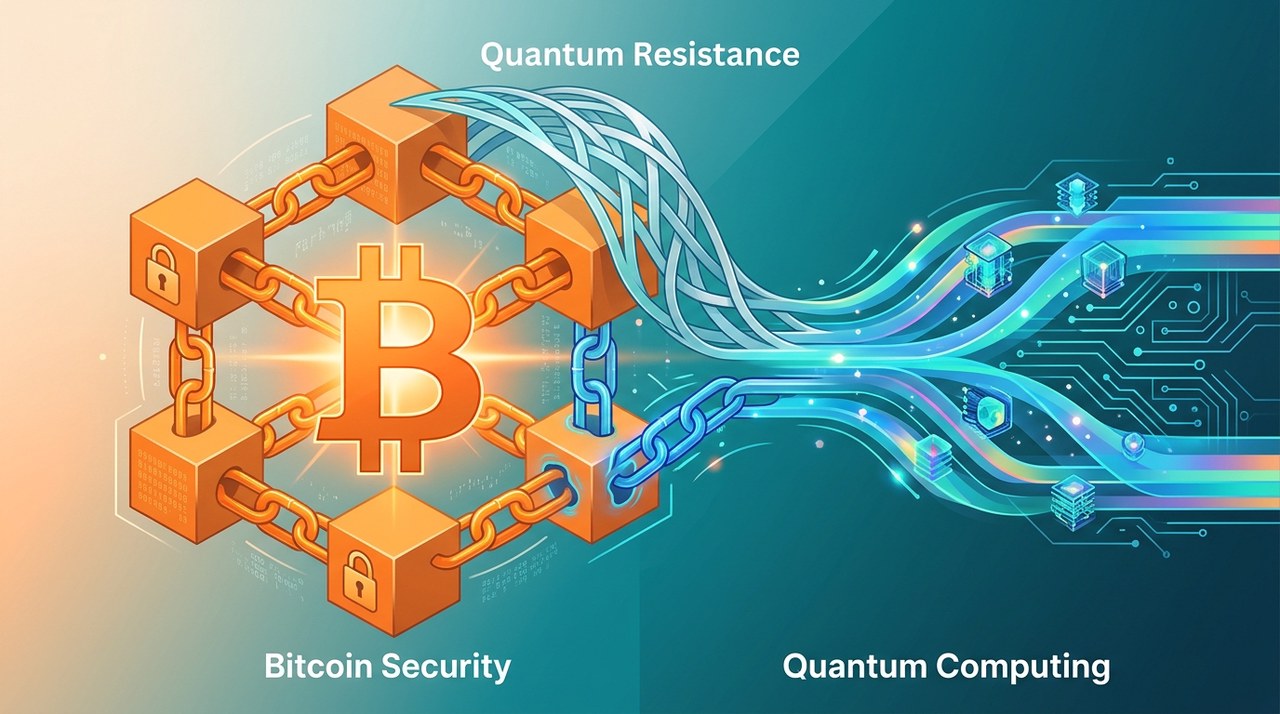
Understanding Bitcoin and the Quantum Threat
Have you ever wondered what would happen if super-smart quantum computers became powerful enough to crack crypto code? It is a topic that comes up often in discussions about the long-term future of digital assets.
Analysts at Fidelity Digital Assets recently shared their insights on this exact issue. Daniel Gray, an analyst at Fidelity, pointed out that the mathematical side of the Bitcoin quantum threat is largely solved.
Quantum-secure signature schemes already exist today. However, the real obstacle is getting a decentralized network like Bitcoin to adopt these solutions.
The quantum threat is largely solved mathematically because quantum-secure signature schemes exist. The obstacle is getting a decentralized network to adopt one.
How Quantum Computers Work Against Cryptography
To understand why quantum computers pose a challenge, it helps to look at how Bitcoin security works. Every Bitcoin wallet relies on two keys: a public key and a private key.
Think of your public key as your home address. Anyone can see it to send you funds. Your private key is like the physical key to your front door, which must stay completely secret.
Matt Hogan, a colleague of Gray at Fidelity, explained during a livestream that while the risk is real, it is not an immediate crisis. Today's quantum computers do not have the processing power to break the cryptography used by Bitcoin, major banks, or the global internet.
Gray clarified that quantum computers target public keys rather than private ones. They use Shor's algorithm, a mathematical formula developed in the 1990s that can derive a private key from an exposed public key.
This means Bitcoin addresses that have never exposed their public key on the blockchain remain completely safe from quantum attacks.
Which Bitcoin Addresses Are Exposed First?
Gray highlighted three specific groups of Bitcoin addresses that would face potential exposure if quantum hardware scales in the future:
- Early Coins from 2010 and 2011: Early Bitcoin transactions used a format called Pay-to-Public-Key (P2PK), which permanently displays public keys directly on the public ledger.
- Reused Bitcoin Addresses: When you send Bitcoin out of an address, your public key is revealed to the network. If you reuse that address to store more coins, those funds become visible and vulnerable.
- Transactions Awaiting Confirmation: When you initiate a transfer, your transaction sits in the mempool waiting for miners to confirm it. Your public key is briefly visible during this in-transit window.
Why In-Transit Attacks Are Economically Unlikely
Some investors worry that hackers could target transactions sitting in the mempool before they are confirmed. However, Gray believes this in-transit risk is still very far off due to simple economics.
Running a quantum computer requires immense computational power and financial resources. Gray noted that running a hypothetical quantum attack might cost upwards of $1 million in operational expenses.
Because of this high cost, an attacker would not spend $1 million in quantum computing power just to target a standard $500 Bitcoin transfer. The economic incentive simply does not exist for small transactions.
The Decentralization Dilemma: Upgrading Without a CEO
Upgrading traditional software is straightforward. A company executive issues a command, and developers roll out an update to all users overnight.
Bitcoin operates differently because it has no central authority. Hogan emphasized that Bitcoin has no CEO who can mandate code changes across the network.
Every proposed fix requires consensus among miners, node operators, and developers around the world. Every change also involves trade-offs regarding transaction fees and block space.
Hogan expects a phased rollout over time, where funds gradually migrate from older address formats into quantum-resistant addresses.
Technical Trade-Offs: Block Space and Transaction Fees
Implementing quantum-resistant signatures comes with technical challenges. Gray explained that quantum-safe cryptographic signatures require significantly larger data sizes than standard signatures.
Bitcoin blocks have a fixed data capacity, and the network handles roughly 7 to 11 transactions per second. Larger signatures mean fewer transactions can fit into each block.
To address this limitation, Gray expects an opt-in model to emerge. Users who desire higher quantum protection can choose to pay higher transaction fees for larger, quantum-safe signatures.
Timelines and Institutional Market Context
When could quantum computers actually become powerful enough to challenge current encryption? Industry views remain divided.
Gray cited predictions from quantum experts who point to the early 2030s as a potential timeframe. Conversely, some cryptographers argue that quantum hardware will never reach the scale required to crack cryptography.
In the meantime, institutional interest in digital assets continues to evolve. Hogan noted that spot exchange-traded products (ETPs) acquired approximately 900,000 BTCBTC-2.12% during their first year, representing roughly 4% of the total Bitcoin supply.
Past performance of digital assets or financial products is not a guarantee of future results. You can view current market information and asset performance at bitkub.com/th/market/BTC.
Gray believes Bitcoin will likely upgrade its network defenses before quantum hardware becomes a practical threat, though he emphasized that predicting the exact outcome is impossible.
Latest blog posts


Grayscale: Bitcoin Oversold as AI Risks Shape Near-Term Moves
Grayscale reports that while Bitcoin appears oversold based on key indicators, artificial intelligence market risks could drive its short-term price direction.
|
42 Macro Urges Caution Before Buying the Bitcoin Dip
Independent macro research firm 42 Macro warns that Bitcoin's recent price sell-off may not be over yet, advising investors to monitor global liquidity indicators.
|

Robert Kiyosaki Warns of Economic Crisis and Reaffirms BTC Case
Rich Dad Poor Dad author Robert Kiyosaki warns of a potential global depression and explains why he buys Bitcoin and Ethereum directly.
|