

Hacker Sentenced to 6 Years for $11.6M Crypto Theft
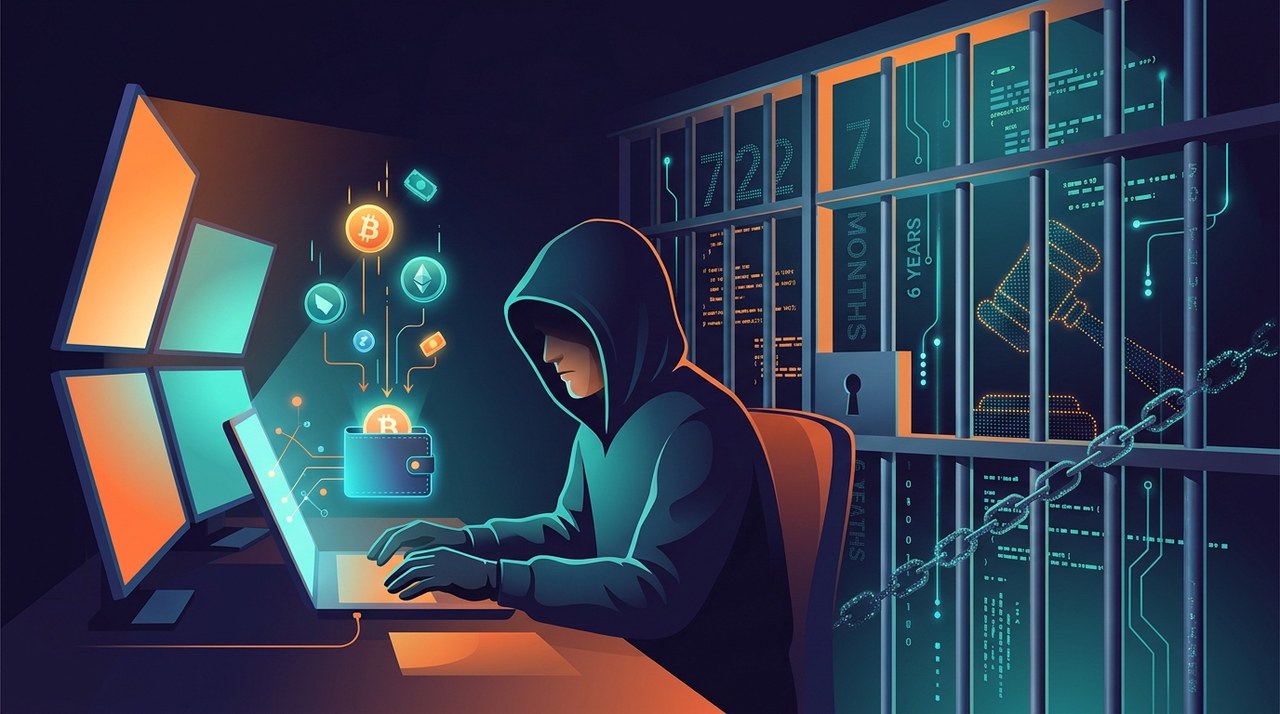
Final Defendant Sentenced in Major Crypto Scam
A 24-year-old man from Scotland will serve six years in federal prison for his role in a nationwide cryptocurrency theft scheme.
Tyler Robert Buchanan, of Dundee, Scotland, was sentenced on November 17, 2026. U.S. District Judge John W. Holcomb ordered him to serve 72 months in federal prison.
Buchanan is the fifth and final defendant sentenced in this multi-million dollar cybercrime case. He has been held in federal custody since April 2025.
Earlier in the case, on April 17, Buchanan pleaded guilty to conspiracy to commit wire fraud and aggravated identity theft. The court set a restitution hearing for December 11, 2026, to settle victim compensation.
Inside the 'Scattered Spider' Phishing Scheme
The cybercrime ring targeted victims between September 2021 and April 2023. Over those months, the group stole at least $11.6 million in cryptocurrency from individuals across the United States.
By October 2024, a threat profile by the U.S. Department of Health and Human Services publicly connected Buchanan to Scattered Spider, a prominent hacker collective.
The group relied on corporate phishing to carry out their thefts. They sent hundreds of fraudulent text messages to workers at 12 or more companies.
These texts appeared to come from employers or authorized service providers. The messages tricked recipients into opening lookalike websites that secretly collected employee login details.
How Stolen Credentials Led to Crypto Theft
The phishing setup automatically captured employee usernames and passwords, forwarding them to a Telegram channel managed by Buchanan and a co-conspirator.
Using these stolen credentials, the hackers breached corporate databases. They pulled confidential files, including names, email addresses, phone numbers, and account records of individual crypto owners.
Investigators later searched Buchanan's home in Scotland. On one of his devices, they found internal corporate files and victim details, including a text file containing crypto seed phrases and account logins.
The Role of SIM-Swapping in Bypassing 2FA
To bypass security protections, the hackers used SIM-swapping. This tactic involves tricking mobile phone carriers into transferring a victim's phone number to a device controlled by the hacker.
Once they hijacked the phone number, the attackers intercepted two-factor authentication (2FA) security codes. This allowed them to drain individual crypto wallets.
Federal prosecutors highlighted the severity of the scheme in a sentencing memorandum:
Those thefts had severe, life-altering consequences for many victims and underscore both the seriousness and far-reaching impact of this conspiracy.
To address these security loopholes, the Federal Communications Commission (FCC) established new rules in November 2023 requiring mobile carriers to strengthen safeguards against unauthorized SIM transfers.
Related Cases Show Broader CyberCYBER+0.00% Security Risks
This case reflects a wider trend of attackers exploiting data outside of central exchanges.
For example, in October 2026, a breach at a third-party analytics vendor exposed contact details for some Coinbase customers. Coinbase reported that its internal systems remained secure and customer funds were unaffected.
In a separate action in September 2025, the U.S. Department of Justice moved to forfeit over $5 million in BitcoinBTC-1.06%. Prosecutors alleged attackers stole the funds from five victims using SIM swaps and laundered the proceeds through online casinos.
Mobile carriers have also faced accountability. In March 2025, an arbitration panel ordered T-Mobile to pay $33 million, including fees and costs, to a victim who suffered a SIM-swap attack.
How to Stay Safe from Crypto Phishing
Investors can reduce their risk of phishing attacks by following basic digital security habits:
- Avoid clicking links in unsolicited text messages or emails.
- Navigate directly to official company websites by typing the address into your browser.
- Use hardware security keys or authenticator apps instead of SMS for two-factor authentication.
- Request a SIM lock or security PIN with your mobile carrier.
Staying informed helps protect personal digital assets against online threats. You can track market conditions and asset performance on Bitkub Market.
Past performance of digital assets or past operational results do not guarantee future performance or future operational results.
Latest blog posts


Moonpay Applies for US National Trust Bank Charter
Crypto payments firm Moonpay has formally applied to the OCC for a federal trust bank charter to expand its stablecoin and digital asset custody offerings.
|
US Launches New Task Force Unit to Fight Crypto Scams
The US Homeland Security Task Force has launched a Threat Disruption Center to combat crypto fraud, cybercrime, and online scam networks.


Solana Unveils 2027 Technical Roadmap for On-Chain AI
Anza CEO Brennan Watt presented Solana's 2027 technical roadmap focusing on on-chain AI, faster blocks, and reduced fees as SOL trades near $73.7.
|