

Global Energy Crisis Threatens Crypto Market Stability
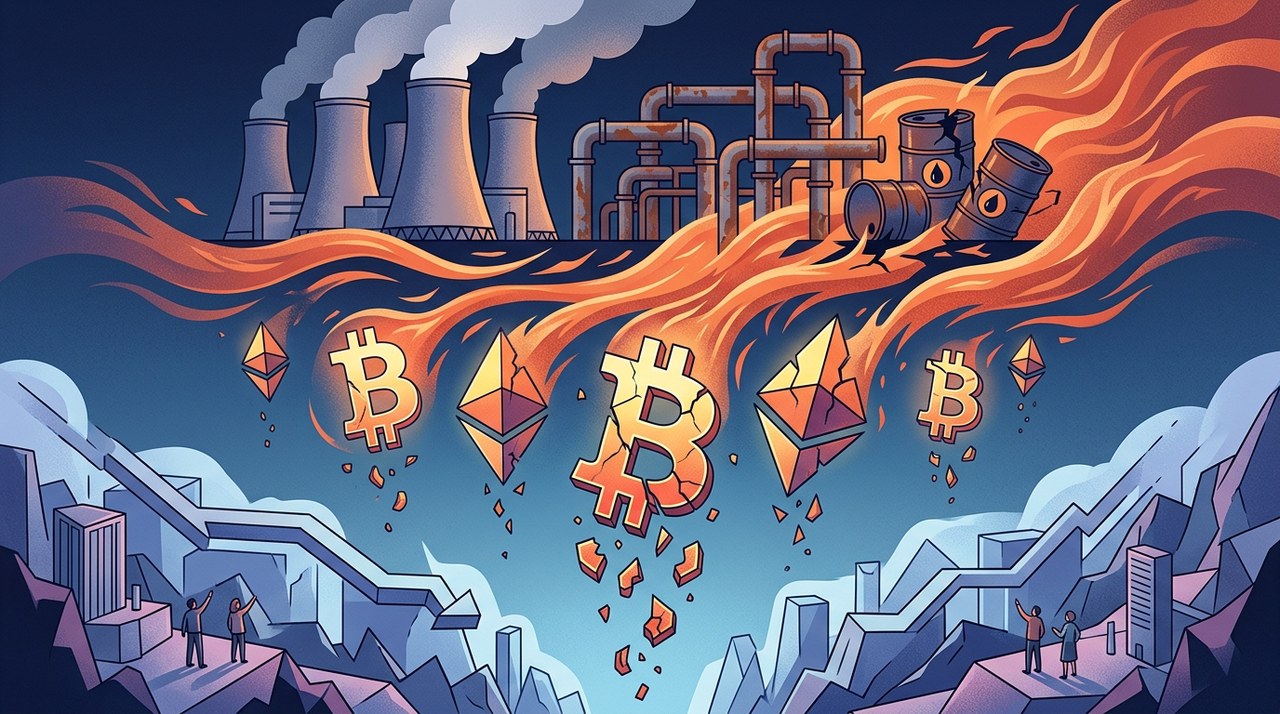
How Global Energy Crises Impact Crypto
While BitcoinBTC+0.02% and other digital assets operate on decentralized blockchain networks, their market prices remain deeply connected to global macroeconomic conditions. When major global events shock key commodity markets like crude oil, the rippleXRP-2.95% effects eventually reach cryptocurrency exchanges.
Recent analytical reports shared on social media platform X highlight growing concern over energy supplies. Ongoing geopolitical conflicts involving Iran and shipping disruptions in the Persian Gulf have reportedly led to a loss of more than 1 billion barrels of oil supply. When energy flows face severe bottlenecks, financial markets as a whole take notice.
The key issue for investors is not just today's missing supply. It is the rapid depletion of global emergency reserves being used to fill the gap. When energy cushions shrink, broader financial markets—including stocks, bonds, and crypto—face heightened volatility.
Understanding the Energy Buffers That Keep Prices Stable
To understand why energy shocks affect digital assets, it helps to look at how global energy markets absorb sudden disruptions. The global oil trade relies on three primary buffers to cushion against unexpected shortages:
- Commercial Inventories: Storage facilities maintained by private energy companies to handle short-term shifts in market supply and demand.
- Strategic Petroleum Reserves: Emergency crude oil stockpiles maintained by national governments to protect economic security during severe crises.
- Offshore Storage at Sea: Crude oil stored on floating ocean tankers, ready to be dispatched quickly to areas facing unexpected shortages.
Analysts report that all three of these critical cushions are currently being drawn down. Commercial inventories are falling, strategic reserves face accessibility challenges, and oil stored at sea is being consumed to meet baseline demand.
Think of these buffers as a household emergency savings account. If an unexpected bill forces you to spend your savings, your financial cushion shrinks. Any subsequent unexpected expense becomes far harder to handle because there is no backup cushion left.
In global energy markets, smaller supply cushions mean that future disruptions—such as a refinery failure, weather emergency, or further escalation in shipping routes—can cause sharper spikes in energy prices.
The Chain Reaction: From Higher Oil to High Inflation
How exactly does an oil supply shortage affect cryptocurrency prices? The transmission mechanism follows a clear, step-by-step path through the global economy:
- Higher Crude Prices: Disrupted supply chains in key regions like the Persian Gulf reduce available oil supplies, driving up crude oil market prices.
- Increased Freight Costs: Energy powers global transport. When fuel prices rise, shipping goods via trucks, cargo ships, and freight planes becomes significantly more expensive.
- Broader Consumer Inflation: Businesses pass higher shipping and operational costs on to consumers, pushing up headline consumer price index (CPI) inflation rates across major economies.
When energy shocks keep inflation elevated, central banks step in to prevent consumer prices from spiraling out of control.
Why Central Banks Keep Interest Rates Elevated
Central banks, such as the U.S. Federal Reserve, manage inflation primarily through monetary policy. When inflation stays high, central banks keep interest rates higher for longer periods or even raise them further.
Persistent inflation leaves central banks with fewer reasons to cut interest rates, maintaining tighter monetary conditions that impact all liquid asset classes.
High interest rates increase borrowing costs for businesses and individuals, slowing down overall economic activity. In tight monetary environments, overall market liquidity decreases.
When liquidity dries up, market participants often shift capital away from risk-sensitive assets—such as growth equities and cryptocurrencies—and move into lower-risk yields like short-term government bonds. This capital rotation creates macroeconomic headwinds for the crypto sector.
Why Ending Geopolitical Conflict Won't Fix Supplies Instantly
It is tempting to think that if geopolitical conflicts end quickly, energy prices and crypto markets will rebound immediately. However, industry analysts note that restoring global energy safety nets takes considerable time.
Even if Middle East tensions were to subside tomorrow, depleted oil stockpiles cannot be refilled instantly:
- Rebuilding Strategic Reserves: Governments must gradually purchase millions of barrels of crude to refill emergency stockpiles without causing price spikes.
- Replenishing Commercial Inventory: Private energy firms need time to rebuild baseline inventories to comfortable operational levels.
- Normalizing Maritime Routes: Shipping routes and global logistics patterns require weeks or months to stabilize fully.
Until these energy buffers recover, global financial markets remain vulnerable to secondary supply shocks.
Navigating Macro Headwinds in the Crypto Market
For crypto market participants, tracking macro factors like energy prices and central bank interest rate policy provides valuable context. Digital assets do not trade in a vacuum, and global liquidity trends play a significant role in market sentiment.
If inflation remains sticky due to high energy costs, liquidity conditions could stay tight, potentially limiting speculative capital inflows into altcoins and major cryptocurrencies in the short term. Conversely, if energy bottlenecks resolve and global inflation cools, central banks may ease policy, providing a more favorable environment for liquidity expansion.
Understanding these interconnected market dynamics helps investors maintain a balanced perspective during periods of broader economic uncertainty. Always remember that past performance of digital assets or macroeconomic trends is not a guarantee of future performance. You can review historical cryptocurrency price dynamics directly on Bitkub Market.
Latest blog posts

Core Scientific to End Bitcoin Mining for AI Push by 2027
Core Scientific plans to completely exit Bitcoin mining by late 2026 to focus entirely on hosting artificial intelligence and high-performance computing workloads.
|
Has Bitcoin Bottomed? Analyst Challenges Cycle Patterns
Bitcoin dipped near $75,000 recently, but analyst KillaXBT suggests the market bottom for this cycle may already be in place.
|
Bitcoin Drops Below $75K: Is a 2023 Recovery Pattern Next?
Bitcoin dipped below $75,000 following macroeconomic pressure, but analysts note technical similarities to its 2023 recovery chart.
|