

Fed Governor Waller Sees Stablecoins and Tokenized Deposits Coexisting

Imagine walking into a world where your digital money isn't controlled by just one payment network. Instead, you have multiple options working together smoothly in the background.
Federal Reserve Governor Christopher Waller shared this vision on November 17, 2026. Speaking at The Clearing House Annual Conference in New York, Waller explained how blockchain technology is reshaping modern finance.
Rather than a single digital currency taking over the market, Waller expects a variety of tokenized financial tools to live side-by-side with traditional bank networks.
A Diverse Ecosystem for Tokenized Money
During his address, Waller highlighted that private financial companies are actively building new ways to move money across blockchains.
The private sector is quickly building a multi-instrument ecosystem of tokenized money to meet these needs of tokenized markets.
Waller pointed out three main types of digital instruments leading this change: stablecoins, tokenized bank deposits, and tokenized money market funds.
While both stablecoins and tokenized deposits allow for automated, programmable transactions, they are not identical. They differ in who issues them, how regulators view them, and how easily they connect to standard banking infrastructure.
Because each payment tool has its own strengths, businesses will likely choose different options depending on their specific tasks.
As a result, corporate treasurers, banks, asset managers, and payment providers may use several tokenized instruments at once to serve different aspects of their business models, in the same way they use multiple rails today.
For instance, one payment rail might be ideal for sending corporate payments across international borders. Another tool might work best for settling large stock or bond transactions instantly.
Major Financial Institutions Jump Into Tokenization
Waller's observations match real-world steps already taken by several leading global financial institutions.
- Citigroup: Citi partnered with Coinbase to allow corporate clients to receive payments in stablecoins and convert them into traditional fiat currency. Citi also processes around $1 billion daily through its existing tokenized-deposit platform.
- Barclays: The banking giant invested in digital money infrastructure provider Ubyx earlier this year to improve connection points between regulated stablecoins and tokenized bank deposits.
- SoFi: In October, SoFi launched a tokenized consumer deposit product. The offering features a 4.4% annual interest rate supported by federal deposit insurance protections.
The Debate: Stablecoins vs. Tokenized Bank Deposits
As tokenized payment options grow, industry leaders and regulators are debating which format offers the safest path forward.
In August, Pablo Hernández de Cos, General Manager of the Bank for International Settlements (BIS), argued that tokenized bank deposits provide a more dependable foundation for everyday payments than stablecoins.
TetherUSDT+0.06% CEO Paolo Ardoino quickly challenged that view. Ardoino argued that fully backed stablecoins can offer stronger security than bank deposits that rely on fractional reserve systems.
Waller took a more balanced approach. He suggested that these different digital models do not need to fight for exclusive dominance. Instead, they can complement each other across different parts of the economy.
Addressing Security Risks and the Central Bank's Role
While Waller sees clear benefits in payment innovation, he raised important warnings regarding consumer protection, accountability, and security.
To illustrate his points, Waller pointed to the recent $6.3 billion security breach at major crypto exchange Binance. He questioned how financial systems will handle stolen security keys, accidental transactions, smart contract glitches, or funds trapped on inactive blockchain networks.
Because of these potential technical and operational risks, Waller believes traditional money and central bank backstops remain vital.
Central bank money need not be used in every transaction or on every platform, but its presence at the foundation of the system is essential.
Waller concluded that the Federal Reserve will continue supporting practical payment updates while carefully monitoring potential financial stability risks.
I see a range of payment solutions coexisting to meet the various payment needs of tokenized markets.
Market Analysis: Macro Trends and BitcoinBTC+5.51% Outlook
As traditional finance evaluates digital settlement tools, broader economic trends continue to influence crypto asset markets.
In a recent report, Binance Research suggested that if global central banks slow down monetary tightening policies, Bitcoin could experience positive price momentum before official interest rate cuts begin.
However, market analysts emphasize that price outcomes depend heavily on broader economic conditions. If central bank interest rate policies change unexpectedly or global liquidity shrinks, asset prices could adjust downward rather than rally.
Latest blog posts


Shiba Inu Activity Spikes as 684 Billion SHIB Move
Over 684 billion SHIB tokens moved across crypto exchanges in 24 hours as Shiba Inu attempts a price recovery from recent lows.
|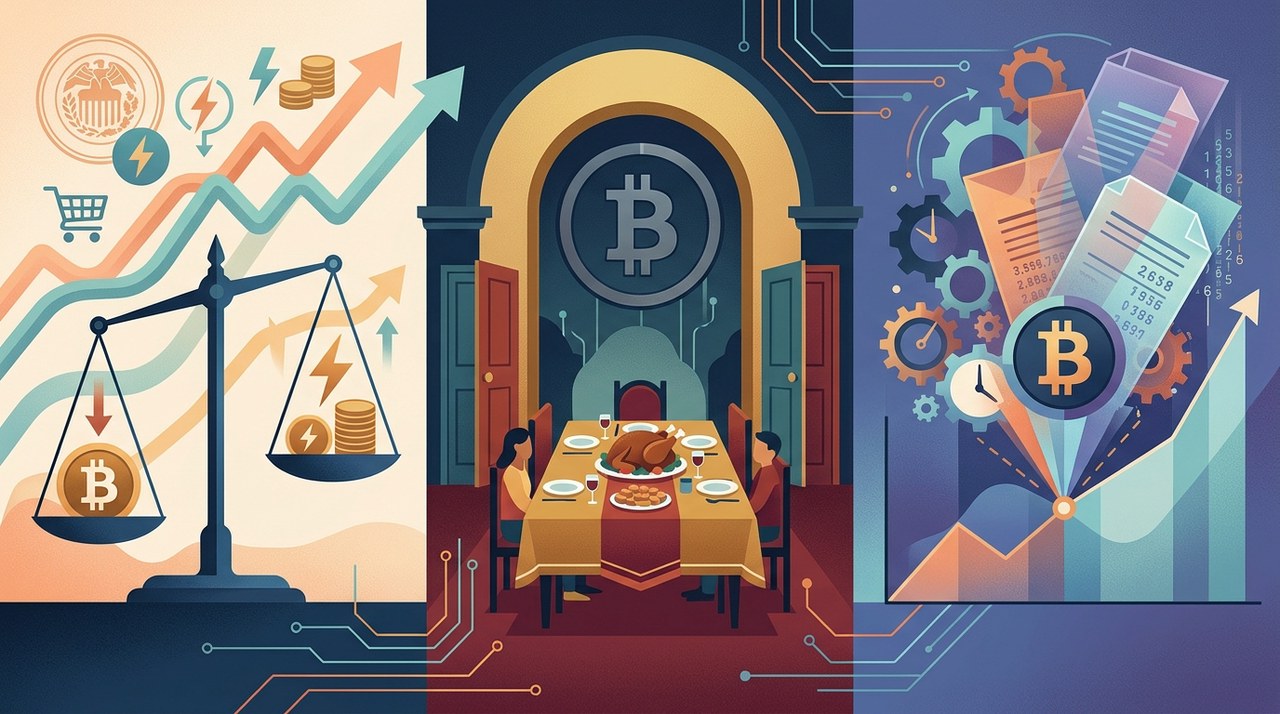
3 Events That Could Shake Bitcoin Prices During Thanksgiving Week
Bitcoin faces three key market tests this Thanksgiving week, including inflation reports, ETF market closures, and a major $6.6 billion options expiration.
|


Shiba Inu (SHIB) Drops to 2021 Levels After November Fall
Shiba Inu fell to $0.00000337 in late November 2026, returning to price levels last seen in spring 2021.
|