
ETHGas Wants to Bring Wall Street Futures to Ethereum
What Is ETHGas and How Does It Work?
Imagine trying to book a table at a super popular restaurant during peak dinner hours. Normally, you have to stand in a crowded line and offer extra cash on the spot just to secure a seat. That is pretty much how gas fees on EthereumETH-0.15% work today.
Whenever network activity spikes, transaction fees jump dramatically. Users end up in intense bidding wars to get their transactions included in the very next block.
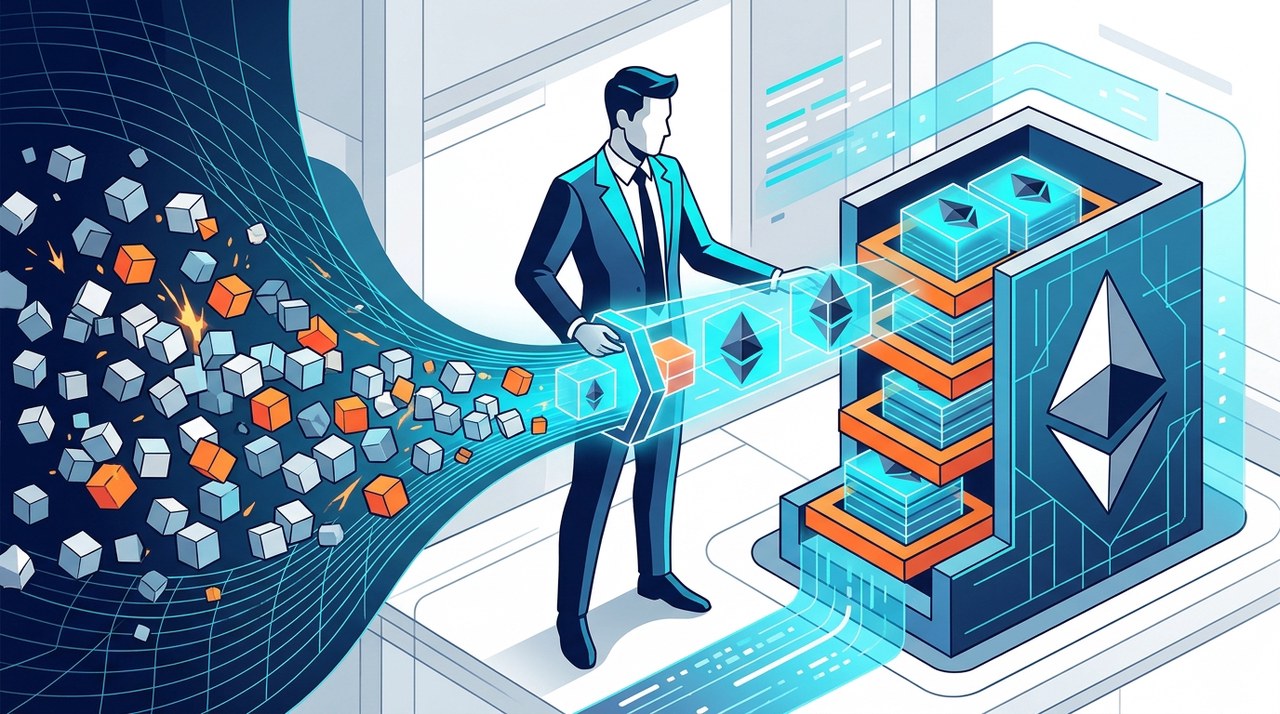
ETHGas wants to change this chaotic dynamic completely. The team is aiming to bring Wall Street-style financial mechanics to the public Ethereum blockchain through a concept called advance block reservations.
Instead of waiting for gas price spikes and bidding frantically during moments of network congestion, users and automated applications can buy their block space ahead of time.
Bringing Wall Street Mechanics to Public Ethereum
Why do people compare advance block reservations to Wall Street? In traditional financial markets, institutional investors rely heavily on derivatives, futures contracts, and guaranteed execution windows.
Large financial firms hate uncertainty. If an institutional trader needs to rebalance a massive fund at precisely 2:00 PM, they cannot afford to get stuck in a gas bidding war or face delayed execution.
By offering advance block reservations, ETHGas essentially builds a futures market for Ethereum block space. This allows participants to plan ahead and secure execution slots at pre-determined rates.
DeFi protocols, automated trading bots, and regular crypto users can utilize these reservations to hedge against sudden gas fee surges during volatile market conditions.
Understanding the Current Ethereum Gas Auction System
To fully appreciate what ETHGas is trying to accomplish, it helps to look at how transactions currently move through Ethereum.
Every block created on the Ethereum network has a strict capacity limit. When you make a transfer or interact with a smart contract, your request waits in a public queue known as the mempool.
Validators are the specialized computers that maintain the network. They select pending transactions from the mempool and bundle them into new blocks roughly every 12 seconds.
To incentivize validators to prioritize your transaction, you pay a tip known as a priority fee. During major market moves, thousands of users compete at once, pushing gas costs to extreme levels.
The Constant Struggle with Unpredictable Fees
Unpredictable gas fees create significant friction across the entire ecosystem. Everyday users often find themselves paying exorbitant fees for basic token swaps.
Meanwhile, institutional players face execution risk. If a high-value trade is delayed by even a few seconds due to gas spikes, price slippage can erase profits or trigger unexpected liquidations.
The Catch: No Financial Compensation for Validator Default
While advance block reservations sound like a game-changer, there is a major catch that prospective users need to understand.
Under the current design of the service, validators that fail to deliver on their commitments face no financial compensation requirement.
But there’s a catch: validators that fail to deliver on their commitments currently face no financial compensation requirement under the service.
What does this mean in practical terms? Think of it like buying a non-refundable, pre-reserved ticket for a train departure.
If the train driver simply decides not to show up or skips your stop, you receive no automatically enforced refund or financial damages under the platform rules.
If a validator promises to include your transaction in a reserved block but experiences node downtime, network latency, or chooses a higher-paying alternative payload, your transaction gets missed.
Why Validator Reliability Matters for Institutional Adoption
For a casual retail user, a missed reservation might just be a minor inconvenience. However, for institutional Wall Street entities, unfulfilled promises carry real financial danger.
Traders relying on guaranteed execution windows could suffer severe losses if a validator defaults on a block reservation during a sudden market crash.
Without automatic slashing mechanics, collateral requirements, or formal service level agreements (SLAs), institutional traders may hesitate to rely heavily on advance block purchases.
Looking Ahead: Balancing Innovation and Operational Risk
The effort by ETHGas to bring forward-looking block space markets to Ethereum represents an important step in decentralized financial engineering.
If developer teams can implement robust default penalties or escrow systems to compensate users when validators fail, advance block space reservation could become a standard tool in Web3.
Until those security and compensation mechanisms are fully matured, users must carefully weigh the efficiency benefits against the operational default risks.
Important Market Risk Context
Navigating smart contract platforms and block space tools requires a thorough understanding of blockchain dynamics and market risks.
Crypto asset prices and gas costs can fluctuate rapidly depending on broader market sentiment and protocol adoption.
Remember that past performance of digital assets is not an indicator of future returns. You can check live Ethereum market data directly on the Bitkub Market ETH page.
Always conduct careful research and evaluate protocol safety mechanisms before committing assets to emerging crypto services.
Latest blog posts

Is BlackRock Selling Bitcoin? Behind the $405M IBIT Outflow
BlackRock did not dump its Bitcoin holdings. Recent $405.3 million IBIT outflows were driven by client redemptions following security and market concerns.
|


David Schwartz Clarifies His Current Role at Ripple
Ripple CTO Emeritus David Schwartz clarifies his position on the Board of Directors and his ongoing role in the XRP community.
|
Liquid Network Restores Full Bitcoin Backing After Exploit
Liquid Network has fully restored its 1:1 Bitcoin backing two months after a $320 million exploit. Here is what happened and why it matters.
|