


Ethereum Runs First Ever Atomic L1 to L2 Transfer

What Just Happened on EthereumETH-2.54% Mainnet?
On October 6, 2026, developers achieved a notable milestone on the Ethereum mainnet. A core developer executed the first atomic transaction directly from Ethereum Layer 1 to a Layer 2 network.
Eduardo Antuña Díez, a key engineer for the Ethereum Economic Zone (EEZ) initiative, shared the accomplishment on social platform X. He declared that atomic synchronous composability is no longer just a distant promise.
To put it simply, the team moved 0.001 ETH from Ethereum's base layer (L1) directly into a Layer 2 rollup in a single, all-or-nothing step.
History made on mainnet: the first atomic cross-chain L1->L2 transaction ever. And this is only the beginning for EEZ.
Around the time of the transfer, Ethereum (ETH) was trading at $2,697, down 0.66%, while Bitcoin (BTCBTC-2.88%) traded at $85,454, down 0.50%.
Please note that past performance of digital assets is not an indicator or guarantee of future returns. You can view current market trends on Bitkub Market.
What Does an 'Atomic' Transfer Actually Mean?
If you are new to crypto jargon, the term 'atomic' might sound complicated. However, the core concept is straightforward.
Think of an atomic transaction like buying a flight ticket and a hotel reservation together in one package deal. Either both reservations go through simultaneously, or neither does. You never end up stuck paying for a hotel without a flight.
In traditional blockchain operations, moving assets between separate layers involves multiple distinct steps. Users often wait for slow confirmations on both ends, which can introduce delays or technical risks.
An atomic L1-to-L2 transfer ensures that funds leave Layer 1 and update the Layer 2 network in the exact same fraction of a second. If an error occurs on either end, the entire operation instantly reverts.
Tackling Ethereum's Liquidity Fragmentation
Over the past few years, Ethereum scaled up through numerous Layer 2 networks like Arbitrum, Optimism, and Base. While this reduced transaction costs for users, it created a new challenge known as capital fragmentation.
User funds became scattered across dozens of isolated scaling solutions. Moving tokens between these layers often felt slow and cumbersome.
The Ethereum Economic Zone (EEZ) was created in early 2026 to address this fragmented landscape. Backed by the Ethereum Foundation and led by groups like GnosisGNO+0.00% and Zisk, EEZ aims to connect these isolated L2 networks into a cohesive, shared system.
Before executing this live mainnet demonstration, the EEZ technical team conducted rigorous security audits, live blob encoding tests, and trial runs against platforms like CoW Swap and UniswapUNI-6.02% v4.
How the Industry Reaction Unfolded
Industry participants expressed strong optimism following the technical demonstration. Many developers view seamless interoperability as an essential step forward for blockchain usability.
Jakub Gregus, co-founder of the decentralized finance protocol Hydration, highlighted the potential impact of the breakthrough on X.
I told you couple months ago I am becoming increasingly bullish on Ethereum as technology. This is insane. One of the most important milestone[s] in whole crypto in my honest opinion. Unlike other tech developments, this can also help ETH directly a lot.
Some community observers went as far as claiming that EEZ resolved Ethereum's biggest structural challenge in one attempt.
What Lies Ahead on the Road to 2027?
While this test represents an exciting milestone, the developers emphasize that it remains a technical demonstration rather than an official network upgrade or finished product.
The core software remains in an early development phase. EEZ has outlined a multi-year technical roadmap extending through 2027 before the technology reaches full maturity.
Key goals on the upcoming EEZ development roadmap include:
- Full two-way smart contract execution between L1 and L2 layers
- Nested cross-chain transactional calls
- Real-time zero-knowledge proving mechanisms
If development proceeds smoothly, Ethereum could eventually achieve unified liquidity across its scaling ecosystem. However, potential technical hurdles, protocol bugs, or implementation delays remain factors that could impact the timeline.
Latest blog posts
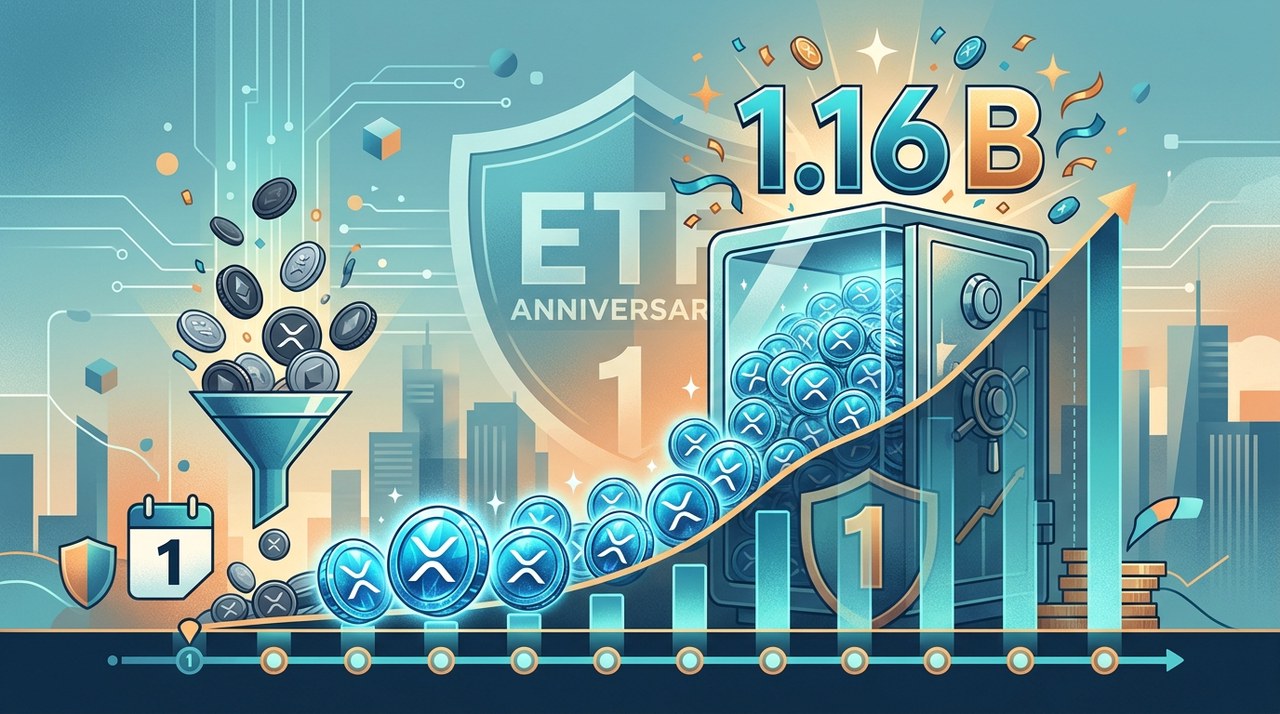

Spot XRP ETFs Reach 1.16 Billion Token Milestone in Year One
U.S. spot XRP ETFs have accumulated 1.16 billion tokens in their first year, highlighting growing institutional adoption despite market volatility.
|
 +1
XRP Drops Below $1 as U.S. Spot ETFs Reach First Anniversary
XRP fell below $1.00 on Saturday, reaching its lowest price level since late 2024 as broader market liquidations coincided with the first anniversary of U.S. spot XRP ETFs.
|
 +1
Nadex Adds Shiba Inu (SHIB) Derivatives to Regulated US Market
Nadex has self-certified a new Shiba Inu strike event contract with the U.S. CFTC, expanding SHIB's exposure in regulated derivatives markets.
|