
Crypto Needs Mass Adoption to Withstand US Policy Shifts
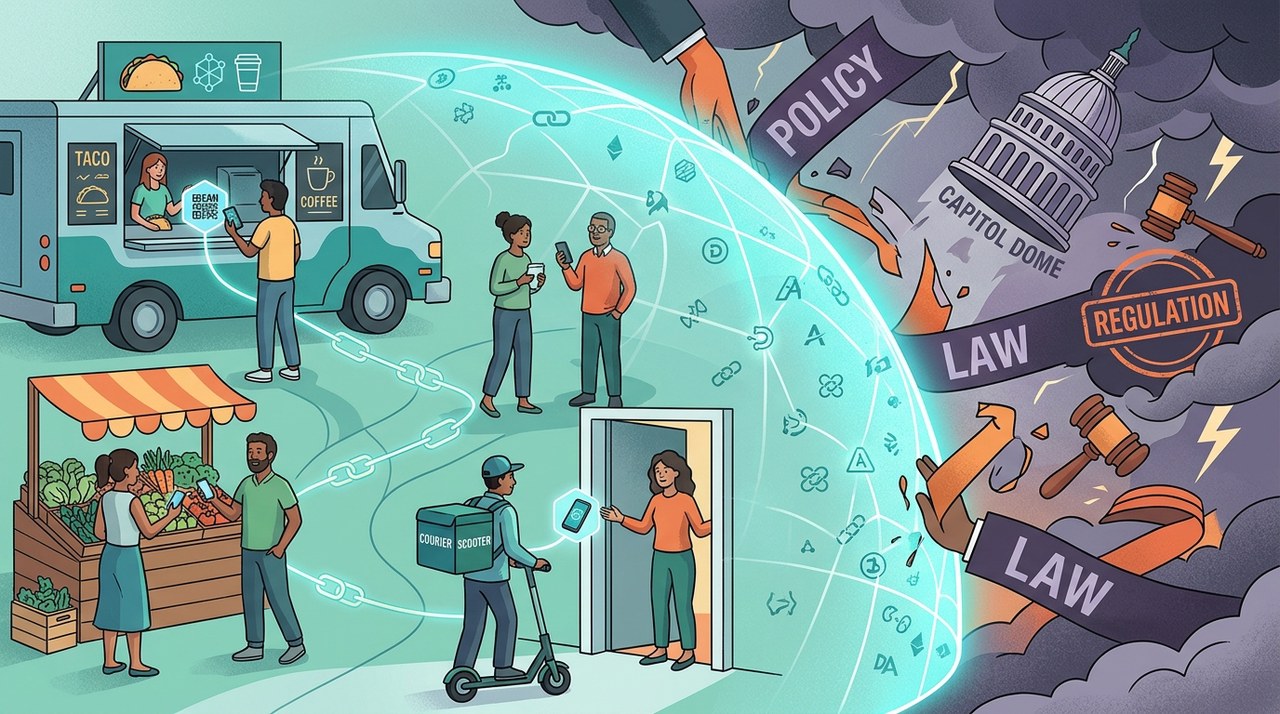
Why Crypto Needs Real-World Adoption to Survive Politics
Have you ever wondered what happens to crypto when political tides turn in Washington? U.S. regulatory policies can swing dramatically whenever a new administration or leadership team takes office.
Yuval Rooz, the CEO of Canton NetworkCC-2.69% developer Digital Asset, recently shared a insightful perspective on how crypto can protect itself. He argued that the cryptocurrency industry must build widespread real-world adoption to withstand sudden political and policy reversals.
To illustrate his point, Rooz compared the crypto industry to established tech pioneers like Uber and Airbnb.
The Uber and Airbnb Strategy: Strength in Numbers
When Uber and Airbnb first launched, local governments around the globe tried to restrict or outright ban them. Traditional taxi companies and hotel chains pushed back hard against these new digital competitors.
Despite intense legal battles, both companies survived and grew into household names. How did they manage to win over regulators?
They focused on building a massive base of everyday users first. By the time city councils attempted to ban these services, millions of everyday people relied on Uber for daily rides and Airbnb for travel or income. Banning them became politically unpopular.
- Uber provided convenient and affordable transportation that consumers loved.
- Airbnb created new income sources for homeowners and flexible stays for travelers.
- Massive public demand forced governments to update their regulations rather than shutting the services down.
Applying the Lesson to Blockchain Technology
Rooz believes the cryptocurrency sector needs to follow this exact same playbook. If blockchain technology remains primarily focused on speculative trading, regulators can easily restrict it without causing widespread disruption.
However, if blockchain technology powers crucial financial infrastructure, supply chains, and everyday payments, shutting it down becomes almost impossible without harming the broader economy.
When millions of individuals and institutional businesses rely on decentralized systems daily, lawmakers are encouraged to build sensible, supportive regulatory frameworks.
Navigating U.S. Policy Changes
The regulatory landscape in the United States can shift every few years. One administration might encourage financial innovation, while another might favor strict enforcement action.
This ongoing uncertainty creates challenges for Web3 companies trying to build long-term products. Clear legislation is key to long-term growth, but building mainstream utility creates an immediate safety net.
While real-world utility builds resilience over time, digital asset markets remain volatile. Past performance of digital assets or financial platforms is not indicative of future results.
Understanding the Canton Network
To understand Rooz's viewpoint, it helps to look at what Canton Network actually does. Canton is an interoperable, privacy-focused blockchain designed specifically for institutional finance.
Created by Digital Asset, Canton enables traditional financial giants to tokenize real-world assets like bonds, equities, and commodities while adhering to regulatory standards.
By connecting major Wall Street institutions through blockchain tech, platforms like Canton aim to make distributed ledger technology an essential part of global markets.
Moving Beyond Market Speculation
For crypto to achieve long-term security, the ecosystem must move beyond pure speculation into meaningful real-world utility.
Tokenized real-world assets (RWAs), fast cross-border payments, and digital identity solutions are prime examples of where blockchain provides clear technical advantages.
As these technologies integrate into daily financial activities, crypto evolves from an optional asset class into fundamental global infrastructure.
Key Takeaways for Readers
Regulatory debates in Washington will likely continue for years. However, as Yuval Rooz points out, adoption remains the strongest buffer against policy shifts.
When a technology becomes indispensable to public life and commercial finance, regulations naturally adapt to support its continued growth.
Monitoring real-world adoption metrics—rather than just short-term price movements—provides the clearest signal of crypto's long-term resilience.
Latest blog posts



Charles Hoskinson Defends Cardano Utility Amid ADA Price Drop
Cardano founder Charles Hoskinson responded to community concerns after ADA fell over 95% from its peak, arguing price does not reflect underlying tech progress.
|


Shiba Inu Activity Spikes as 684 Billion SHIB Move
Over 684 billion SHIB tokens moved across crypto exchanges in 24 hours as Shiba Inu attempts a price recovery from recent lows.
|
3 Events That Could Shake Bitcoin Prices During Thanksgiving Week
Bitcoin faces three key market tests this Thanksgiving week, including inflation reports, ETF market closures, and a major $6.6 billion options expiration.
|