Crypto Market Making: Key Terms Token Projects Must Negotiate
What Happens Before You Sign a Market-Making Deal?
Getting your token listed on an exchange is an exciting step for any project. Naturally, you want active order books and steady liquidity from day one.
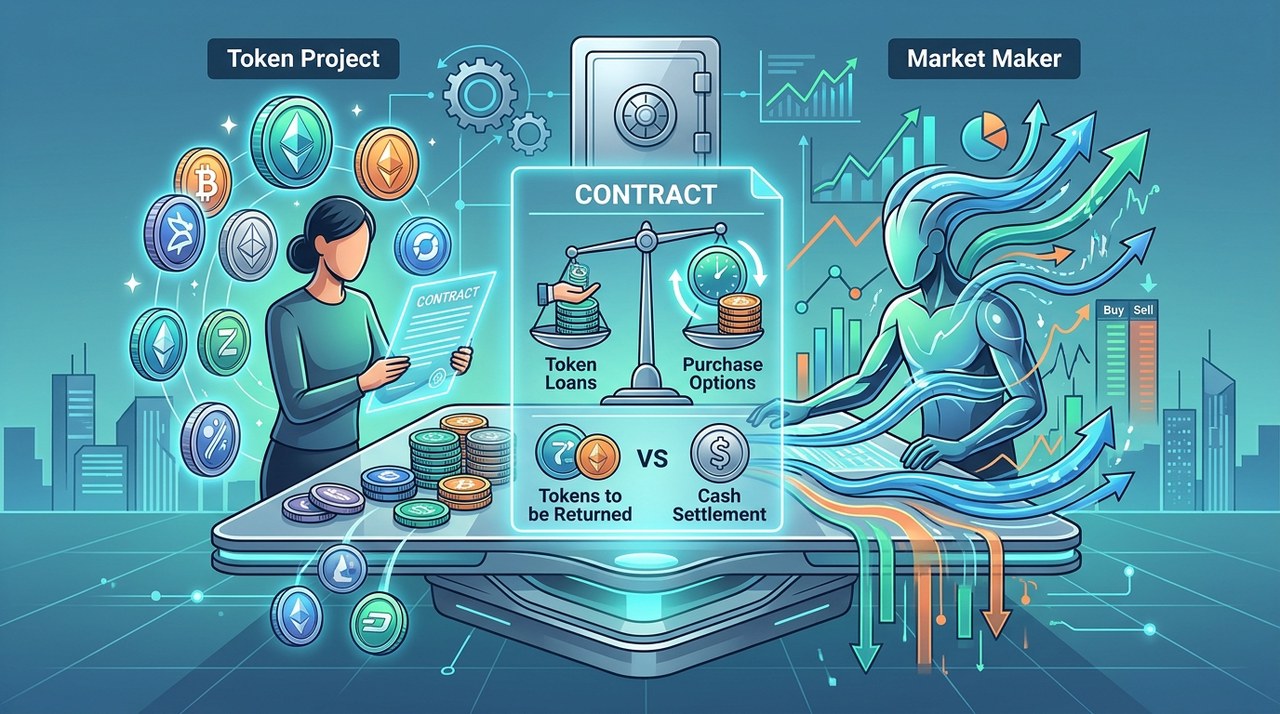
A market maker often offers liquidity in exchange for a token loan and a purchase option. However, without clear contractual terms, retrieving your tokens later can become a complicated challenge.
1. Clearly Define Token Loans and Purchase Options
Start by identifying the exact legal entities signing the contract. Ensure your foundation or treasury entity has full legal authority to grant tokens.
Next, distinguish clearly between a token loan, an outright sale, and managed inventory. Contracts must specify if ownership transfers and whether identical assets must be returned.
If the agreement grants a purchase option, spell out the exact quantity, strike price, expiration date, and repayment rules.
Consider a hypothetical scenario where a project loans 1 million tokens with an option to buy them at $0.50 each. If market demand moves the token price to $2.00, exercising the option allows the market maker to pay $500,000 instead of returning tokens valued at $2 million.
While this can be a fair commercial trade-off, teams must model all potential outcomes first. Remember that crypto prices remain volatile, and token values can fluctuate significantly in either direction.
2. Turn Vague Promises Into Measurable Mandates
Vague terms like maintain liquidity leave too much room for disagreement. Your contract should define exact trading venues, asset pairs, and performance criteria.
Set measurable targets for bid-ask spreads, minimum order book depth, and required quote availability times.
Trading authority also requires boundaries. Clearly state whether the provider may transfer funds across exchanges, re-pledge assets, use leverage, or execute derivative hedges.
3. Ban Market Manipulation and Retain Oversight
Projects should carefully examine how promised trading volume will be generated.
In August 2026, the U.S. Department of Justice announced the sentencing of My Trade's founder after a guilty plea involving market manipulation and wire fraud. The provider used automated bots to execute wash trades and fake market activity.
To protect your project, explicitly prohibit wash trading, deceptive orders, and artificial volume tactics. Include explicit rights to review records, audit trading activity, and halt operations if issues arise.
4. Require Transparent Inventory Reporting
A basic dashboard showing aggregate volume does not tell you where your assets are.
Negotiate detailed reporting that lets your team reconcile balances regularly. You should see starting and ending inventory, executed trades, fees, exchange rebates, and venue-specific balances.
Clarify financial details in advance. Define who retains venue rebates, who covers trading losses, and whether disputed fees can be withheld from token repayments.
5. Address Conflicts of Interest and Exclusivity
Market makers frequently trade for their own accounts and support multiple competing projects.
Require full disclosure of material conflicts of interest. Establish strict confidentiality rules around non-public data like listing dates, treasury transfers, and token unlock schedules.
Be cautious with broad exclusivity clauses. Limit exclusivity by specific trading pairs, platforms, or timeframes so you can replace an underperforming partner if necessary.
6. Plan the Exit Strategy and Consider Legal Risks
Ending a trading relationship and securing token repayment are separate steps. Contracts need explicit timeline procedures for unwinding open positions and returning funds.
Specify return deadlines, blockchain networks, verification procedures, and rules for handling exchange withdrawal freezes.
Keep in mind that contractual rights do not guarantee immediate asset recovery. Under U.S. bankruptcy law (11 U.S.C. Section 362), an automatic stay can freeze asset recovery during insolvency proceedings.
7. Structure Liability Limits Appropriately
Standard liability caps equal to a few months of service fees are usually insufficient when large token allocations are involved.
Ensure that token repayment obligations, unauthorized asset transfers, fraud, and confidentiality breaches are excluded from standard liability limitations.
Finally, evaluate your counterparty's financial strength and legal jurisdiction before transferring any treasury inventory.
Latest blog posts



 +1
David Schwartz Speaks Out Over XRP Price Influence
Former Ripple CTO David Schwartz clarified that while his impact on XRP's price is minimal, he is setting clear boundaries against social media harassment.
|
Global Crypto Race: Which Region Wins on Regulation?
Countries around the world are competing to build the best rules for Web3 businesses. Here is how Europe, the US, Asia, and the Middle East compare.



Crypto Wallet Revenue Drops 60% in H1 2026 as Gaming Steps Up
Crypto wallet revenues fell by $700 million in the first half of 2026 as market activity slowed, while Web3 gaming revenue helped support the wider consumer sector.
|