
Could AI Break Bitcoin? Not Yet, Research Firm K33 Says
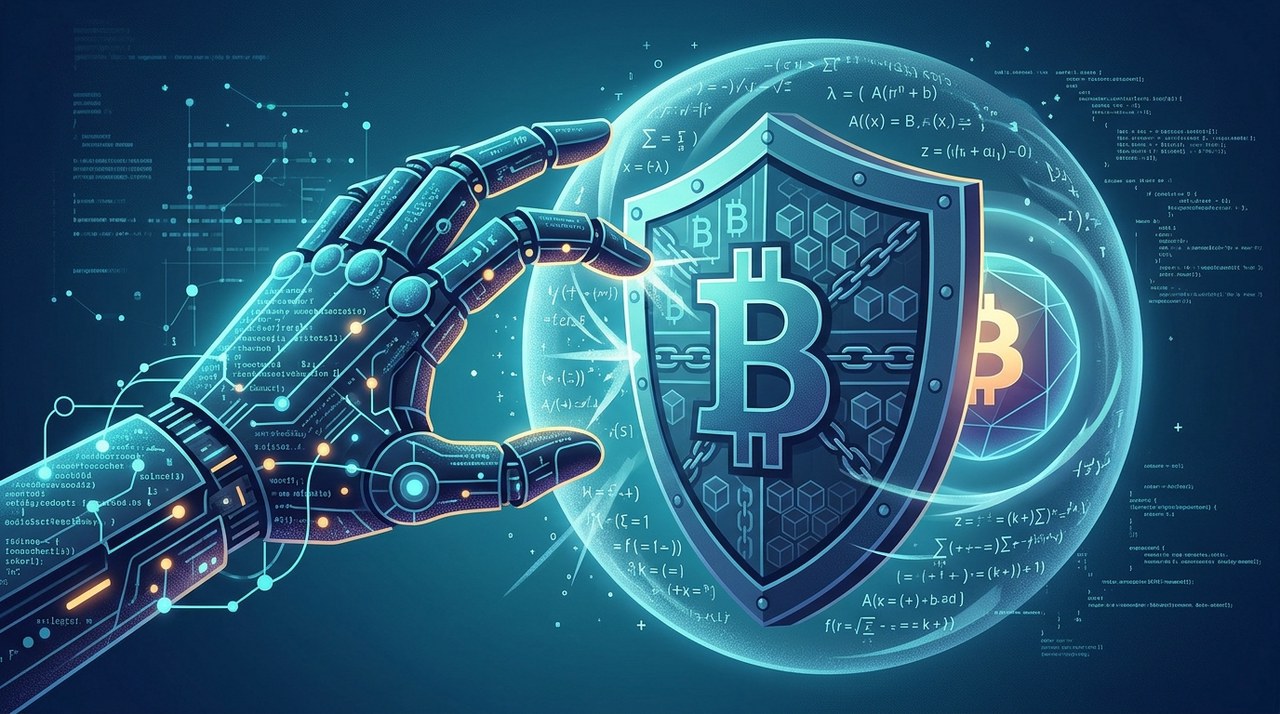
Can AI Threaten BitcoinBTC-1.84% Security? Here is What K33 Says
Crypto research firm K33 evaluated the potential threat of Artificial Intelligence (AI) to Bitcoin's core cryptographic security. The research team concluded that current AI technology is nowhere near capable of breaking the mathematical principles that protect the Bitcoin network.
As AI models become faster and more powerful, some investors worry whether machine learning algorithms could guess private keys or crack encryption protocols. K33 addressed these concerns directly, explaining that mathematical laws still place Bitcoin security far beyond the reach of modern AI capabilities.
Understanding the Math Behind Bitcoin Security
To understand why AI cannot break Bitcoin, it helps to look at how the network secures user funds. Bitcoin relies on two primary cryptographic mechanisms: SHA-256 for hashing and ECDSA (Elliptic Curve Digital Signature Algorithm) for private key creation.
Think of SHA-256 like a one-way food blender. You can put fruit inside to create a smoothie, but it is mathematically impossible to reverse the process and turn the smoothie back into whole fruit. Similarly, computing a hash from data is fast, but reversing it requires trying billions of combinations through brute force.
How Big Are Bitcoin Key Numbers?
The number of possible private keys on the Bitcoin network is 2 to the power of 256. This number is so astronomically large that it exceeds the estimated number of atoms in the observable universe. Even if every computer on Earth worked together alongside advanced AI software, guessing a specific private key would still take billions of years.
Why AI Advances Are Raising Questions in Crypto
The rapid growth of large language models and machine learning tools has led to speculation across financial markets. Some analysts wonder if AI could optimize brute-force attempts or discover hidden mathematical vulnerabilities in public-key cryptography.
However, machine learning excels at recognizing patterns in data, whereas cryptographic hashes are deliberately engineered to appear completely random. Because there are no readable patterns to exploit, AI algorithms face the same mathematical barriers as traditional computers.
Artificial intelligence improves problem-solving in structured datasets, but it cannot bend the laws of mathematics that secure public-key cryptography.
Key Findings from the K33 Research Report
The K33 report highlights several factors that keep Bitcoin safe from emerging technological risks while outlining how the ecosystem continues to evolve:
- AI capabilities are limited by physics: Current computing hardware cannot compute 2^256 attempts, regardless of how smart an AI software layer is.
- Quantum computing remains the true long-term benchmark: Unlike AI, quantum computing poses a theoretical future risk to ECDSA, but practical quantum computers capable of doing so are still years or decades away.
- Network adaptability: If cryptographic algorithms ever show signs of weakness, Bitcoin developers can upgrade the protocol to quantum-resistant encryption standard via community consensus.
Prediction Markets and Bitcoin Price Dynamics
Alongside technological discussions, market participants are actively monitoring price levels through prediction contracts. Data from decentralized prediction platforms shows traders pricing probabilities for various November low thresholds, ranging between $55,000, $60,000, $62,500, $65,000, and $70,000.
Prediction markets reflect current trader sentiment rather than guaranteed outcomes. If macroeconomic conditions remain supportive and institutional inflows continue, Bitcoin could test higher resistance boundaries near $70,000. Conversely, should liquidity tighten or unexpected market pressure arise, prices might test support levels around $55,000 or $60,000. Investors should always consider that digital asset markets experience high short-term price volatility.
Past performance of digital assets is not a guarantee of future returns. You can review current prices and historic performance metrics on the Bitkub Market page.
How Bitcoin Can Adapt to Future Technological Threats
Bitcoin is not a static protocol. It is open-source software that undergoes continuous maintenance by a global developer community. If future breakthroughs in artificial intelligence or quantum computing threaten security, the network has path options to protect user funds.
- Transitioning to Post-Quantum Cryptography (PQC): Developers can introduce quantum-resistant signature schemes through consensus upgrades.
- Implementing Soft and Hard Forks: Soft fork updates like Taproot demonstrate how Bitcoin can introduce modern cryptographic functions without disrupting historical transactions.
- User Security Best Practices: Moving funds away from exposed public keys to fresh addresses remains a simple way to minimize vulnerability.
What Investors Should Keep in Mind
While news headlines often highlight theoretical risks from artificial intelligence, research from firms like K33 reassures market participants that Bitcoin's fundamental math remains solid. The threat of AI breaking Bitcoin encryption is not an immediate concern for the foreseeable future.
Investors should focus on understanding market fundamentals, technological developments, and risk management strategies rather than reacting to speculative claims about emerging technologies.
Latest blog posts


BlackRock Investors Sell $22 Billion in BTC and ETH
BlackRock clients offloaded over $22 billion in Bitcoin and Ethereum during November 2026 amid broader market price adjustments.
|
Bitcoin Whales Accumulate BTC Despite Thinner Profit Margins
CryptoQuant data shows large Bitcoin investors are buying more BTC, breaking away from traditional fourth-quarter sell-off patterns.
|
Spain Moves to Freeze Crypto Accounts Without Court Orders
A new Spanish decree allows financial watchdog SEPBLAC to pause suspect crypto transfers for 10 days and freeze accounts for 5 days without prior judge approval.
|