


Chainflip Hit by $4.86M Exploit as Ethereum Vault Drained
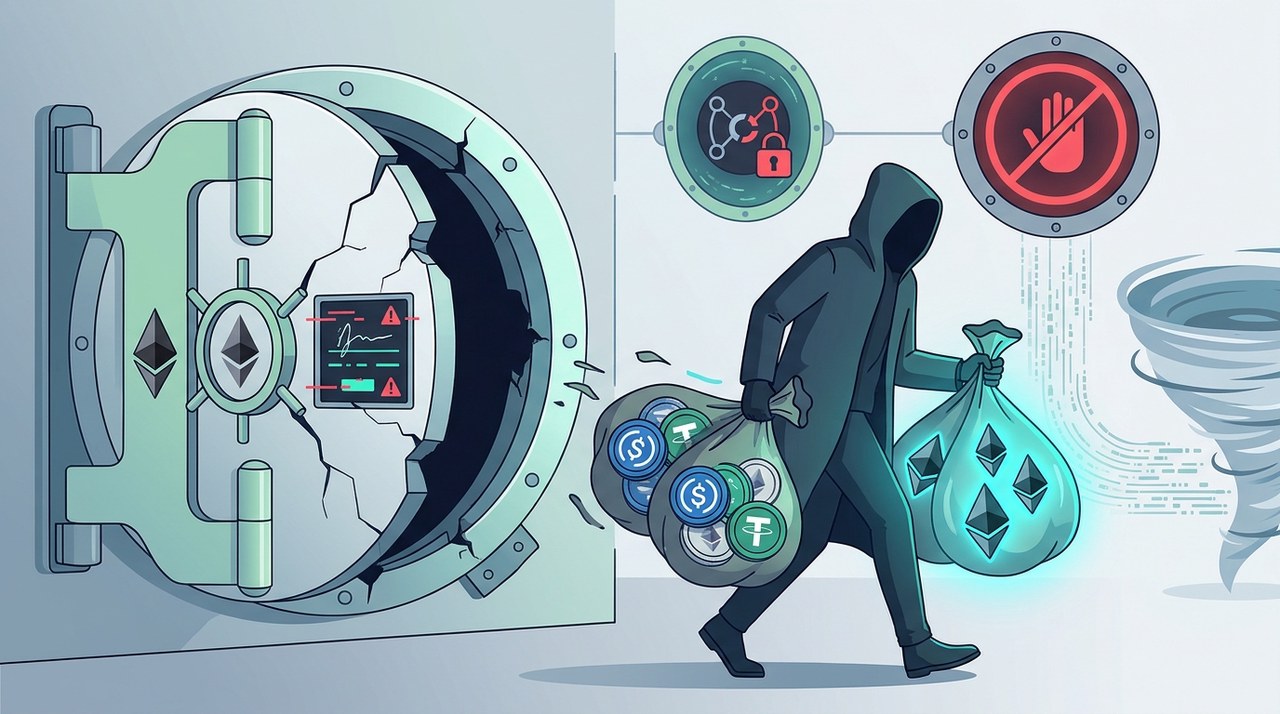
Chainflip Halts Operations After $4.86M Vault Exploit
Cross-chain swap protocol Chainflip has paused all network activities following a major security breach.
On November 21, 2026, an unknown attacker managed to drain nearly $4.86 million worth of crypto assets from Chainflip's EthereumETH-2.17% vault in a single transaction.
Shortly after detecting the suspicious activity, the protocol team activated full safe mode. This emergency action suspended deposits, withdrawals, swaps, and price quotes while security engineers began investigating the incident.
Breaking Down the Numbers: What Was Stolen?
On-chain data reveals the exact breakdown of assets removed from the vault during the exploit.
- 3,249,631.41 USDCUSDC+0.74%
- 758,141.33 USDT
Immediately after withdrawing these stablecoins, the attacker converted the entire amount into 2,909 Ethereum (ETH).
To cover their tracks, the perpetrator funneled the funds through Tornado Cash—a decentralized privacy tool—in 38 separate transactions over a nine-minute window.
How the Exploit Happened: Key Signing vs. Code Bugs
Many decentralized finance (DeFi) exploits stem from coding mistakes hidden inside smart contracts. However, initial security findings indicate this attack took a different path.
According to analysis from blockchain analytics firm Bitquery, the hacker targeted Chainflip's cryptographic key system rather than finding a bug in the smart contract code.
Chainflip utilizes a setup called a Threshold Signature Scheme (TSS). This cryptographic technique combines multiple signatures to approve actions across different blockchains securely.
The attacker obtained a valid Schnorr signature associated with the Ethereum Vault's TSS aggregate key. Armed with this valid signature, a newly funded wallet address starting with 0x78fa called the protocol's Vault.transferBatch function.
Because the transaction carried a valid signature, the smart contract verified the request as legitimate and released all available funds in a single transaction.
A Simple Analogy: Key Forgery vs. Breaking a Lock
To better picture how this happened, consider a secure digital vault guarded by two main layers: a physical lock (the smart contract code) and a digital keycard (the cryptographic signature).
In a standard code exploit, an attacker finds a structural flaw in the door lock itself, picking or breaking it to get inside without permission.
In Chainflip's situation, the door lock worked as designed. Instead of breaking the lock, the attacker managed to duplicate the authorized master keycard.
Because the vault system recognized the keycard as authentic, it opened the doors without triggering an automatic warning.
The Timeline: Rapid Laundering Through Tornado Cash
The execution speed highlights how organized modern crypto exploits have become.
After draining the stablecoins from the vault, the attacker immediately swapped the USDC and USDT into ETH.
Converting funds into ETH is a common tactic in crypto hacks because ETH can be routed through Ethereum-native mixing tools without dependency on centralized stablecoin issuers who might freeze accounts.
Within nine minutes of the initial drain, the 2,909 ETH was divided into 38 batches and sent to Tornado Cash, making the funds significantly harder to track publicly.
Chainflip's Official Response and Protocol Safe Mode
Chainflip formally acknowledged the incident on social media, confirming that emergency protocols had been triggered to protect remaining infrastructure.
We're aware of a potential exploit affecting Chainflip vaults. As a precaution, the protocol is being put into full safe mode. Deposits, withdrawals, swaps and quoting are disabled. We're investigating and will share updates here as we learn more.
Protocol safe mode serves as an operational pause button. By freezing liquid pools and cross-chain routing engines, Chainflip prevented further extractions while engineers work to isolate the root cause.
A Second Security Incident in Two Months
This event marks the second major security challenge for Chainflip in a relatively short timeframe.
Just over two months prior, on September 12, 2026, Chainflip suffered a separate security breach resulting in a loss of $736,442.
That earlier incident targeted Chainflip's TRONTRX+1.96% integration and was caused by a software defect in how the system parsed TRON transaction payload data.
Following the September exploit, Chainflip paused TRON swaps and utilized its operational reserves to fully compensate affected liquidity providers in USDC.
The protocol team has not yet stated whether a similar reimbursement plan will be implemented for this larger $4.86 million loss.
Understanding Security and Operational Risks in DeFi
Cross-chain bridges and decentralized swap protocols play a vital role in connecting different blockchain networks. They allow users to exchange assets like BitcoinBTC-1.37% and Ethereum without relying on centralized intermediaries.
However, keeping large amounts of crypto in smart contract vaults presents ongoing operational risks. When access control mechanisms or signature processes are compromised, large amounts of capital can be moved rapidly.
Market participants should evaluate operational risks carefully when using decentralized protocols. Past performance of digital assets or historical security records do not guarantee future performance or absolute security. For readers tracking real-time asset updates, live market details are available via resources like Bitkub Market.
Next Steps for the Investigation
Chainflip developers are continuing their investigation alongside external cybersecurity specialists to figure out how the Schnorr signature was obtained.
Key questions remain open, including whether private key shards were compromised, if validator nodes were targeted, or if a vulnerability was present in the key generation setup.
The team plans to publish a complete post-mortem report and provide further details regarding protocol recovery once the security audit is complete.
Latest blog posts

Is the AI Bubble Popping? Nvidia Drop Shakes Crypto
Nvidia experienced a major pullback from its highs, raising questions about an AI bubble. Here is how Wall Street, prediction markets, and Bitcoin are reacting.
|

 +2
Kalshi Traders See 55% Chance XRP Could Retest $0.70
XRP fell over 8% in a single day, leading Kalshi prediction market traders to price in a 55% chance of a $0.70 retest before 2026 ends.
|

BTCS Warns SEC That Its $54M Aave Loan Faces Liquidation Risk
BTCS reduced its Aave debt by $10 million in ten days, but falling Ether prices continue to pressure its collateral.
|