
Canadian Extradited to US Over University Hacking Plot
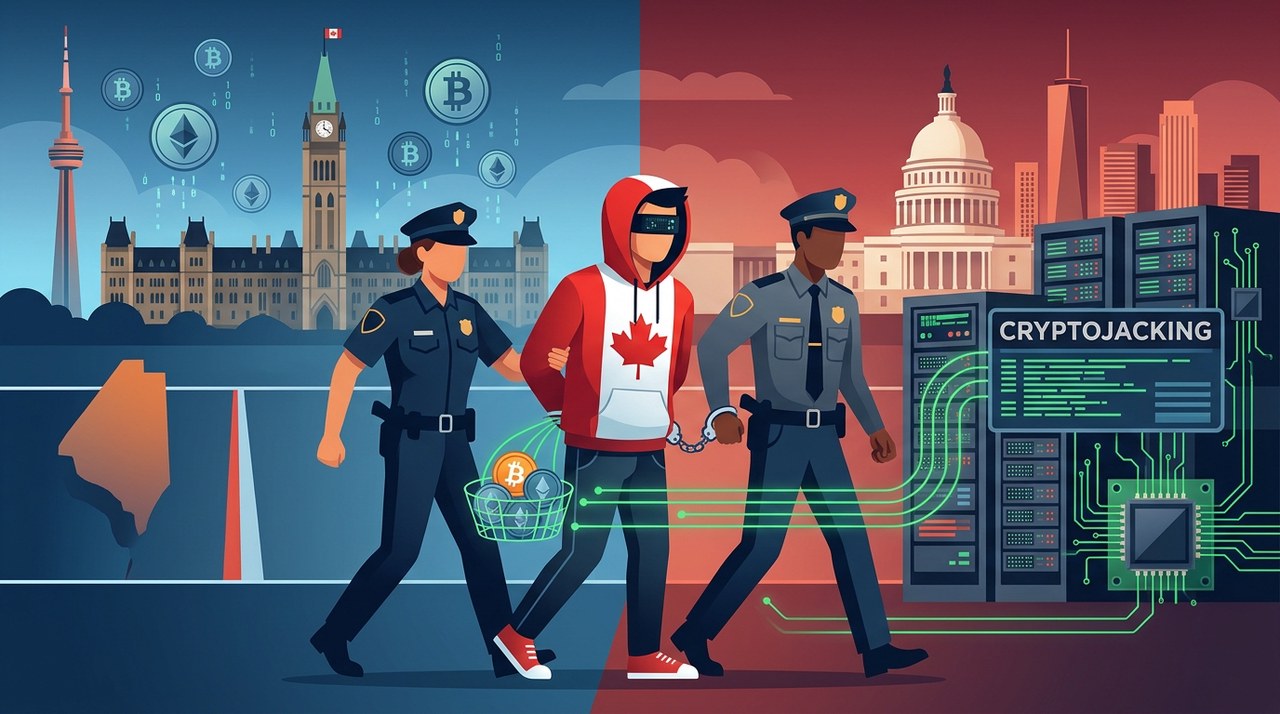
What Happened in the University Supercomputer Scheme?
A Canadian citizen has officially been extradited to the United States to face criminal charges. Authorities allege that he conspired to hack into university supercomputers across the country to secretly mine digital assets.
Extradition is a formal process where one country hands over an accused person to another nation to stand trial. In this case, law enforcement agencies from both Canada and the US worked together to bring the suspect to court.
Understanding Cryptojacking in Simple Terms
This type of illegal cyberCYBER-0.05% activity is often called cryptojacking. You can think of it like someone secretly plugging a massive extension cord into your house to run high-powered tools without your knowledge.
Instead of paying for their own equipment and electricity, hackers install hidden software on someone else's computer. The software then solves complex mathematical problems to earn new crypto tokens, while the victim pays the massive electric bill.
Why Target University Supercomputers?
Supercomputers at major research universities are built for heavy computing tasks. Researchers use them to model climate patterns, simulate complex chemistry, and process big data sets.
Because these systems possess immense processing power, they are tempting targets for unauthorized mining programs. Running scripts on a supercomputer allows bad actors to mine digital assets at a much faster rate than using standard consumer hardware.
The Real Impact on Educational Institutions
Unauthorized mining is far from a victimless crime. When malicious software runs in the background of institutional servers, it causes significant damage and disruption.
- Inflated Energy Costs: Running server processors at full power drives up electricity and cooling expenses rapidly.
- Hardware Wear and Tear: Continuous maximum utilization degrades server components much faster than normal usage.
- Disrupted Research: Academic projects can slow down significantly because computing resources are stolen by background scripts.
- Cybersecurity Hazards: Unwanted intrusion exposes broader academic networks to potential data breaches.
Legal Ramifications and International Cooperation
Cross-border cybercrimes face heavy scrutiny from international law enforcement. US federal charges against unauthorized computer access and wire fraud carry serious prison sentences.
This successful extradition sends a clear message to cybercriminals. Operating across an international border does not guarantee protection from prosecution.
How Organizations Can Defend Against Mining Attacks
Universities and corporations continue to upgrade their cybersecurity protocols to spot unauthorized mining activity early.
- CPU Usage Monitoring: Tracking unusual spikes in processor activity during off-peak hours.
- Network Traffic Inspection: Blocking outbound connections to known mining pool servers.
- Multi-Factor Authentication: Requiring strong access controls for researchers logging into supercomputing hubs.
Distinguishing Legitimate Mining from Cybercrime
It is important to remember that cryptocurrency mining itself is a legitimate mechanism that secures blockchain networks. However, doing so without permission on hardware you do not own is illegal.
Enforcing laws against cryptojacking helps protect academic research systems while building a safer environment across the digital ecosystem.
Latest blog posts


Bitcoin Holds Strong as Traders Look Ahead to November 5
Bitcoin is showing price resilience, but muted spot demand and low trading leverage are keeping the market in a calm phase.
|
MARA Moves $133M in Bitcoin: What Is Happening?
Bitcoin miner MARA Holdings transferred 1,650 BTC to institutional platforms, sparking discussions about corporate treasury moves and potential selling pressure.
|
VanEck Says Bitcoin Miners Are Oversold After October Rout
VanEck reports that Bitcoin miners faced a 35% sell-off in October as investors mistakenly lumped them into a broader AI tech downturn.
|