
Canaan Expands Nordic Bitcoin Heat Project to 8,000 Homes
Heating Homes with BitcoinBTC+2.28% Mining
Imagine warming your home during a freezing winter using excess heat generated by Bitcoin mining. That concept is becoming everyday reality in Northern Europe.
Bitcoin mining hardware manufacturer Canaan announced on November 25, 2026, that it has secured two new orders for 430 hydro-cooled Avalon mining units in the Nordic region.
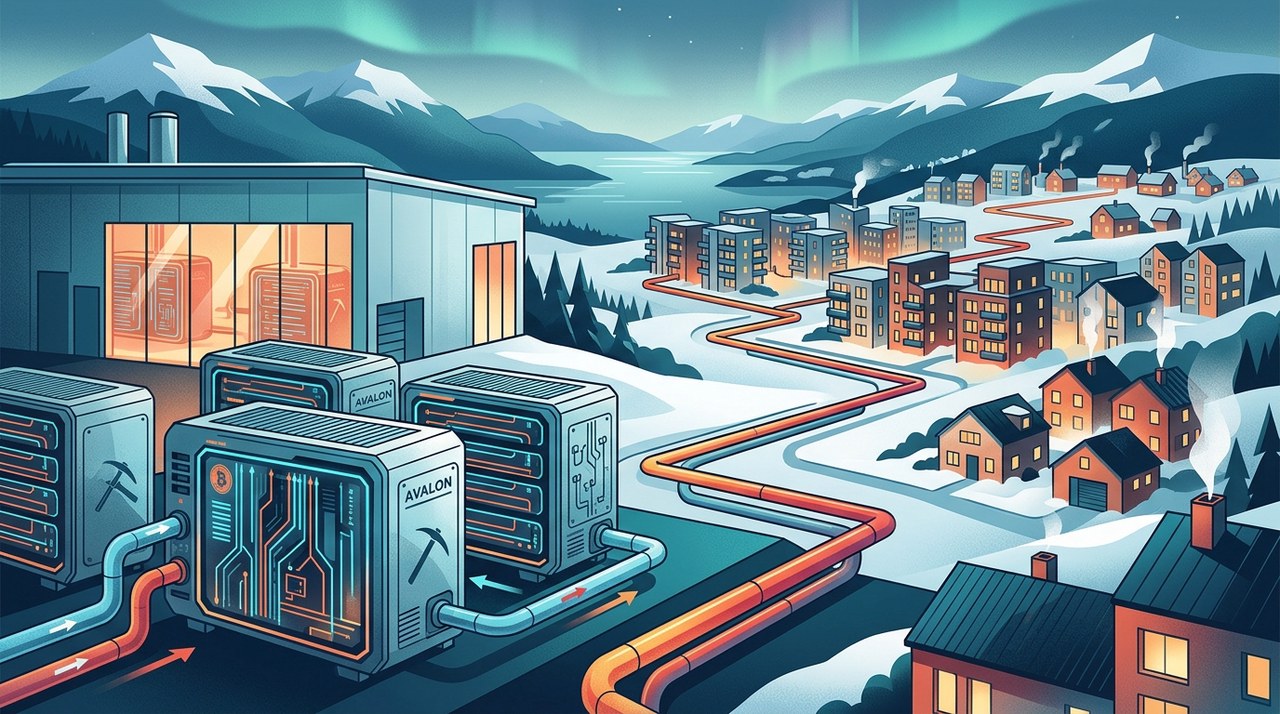
This latest expansion pushes Canaan's local district heating capacity to nearly 12 megawatts (MW). In total, this system has the potential to supply heat to almost 8,000 residential homes.
Inside the New Equipment Orders
The latest deal includes customized Avalon A1566HA-500T mining units designed specifically for fluid-based heat recovery.
- 430 new hydro-cooled machines ordered across two locations
- 500 terahash per second (TH/s) computing power per unit
- 215 petahash per second (PH/s) in total added network computing capacity
- 80 degrees Celsius (176 degrees Fahrenheit) water output temperature
Instead of burning traditional fossil fuels on-site, local municipal heating systems receive hot water directly from these running server rigs.
Building on Earlier Nordic Projects
This announcement expands on an earlier 8 MW Nordic heating initiative that Canaan disclosed back on May 19, 2026.
That initial phase began with a 2 MW installation using 228 units, which warmed roughly 2,800 homes. That success quickly prompted a second order of 692 units adding another 6 MW of capacity.
With this newest batch added, Canaan now has 1,350 active and planned units integrated across Nordic district heating sites.
Securing these contracts required more than four months of technical evaluation. Canaan noted that both buyers chose to order again based on reliable performance and responsive support at existing sites.
Securing two district heating orders from existing customers across the Nordic region is an encouraging validation of our computing and heat-reuse solutions.
How Bitcoin District Heating Works
Standard boilers burn energy solely to create warmth. Hydro-cooled mining machines generate two useful economic outputs from a single electricity source.
First, the specialized chips perform computational work for the Bitcoin network. Second, liquid cooling channels capture thermal energy that would usually go to waste.
Northern Europe offers ideal conditions for this setup. Established municipal networks pipe hot water centrally, so homeowners do not need complex hardware installed in their basements.
Operational Perks and Environmental Impact
Canaan's system provides grid flexibility. Operators can dial computing loads up or down depending on electricity rates and real-time grid needs.
The setup is also modular. Technicians can complete maintenance on individual mining units without shutting off heat to the neighborhood.
Reusing chip heat reduces local fuel combustion emissions like oil or gas. Still, overall environmental gains depend on how clean the local electric power grid is.
Expanding Beyond District Networks
District heating networks are not the only place Canaan is applying this technology.
The company has introduced smaller Avalon solo miners aimed at single-home heating, alongside a commercial greenhouse heating initiative in Manitoba, Canada.
The fact that both Nordic orders came from returning clients demonstrates that hash-to-heat technology is steadily moving from initial pilots into proven commercial use.
Latest blog posts

How Fake Internet Routes Stole Bitcoin Mining Power
Over 1,000 Bitcoin miners were tricked into redirecting 1.9 EH/s of mining power to an impostor pool through a fake internet routing attack in early November.
|


Fidelity Files for Spot Chainlink ETF as X Wins Legal Case
Fidelity moves to launch a spot Chainlink ETF while Elon Musk's X secures a court victory in a Bitcoin content farm lawsuit.
|

SEC Filings Show Huge 70% Gap in Ripple Stock Valuation
Two SEC-registered funds valued Ripple stock at $90 and $300 per share on Sept. 30, revealing a massive valuation split.
|