

Can AI Hack Smart Contracts? AI Agents in Web3 Security
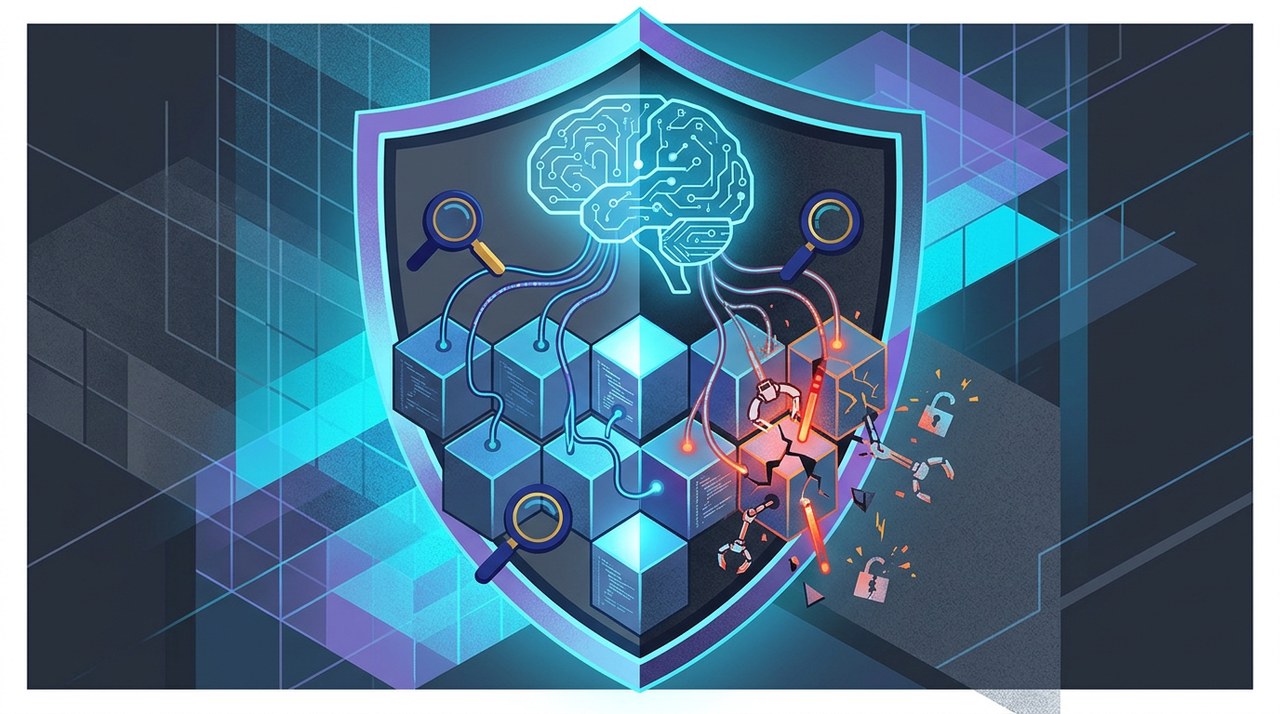
Can Artificial Intelligence Really Break Smart Contracts?
Imagine having an automated auditor that works around the clock without taking a break. Now imagine that same tool being used by hackers to search for hidden flaws in decentralized applications. Artificial intelligence (AI) is rapidly evolving from a simple coding helper into an autonomous system that can analyze, test, and potentially exploit smart contract code.
In the world of Web3, smart contracts store and manage billions of dollars in user funds. Because contract code is usually permanent once deployed on a blockchain, catching bugs before launch is essential. Let us explore how AI agents hunt for vulnerabilities, what recent tests reveal, and how security teams can defend their projects.
How AI Agents Discover Smart Contract Vulnerabilities
Traditional vulnerability scanners look for specific code patterns based on past security incidents. If a bug does not fit a known rule, traditional scanners often miss it.
AI agents take a far more flexible approach. They can run repeated tests, simulate local blockchain environments, analyze code dependencies, and even decompile raw bytecode back into readable logic. Keeping your source code unverified or private no longer offers complete security.
Modern AI agents can analyze complex logic flaws, including:
- Access control bugs: Coding flaws that allow unauthorized users to trigger admin functions.
- Accounting errors: Mathematical logic mistakes that lead to miscalculated balances or rewards.
- Oracle manipulation: Weaknesses in how a contract reads external market data.
- Unexpected contract interactions: Issues that occur when multiple smart contracts interact at the same time.
Real-World Experiments: AI Finding Zero-Day Flaws
Researchers have started testing advanced AI models against historical and live smart contracts to measure their actual technical capabilities.
In December 2025, AI company Anthropic published findings from SCONE-bench, a dataset of 405 smart contracts that were exploited between 2020 and 2025. The test evaluated whether AI agents could recreate those historical exploits automatically.
The AI agents successfully recreated exploit attacks for 207 out of 405 contracts. Across these simulated scenarios, the models generated $550.1 million in simulated stolen funds.
To verify that the AI was not simply repeating published solutions, researchers tested newer vulnerabilities that occurred after the models' training cutoff. Using Claude Opus 4.5, Sonnet 4.5, and GPT-5, the AI generated $4.6 million in simulated stolen funds on these unfamiliar contracts.
Anthropic also analyzed 2,849 recent smart contracts with no known security issues. The AI agent identified two previously undiscovered zero-day vulnerabilities, representing $3,694 in simulated stolen funds.
Anthropic pointed out that no real-world funds were lost in these simulations. Additionally, in one experiment using GPT-5, the API computational fees reached $3,476, resulting in a very small simulated net profit of $218. This demonstrates that while AI capabilities are growing, computational costs remain a meaningful constraint.
Smart Contract Losses and Market Data in 2026
Automated attack methods present an ongoing challenge for the decentralized finance (DeFi) ecosystem, where smart contract reliability is critical.
According to a report from security firm Hacken, crypto protocols suffered $1.18 billion in total losses across 107 security incidents in the third quarter of 2026 alone. About 48% of these quarterly losses were caused by smart contract exploits.
Blockchain research firm Chainalysis estimated that $36.7 million was stolen in 2026 from DeFi protocols that had not completed smart contract source code verification. Chainalysis identified AI-assisted reverse engineering as an emerging risk factor, though specific thefts were not directly linked to AI execution.
Research from venture capital firm a16z examined how context impacts AI exploit performance:
- In a test on 20 historical DeFi price manipulation exploits, AI achieved an initial 50% success rate.
- When researchers hid transactional data that revealed the original hack mechanism, the AI success rate dropped to 10%.
- When researchers provided high-level information about the DeFi domain, the AI success rate rose to 70%.
Key Industry Benchmarks: EVMbench and CyberCYBER+13.21% Chain Bench
Security researchers have introduced standardized benchmarks in 2026 to track AI progress in detecting and fixing bugs.
OpenAI and Paradigm EVMbench
In February 2026, OpenAI and Paradigm released EVMbench to test AI agents in vulnerability detection, patching, and exploitation within an EthereumETH-0.36% Virtual Machine sandbox.
- GPT-5.3-Codex achieved a 71% exploit success rate in the controlled sandbox environment.
- GPT-5 achieved a 33.3% success rate on the same test suite.
Cyber Chain Bench Evaluation
In October 2026, researchers released Cyber Chain Bench, analyzing 541 security events across 9 Ethereum-compatible networks. The best-performing AI model configuration recorded:
- 37.5% success rate for vulnerability detection.
- 43.7% success rate for exploit execution.
- 23.4% success rate for code patching.
In a simulation covering 200 exploit events after the model's training cutoff, the top agent generated $57.4 million in simulated profits. However, security team OpenZeppelin evaluated several reported high-severity findings and determined that some were not exploitable in real conditions. Public training data can sometimes inflate benchmark metrics.
How Web3 Developers Can Strengthen Security
As AI makes it easier to run automated security tests across many protocols, smaller projects could experience more exploit attempts. Fortunately, security teams can use AI defensibly to protect their code.
Developers can adopt these practical defense measures:
- Use Defensive AI Tools: Deploy AI agents to perform pre-launch contract tests, write automated regression test suites, and detect abnormal on-chain behavior.
- Require Human Oversight: Maintain strict policy requiring human security engineers to review and approve all smart contract updates before deployment.
- Conduct Independent Audits: Work with reputable third-party security firms to conduct manual code reviews and architectural checks.
- Restrict Admin Rights: Limit access to sensitive contract control functions and restrict AI systems from making live on-chain transactions without human approval.
- Establish Emergency Protocols: Set maximum transfer caps on protocol wallets and implement automated response plans to pause contracts during an incident.
Conclusion: Navigating AI in Smart Contract Security
AI agents are becoming surprisingly effective at evaluating smart contract logic, but they are not an unstoppable force. While attackers can use AI to analyze code quickly, development teams can use the same tools to find bugs early and secure their platforms.
By combining automated AI testing with thorough human audits, Web3 projects can build stronger defenses and improve protocol safety over time.
Past performance of digital assets or security models is not a guarantee of future results. Always conduct independent research and exercise care when interacting with smart contracts.
Latest blog posts


LeBron James Sues AI Sports Betting App Over Fake Ad
NBA superstar LeBron James has filed a federal lawsuit against Play Vision for using an AI clone of his image and voice to market a sports betting research app.
|

Sygnum Predicts Bitcoin Carry Trades Could Beat T-Bills by 2027
Digital asset bank Sygnum projects that Bitcoin carry trades could outperform traditional US Treasury bills by 2027 as funding rates recover.
|
Bitcoin Carry Trades May Beat T-Bills by 2027, Sygnum Says
Swiss crypto bank Sygnum projects that Bitcoin carry trades could outperform U.S. Treasury bills by 2027 as market funding rates recover.
|