
Brazil Central Bank Sparks Debate Over Stablecoin Remarks
A Controversial Statement from Brazil's Central Bank
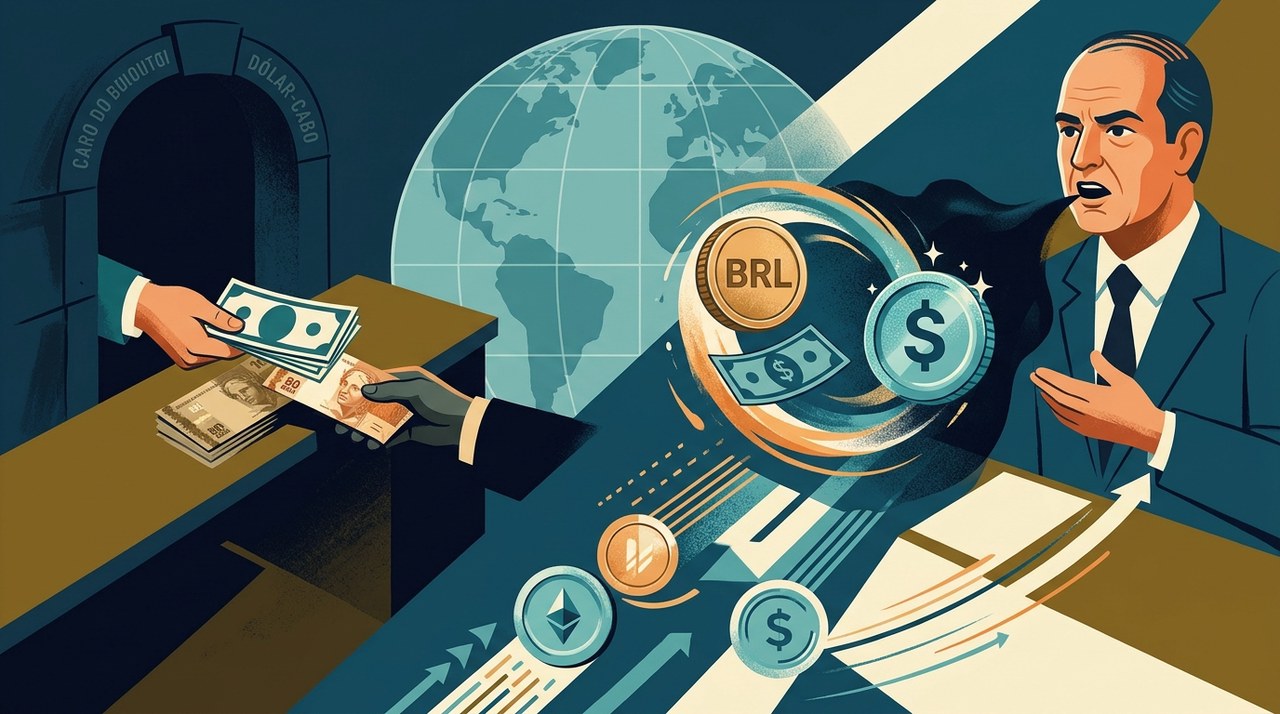
The crypto community in Brazil is actively discussing recent comments made by a central bank official. The regulator raised eyebrows by suggesting that legal money effectively becomes tainted when converted into stablecoins.
To make matters more tense, the official drew a direct parallel between the modern stablecoin market and an underground money transfer network known locally as dólar-cabo.
This comparison triggered swift pushback from local crypto businesses, fintech leaders, and compliance experts who feel the statement unfairly paints the legitimate digital asset industry with a broad brush.
Understanding the Dólar-Cabo System
To understand why industry participants are upset, it helps to examine what dólar-cabo actually is. Think of it as an off-the-books shadow banking mechanism.
In a traditional dólar-cabo setup, a client hands cash to an informal broker in Brazil. That broker then contacts an overseas partner to deposit US dollars into a foreign account on the client's behalf.
- It operates outside official banking channels.
- It is historically used to bypass cross-border limits and currency controls.
- It is often linked to tax evasion and money laundering.
Because dólar-cabo relies on informal trust and cash movements, it lacks regulatory oversight. Equating transparent blockchain tokens to this illegal shadow market struck a sensitive nerve with compliant exchanges.
Why Stablecoins Are So Popular in Brazil
Stablecoins like USDT and USDCUSDC-0.03% are digital tokens pegged 1-to-1 with fiat currencies like the US dollar. In Brazil, they have quickly become an essential tool for everyday consumers and merchants.
Many individuals hold dollar-pegged stablecoins to protect their purchasing power against local currency devaluation. Others use them to send international payments fast without paying expensive wire fees.
According to tax reporting data, stablecoin transfers represent a massive portion of all cryptocurrency transactions in the country, serving practical economic needs.
Industry Pushback: Public Blockchains Provide Transparency
Industry defenders were quick to highlight major flaws in comparing crypto to illicit wire operations. Unlike shadow banking networks, public blockchains create a permanent record.
Every transaction conducted with major stablecoins is visible on an open ledger. Blockchain analytics companies actively monitor fund movements to help flag illicit activity.
Public blockchains provide a level of transaction traceability that cash-based informal networks simply cannot offer.
In addition, compliant crypto exchanges operating in Brazil enforce strict Know-Your-Customer (KYC) rules. They regularly report user activities to the tax authority, Receita Federal.
What Concerns Regulators?
While the central bank's comments sparked criticism, authorities around the world do face real oversight challenges with digital assets.
Central banks worry about potential capital flight and unmonitored cross-border flows. When transactions happen peer-to-peer via private wallets, tracking the origin of funds becomes complex.
However, industry experts maintain that assuming all funds become tainted upon entering the stablecoin ecosystem ignores the vast majority of legitimate users and regulated platforms.
What Lies Ahead for Crypto Rules in Brazil?
Brazil is currently refining its framework for regulating virtual asset service providers. The Central Bank of Brazil serves as the primary regulator overseeing these digital finance rules.
As rulemaking progresses, market players hope for balanced policies that protect against money laundering without stifling legitimate technological innovation.
Latest blog posts



Charles Hoskinson Defends Cardano Utility Amid ADA Price Drop
Cardano founder Charles Hoskinson responded to community concerns after ADA fell over 95% from its peak, arguing price does not reflect underlying tech progress.
|


Shiba Inu Activity Spikes as 684 Billion SHIB Move
Over 684 billion SHIB tokens moved across crypto exchanges in 24 hours as Shiba Inu attempts a price recovery from recent lows.
|
3 Events That Could Shake Bitcoin Prices During Thanksgiving Week
Bitcoin faces three key market tests this Thanksgiving week, including inflation reports, ETF market closures, and a major $6.6 billion options expiration.
|