


Bitwise Sets $1,100 Solana Goal Based on Tokenized Stocks

Bitwise Shares Long-Term SolanaSOL+4.16% Price Valuation Model
Asset management firm Bitwise published a research report on November 16 examining the potential long-term economic value of Solana (SOL). Bitwise, which manages a spot Solana ETF in the United States, outlined a multi-scenario valuation model where SOL could reach $1,100 by the year 2031 under specific conditions.
This target sits more than 15 times above recent market levels. At the time of Bitwise's report, SOL was trading around $71.55, reflecting a 30.87% decline over the preceding month.
Past performance of digital assets is not a guarantee of future results. Market participants can monitor current market trends on the Bitkub SOL Market.
How Bitwise Evaluates Solana's Real Economic Value
To construct its price target, Bitwise relies on a framework called Real Economic Value (REV). REV measures the total transaction fees paid by users to execute actions on the network.
Think of Real Economic Value like a busy toll highway. As more vehicles travel the road and pay usage fees, the network generates higher cash flow. Bitwise then applies a financial earnings multiple to these user-paid fees to calculate an estimated valuation for the blockchain.
The $1,100 Bull Case: Essential Requirements
For Solana to reach the $1,100 milestone by 2031, Bitwise's bull case requires several major conditions to materialize across global financial markets:
- Global Stock Tokenization: Approximately 5% of all global publicly listed stocks must move onto public blockchain networks.
- Solana Market Dominance: Solana must capture and maintain a 65% market share of all trading in those tokenized stock assets.
- Annual Fee Growth: Yearly network fees generated on Solana would need to expand from approximately $278 million today to $12.83 billion—roughly a 46-fold increase.
- Transaction Shift: Tokenized stocks would need to grow from under 2% of total Solana transactions today to about 66% by 2031.
- Valuation Multiple: Bitwise applies a 60x multiple to the projected $12.83 billion annual fees, deriving a total network valuation near $770 billion.
Insights from Bitwise Onchain Researchers
Bitwise Head of Onchain Research Kam Benbrik and protocol researcher Rafal Klich highlighted that this high-end target depends heavily on institutional adoption dynamics.
"Most of the price increase depends on how quickly stocks move onchain and how well Solana competes against other blockchains on tokenization."
Base Case and Bear Case Valuation Scenarios
Because blockchain adoption remains uncertain, Bitwise provided alternative targets for scenarios where tokenization progresses more slowly.
The report also discounted each future target back to present value using a 20% annual discount rate to account for long-term asset risks. Here is how the three scenarios break down:
- Bull Case: 2031 target of $1,100, assuming 5% global stock tokenization and 65% Solana market share.
- Base Case: 2031 target of $385. Discounted at 20% annually, this equals a present value of approximately $155.
- Bear Case: 2031 target of $80. Discounted at 20% annually, this yields a present value of around $32, reflecting lower network usage.
Competition and Market Expansion Outlook
Achieving dominant market share in tokenized assets faces stiff competition. EthereumETH+1.02% and its Layer-2 network ecosystem currently hold the majority of tokenized real-world assets by total value.
At the same time, the broader tokenized stock sector is showing early momentum. According to Bitwise data, the market value of tokenized stocks grew from roughly $0.7 billion to $3.3 billion through September.
While $3.3 billion is a small fraction of the $152 trillion global stock market, institutional infrastructure is advancing. Nasdaq expects to launch its own stock token platform in the second quarter of 2027, providing a key benchmark for institutional onchain trading.
Evaluating Valuation Models Realistically
Long-term price models offer structured ways to think about adoption scenarios, but they rely on theoretical assumptions. Factors such as network upgrades, regulatory developments, and market shifts will determine how adoption unfolds over time.
Latest blog posts
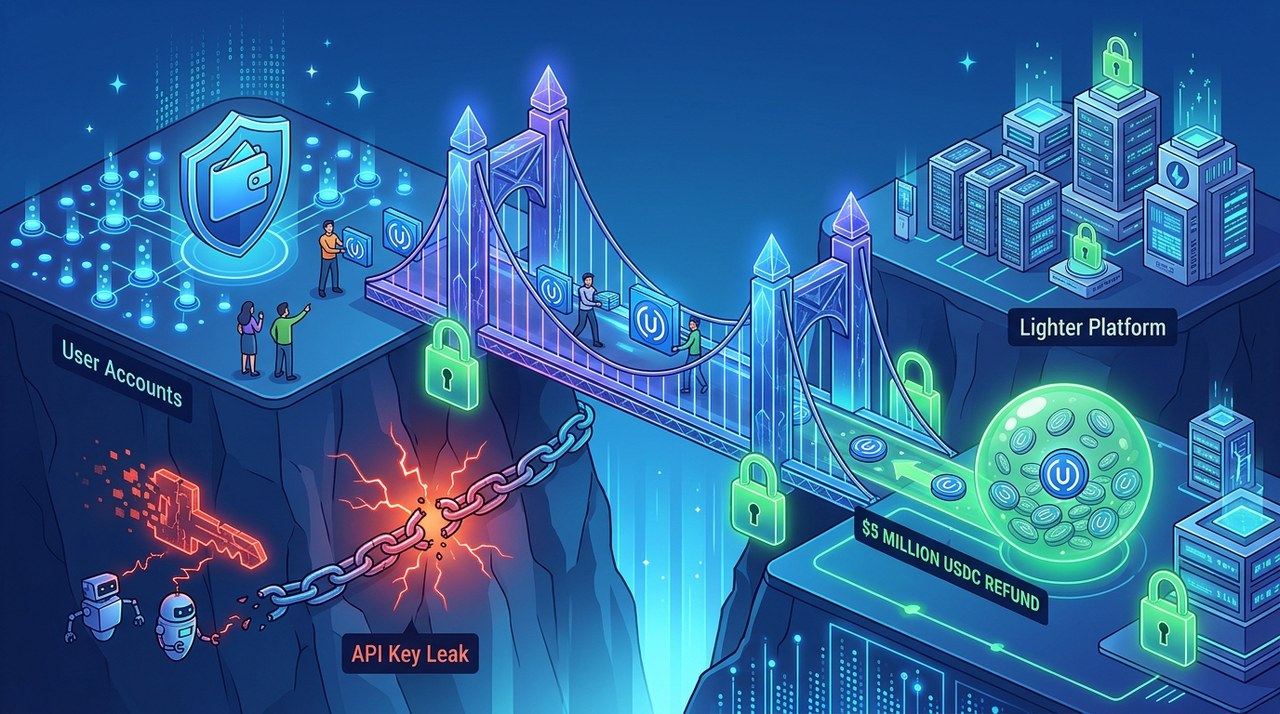

Lighter Restores Withdrawals After $5 Million API Incident
Lighter has resumed deposits and withdrawals after returning about $5 million in USDC to a trader affected by an API key leak.
|

Ex-OpenAI Fund Dumps BTC Miners & Cuts IREN by 94%
An ex-OpenAI researcher fund sold off Bitcoin miners and cut its IREN stake by 94%, replacing equity shares with call options in AI power and memory stocks.
|
Revolut Plans 4 Blockchain Funds to Fix Private Market Liquidity
Fintech giant Revolut is planning four blockchain-backed funds to tackle liquidity challenges in private markets, according to chairman Martin Gilbert.